
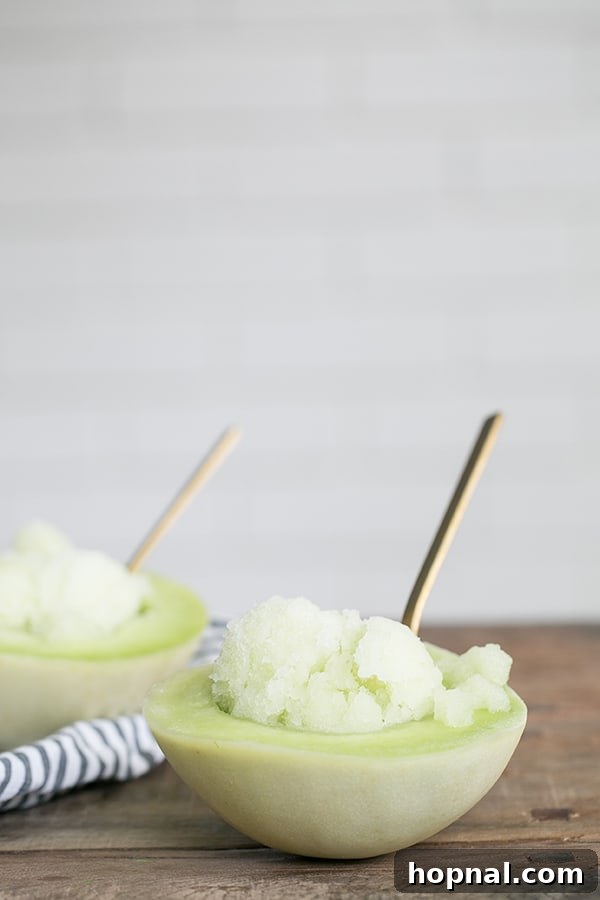
Easy 3-Ingredient Honeydew Sake Sorbet: Your Ultimate Summer Treat
Are you searching for a deliciously fresh and uniquely flavorful palate cleanser to beat the summer heat? Look no further! This incredibly simple, three-ingredient honeydew sake sorbet is not just the ultimate warm-weather dessert; it’s also one of the easiest frozen delights you can craft right in your own kitchen. Perfect for a refreshing interlude or a light finish to any meal, this vibrant sorbet promises to keep you cool and delighted. Discover the pure joy of homemade sorbet and all the essential tips and tricks you need to create this amazing treat.
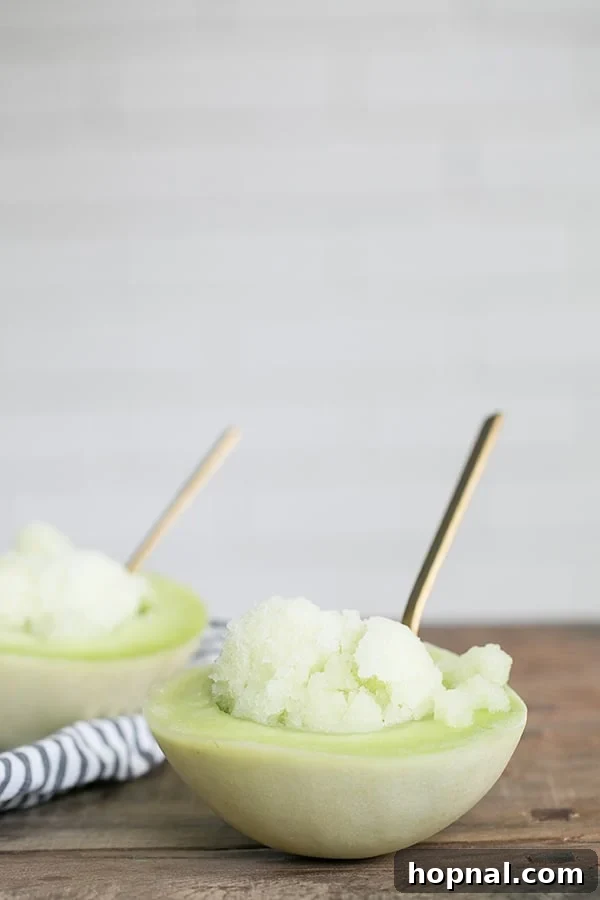
Here’s everything you need to know about preparing our refreshingly simple honeydew sake sorbet, along with insights into its star ingredients, the joy of making your own frozen treats, and plenty of serving suggestions.
The Allure of Honeydew Melons: Sweetness, Health, and Versatility
Honeydew melon, instantly recognizable by its pale green flesh and smooth, creamy rind, is a cherished summer fruit renowned for its incredibly sweet, light, and subtly honey-like flavor. This natural sweetness and delicate taste make it an ideal base for a wide array of refreshing summertime treats, especially for a vibrant sorbet. But honeydew is more than just a sweet delight; it’s also packed with remarkable nutritional benefits.
Nutritional Powerhouse for Summer Wellness
Beyond its delicious taste, honeydew is an excellent source of hydration due to its exceptionally high water content, making it a perfect choice to help you stay cool and replenish fluids during warmer months. It’s also a rich source of Vitamin C, a powerful antioxidant crucial for supporting immune health, promoting collagen production for radiant skin, and protecting your cells from damage. Furthermore, honeydew provides a significant amount of potassium, which is vital for maintaining proper fluid balance, supporting nerve function, and regulating blood pressure. You’ll also find smaller quantities of other important vitamins and minerals, including B vitamins and Vitamin K, making it a healthy and incredibly delicious addition to any diet.
Honeydew’s Culinary Versatility
While this sorbet recipe is a fantastic way to enjoy honeydew, its versatility extends far beyond frozen desserts. Its mild yet distinctly sweet profile lends itself beautifully to various culinary applications, both sweet and savory. Consider incorporating it into vibrant fruit salads for a burst of freshness, blending it into smoothies for a creamy, nutritious drink, or even pairing it with savory dishes like prosciutto or feta cheese for a delightful contrast of flavors and textures. For an adult twist, honeydew can be muddled into cocktails, adding a natural sweetness and refreshing aroma, as creatively explored in honeydew freeze cocktails. The possibilities are truly endless with this delightful melon.
Perfect Pairings: What Complements Honeydew Melon?
The true charm of honeydew melon lies in its neutral yet distinctively sweet and slightly floral flavor profile. This allows it to harmonize beautifully with a multitude of other ingredients, making it a versatile component in many recipes. Its inherent mildness means it rarely clashes, serving as an excellent culinary canvas for both sweet and savory combinations.
Fruit Combinations for Enhanced Flavors
Practically any other fruit pairs wonderfully with honeydew, creating delightful flavor synergies. Berries such as strawberries, blueberries, and raspberries offer a tangy and slightly tart counterpoint that beautifully contrasts honeydew’s sweetness. Citrus fruits like lime or lemon can brighten its flavor profile, adding a zesty zing that makes the melon taste even fresher. Tropical fruits, including pineapple, mango, or passion fruit, enhance its exotic appeal, creating a more complex and vibrant experience. A classic fruit salad featuring honeydew alongside cantaloupe and watermelon is always a refreshing and hydrating crowd-pleaser, perfect for picnics or brunches.
Beyond Fruit: Surprising and Sophisticated Pairings
Beyond its fruity companions, honeydew’s natural sweetness is exquisitely complemented by fresh herbs like mint or basil, which introduce an aromatic depth and cooling sensation, perfect for summer dishes. It also pairs exceptionally well with creamy textures such as Greek yogurt, cottage cheese, or even mascarpone, creating light and healthy snacks or decadent parfaits. For an elegant and grown-up touch, try honeydew with sparkling wines or prosecco; its subtle sweetness enhances the bubbly notes, making it a sophisticated appetizer or a light dessert component. The refreshing nature of honeydew also makes it a great match for savory elements like salty prosciutto or sharp cheeses, creating an intriguing balance of sweet and savory that tantalizes the taste buds.
Dairy-Free Delight: Understanding the Purity of Sorbet
One of the most universally appealing aspects of sorbet, particularly for those with specific dietary requirements or preferences, is its inherently dairy-free nature. In stark contrast to ice cream, frozen yogurt, or sherbet, authentic sorbet contains absolutely no milk, cream, butter, or any other animal byproducts. This makes it an ideal, safe, and utterly delicious option for individuals following a vegan lifestyle, those with lactose intolerance, or anyone who suffers from dairy allergies but still craves a luscious, cool, and satisfying frozen treat.
Sorbet’s commitment to purity allows the intense, natural flavors of its fruit base to shine through unmasked by the richness of dairy. This focus on fruit-forward taste, combined with its refreshingly light and smooth texture, positions sorbet as a truly guilt-free indulgence that doesn’t compromise on flavor or satisfaction. It embodies simplicity and elegance, offering a pure taste of summer in every spoonful.
Exploring Sake: Japan’s Ancient and Versatile Beverage
Sake (pronounced “Sah-Keh”) is far more than just a drink; it is a profound cultural emblem of Japan, steeped in centuries of tradition and craftsmanship. Often colloquially referred to as “rice wine,” it is, in fact, brewed more akin to beer, undergoing a meticulous fermentation process involving specific types of rice, pristine water, specialized yeast, and koji mold. This traditional beverage boasts a rich history and an incredibly diverse range of flavors, aromas, and styles, making it an intriguing and sophisticated ingredient for culinary experiments like our sorbet. To truly appreciate its nuances and complexity, delving into a comprehensive guide to sake can be incredibly enlightening.
A Spectrum of Sake Varieties
Just like grape wines, sake comes in a fascinating array of varieties, each offering a unique sensory experience:
- Amazake: This is a sweeter, often non-alcoholic or very low-alcohol sake, well-known for its thick, cloudy texture and gentle, comforting flavor. It’s frequently enjoyed warm as a traditional winter beverage or chilled as a refreshing drink.
- Taruzake: Distinguished by its aging process in cedar barrels, this sake absorbs a distinct woody, often spicy, and subtly aromatic flavor and aroma. This unique character makes Taruzake a fascinating choice for specific dishes or as a distinctive sipping sake.
- Muroka: Muroka sake is particularly interesting because it is an unfiltered sake, meaning it skips the charcoal filtration step that most sakes undergo. The absence of filtration results in a sake with a stronger, bolder, and more concentrated taste, often exhibiting a more pronounced aroma and a slightly cloudy appearance. Its robust and vibrant profile makes Muroka an excellent choice for a sorbet, as its character can stand up to the sweetness of the fruit and contribute a complex, sophisticated depth of flavor to the dessert.
- Nigori: Similar to Muroka in its cloudy appearance, Nigori sake is coarsely filtered, intentionally leaving fine rice particles suspended in the liquid. This gives it a creamy, often chewy texture and typically a sweeter, fruitier taste profile, making it another superb candidate for desserts and culinary applications.
- Junmai, Ginjo, Daiginjo: These classifications relate to the rice polishing ratio, which significantly influences the sake’s purity, aroma, and overall quality. Junmai sakes are “pure rice” sakes, meaning no distilled alcohol is added. Ginjo and Daiginjo refer to sakes with increasingly higher rice polishing ratios (meaning more of the outer layer of the rice grain is milled away), typically resulting in more aromatic, delicate, and refined flavors, often with fruity and floral notes.
Important Note on Cooking Sake
While the designation “cooking sake” (Ryōrishu) might seem like a practical and economical option for culinary use, it comes with an important caveat, especially for desserts. Most cooking sakes contain added salt, which is intended to enhance savory dishes. However, this salt content can be highly detrimental to sweet preparations, creating an undesirable and jarring flavor in desserts like sorbet. Therefore, when preparing any sweet treat, it is unequivocally best to opt for a drinking-grade sake. This ensures the purest and finest flavor profile, free from any unwanted salty surprises, allowing the delicate nuances of the sake to complement your dessert perfectly.
Where to Source Your Sake for Culinary Adventures
Despite its origins as a cherished traditional Japanese beverage, acquiring sake for your culinary adventures is quite straightforward in today’s global market and certainly doesn’t require a special trip to the Land of the Rising Sun. Sake has experienced a significant surge in popularity worldwide, making it readily available in many parts of the globe.
You can typically find a good selection of sake at most well-stocked liquor stores or specialty wine and spirits shops. These establishments often carry a range of options, from more common varieties to some premium selections. For a more diverse and authentic selection, especially if you’re seeking specific types like Muroka or Nigori, dedicated Asian food markets—particularly those specializing in Japanese ingredients—are an excellent resource. They often boast an impressive array of sake, catering to both casual drinkers and connoisseurs. Furthermore, depending on your local regulations and the availability of licensed distributors, you might also have the convenience of ordering sake online. Many reputable online retailers specialize in Japanese beverages, offering a wide selection that can be delivered directly to your doorstep. When purchasing, consider the type of sake for your recipe (unfiltered is great for sorbet!) and look for brands with good reviews or recommendations to ensure quality and authenticity.
The Simple Science and Art of Sorbet Making
Sorbet holds a revered place among the oldest frozen desserts in the world, with its origins tracing back centuries to ancient civilizations. At its core, sorbet is a marvel of simplicity, often requiring nothing more than fruit juice and water. However, the true beauty of sorbet lies in its adaptability; there are countless ways to enhance its flavor and texture, transforming it into a truly memorable and sophisticated treat.
Unlike its dairy-based counterparts, sorbet is remarkably easy to make, primarily relying on your chosen fruit ingredients and the transformative power of freezing. The key to achieving that perfect, smooth, and scoopable sorbet consistency lies in a simple scientific principle: constant movement during freezing.
When making any frozen dessert, agitation is crucial as it prevents the mixture from freezing into a single, unappealing block of solid ice. Instead, continuous churning or stirring encourages the formation of minuscule, separate ice crystals. These tiny crystals are what create the delicate, melt-in-your-mouth texture that is the hallmark of a well-made sorbet. Without this essential movement, you would inevitably end up with a hard, icy lump rather than a luscious, scoopable, and smooth dessert. This understanding is your secret weapon for sorbet success!
Essential Tools for Sorbet Success
- Ice Cream Maker: The most straightforward path to achieving silky-smooth sorbet is often with an ice cream machine. These convenient devices are specifically engineered to continuously churn the mixture as it freezes, doing all the hard work for you. Simply pour in your prepared liquid mixture, and let the machine work its magic according to the manufacturer’s instructions, typically for 20-30 minutes, until it reaches a soft-serve consistency.
- No Machine? No Problem!: Don’t despair if you don’t own a dedicated ice cream maker; you can still create excellent sorbet with a bit of patience and manual effort. Simply pour your blended sorbet mixture into a shallow, freezer-safe container, such as a baking dish or a metal loaf pan. After about 30-45 minutes in the freezer, when the edges begin to solidify, remove the container and vigorously scrape and stir the mixture with a fork or an electric hand mixer set to low. This breaks up the forming ice crystals. Repeat this process every 30-45 minutes for 3-4 hours, or until the sorbet reaches your desired firm but scoopable consistency. This manual agitation ensures those crucial small ice crystals form, leading to a delightfully smooth finish.
Now that you understand the principles and the simple tools involved, let’s dive into the recipe for our super-simple, three-ingredient honeydew sake sorbet, designed for maximum flavor and minimal fuss!
Honeydew Sake Sorbet Recipe
Honeydew Sake Sorbet
This incredibly easy, 3-step Honeydew Sake Sorbet recipe is perfect for a refreshing summer treat. A unique blend of sweet honeydew melon and subtle sake creates an elegant, dairy-free dessert that’s simple to make and always impressive.
By: Eden
Rating: 5 out of 5 stars (Based on 1 vote)
Prep Time: 10 minutes
Freeze Time: 4 hours
Total Time: 4 hours 10 minutes (approximately)
Yields: 7 servings
Print Recipe
Ingredients
- 7 cups honeydew, peeled, seeded, and chopped into chunks
- ¾ cup granulated sugar (adjust to taste based on melon sweetness)
- ¾ cup unfiltered sake (Muroka or Nigori varieties are highly recommended for best flavor)
Instructions
- Prepare the Honeydew: Wash the honeydew melon thoroughly. Carefully cut it in half, scoop out the seeds, and remove the rind. Chop the honeydew flesh into roughly 1-inch chunks to facilitate blending.
- Blend Until Smooth: Place the chopped honeydew, granulated sugar, and unfiltered sake into a high-speed blender. Blend the mixture until it is completely smooth and liquid, ensuring no lumps of melon remain. The consistency should be pourable and uniform.
- Churn or Freeze:
- Using an Ice Cream Maker: Pour the blended mixture directly into your ice cream maker’s frozen bowl. Churn according to the manufacturer’s instructions, typically for 20-30 minutes, until the sorbet reaches a soft-serve consistency.
- No-Churn Method: If you don’t have an ice cream maker, pour the mixture into a shallow, freezer-safe container (a metal baking dish works well). Place it in the freezer. After 30-45 minutes, when the edges begin to solidify, remove the container and vigorously stir or scrape the mixture with a fork or an electric hand mixer. Repeat this stirring and scraping process every 30-45 minutes for approximately 3-4 hours, or until the sorbet is firm but still scoopable.
- Serve and Store: Serve the sorbet immediately for a softer, freshly churned texture. For a firmer consistency, transfer the sorbet to an airtight container and store it in the freezer for at least 2 hours. When ready to serve, allow very firm sorbet to soften slightly at room temperature for 5-10 minutes before scooping. The sorbet can be stored in the freezer for up to two weeks.
Optional Serving Idea: For a fun and convenient alternative, pour the blended mixture into popsicle molds and freeze until solid (typically 4-6 hours). These make fantastic grab-and-go frozen treats!
Nutrition Information (per serving, approximate)
- Calories: 179 kcal
- Carbohydrates: 38 g
- Protein: 1 g
- Fat: 1 g
- Saturated Fat: 1 g
- Sodium: 31 mg
- Potassium: 394 mg
- Fiber: 1 g
- Sugar: 35 g
- Vitamin A: 85 IU
- Vitamin C: 30.6 mg
- Calcium: 10 mg
- Iron: 0.3 mg
Disclaimer: Nutrition information is an approximation and may vary based on specific ingredients, portion sizes, and preparation methods. It should be used as a general guide.
Serving Suggestions & Creative Variations to Enhance Your Sorbet Experience
While this honeydew sake sorbet is absolutely delicious on its own, a few simple serving ideas and creative variations can elevate the experience, making it even more special for your guests or a delightful treat for yourself.
Elegant Serving Suggestions
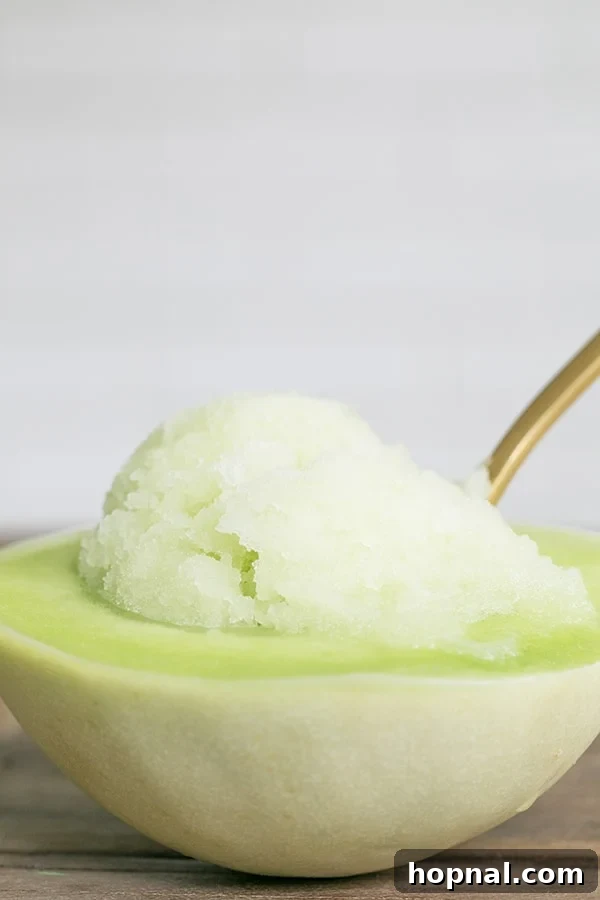
- In Melon Halves: For a truly striking and whimsical presentation, serve the sorbet in hollowed-out honeydew melon halves, just as beautifully pictured in our images. This creates a natural, edible bowl that enhances the theme of the dessert.
- With Fresh Mint: A sprig of fresh mint or a scattering of finely chopped mint leaves can dramatically enhance the refreshing qualities of the melon, adding a burst of cooling aroma and flavor.
- Drizzle of High-Quality Honey: For an extra touch of sweetness and depth, a light drizzle of high-quality local honey or agave nectar just before serving can add another layer of complexity.
- Sparkling Dessert Drink: For an elegant and effervescent adult dessert, place a small scoop of sorbet in a champagne flute and top it with a splash of prosecco, sparkling wine, or even sparkling water for a non-alcoholic option. This creates a delightful and bubbly dessert drink.
- Layered Parfaits: Create beautiful parfaits by layering the honeydew sake sorbet with fresh berries, granola, or a dollop of coconut whipped cream for contrasting textures and flavors.
Exciting Flavor Variations to Try
Don’t hesitate to experiment with the base recipe to discover new favorite flavor combinations:
- Citrus Boost: For an extra zesty kick, add a squeeze of fresh lime or lemon juice to the blend. The acidity will brighten the melon’s sweetness and add a delightful tang.
- Herbal Infusion: For a sophisticated and unexpected twist, blend in a few fresh basil leaves or a tiny bit of rosemary with the honeydew. The herbaceous notes can create a surprisingly harmonious and fragrant sorbet.
- Spice It Up: A tiny pinch of freshly grated ginger or a dash of ground cardamom could add warmth and an intriguing layer of depth to the sorbet, complementing the sake beautifully.
- Other Melons: Feel free to replace honeydew with other complementary melons like cantaloupe or watermelon, or even combine them, for different flavor profiles and colors.
- Tropical Twist: Add a small amount of pineapple or mango to the blend along with the honeydew for a more pronounced tropical flavor experience.
More Refreshing Recipes You’ll Love
If you enjoyed crafting and savoring this unique frozen treat, we encourage you to explore some of our other delightful and refreshing recipes, perfect for any occasion and season:
- Rose Sorbet and Gin Cocktail – An elegant floral and spirited concoction.
- The Most Refreshing Honeydew Margarita Recipe – A vibrant and zesty melon-infused drink.
- Ginger Mango Popsicles – A tropical and spicy frozen delight.
- Easy Watermelon Popsicles – Simple, sweet, and perfectly hydrating for summer.
- Delightful Strawberry Recipes – A collection of sweet treats featuring fresh strawberries.
- The Best Grapefruit Ice – (Consider adding a link here if a recipe is available for SEO and user experience).
We absolutely love hearing from our community! If you make this honeydew sake sorbet or any of our other recipes, please let us know your thoughts and experience by leaving a comment below. Your feedback is invaluable and helps both us and other readers discover new favorites!
Don’t forget to connect with us and discover even more delicious recipes, creative cocktails, tempting desserts, and inspiring party ideas! FOLLOW US on FACEBOOK, INSTAGRAM, and PINTEREST for daily inspiration and updates.