
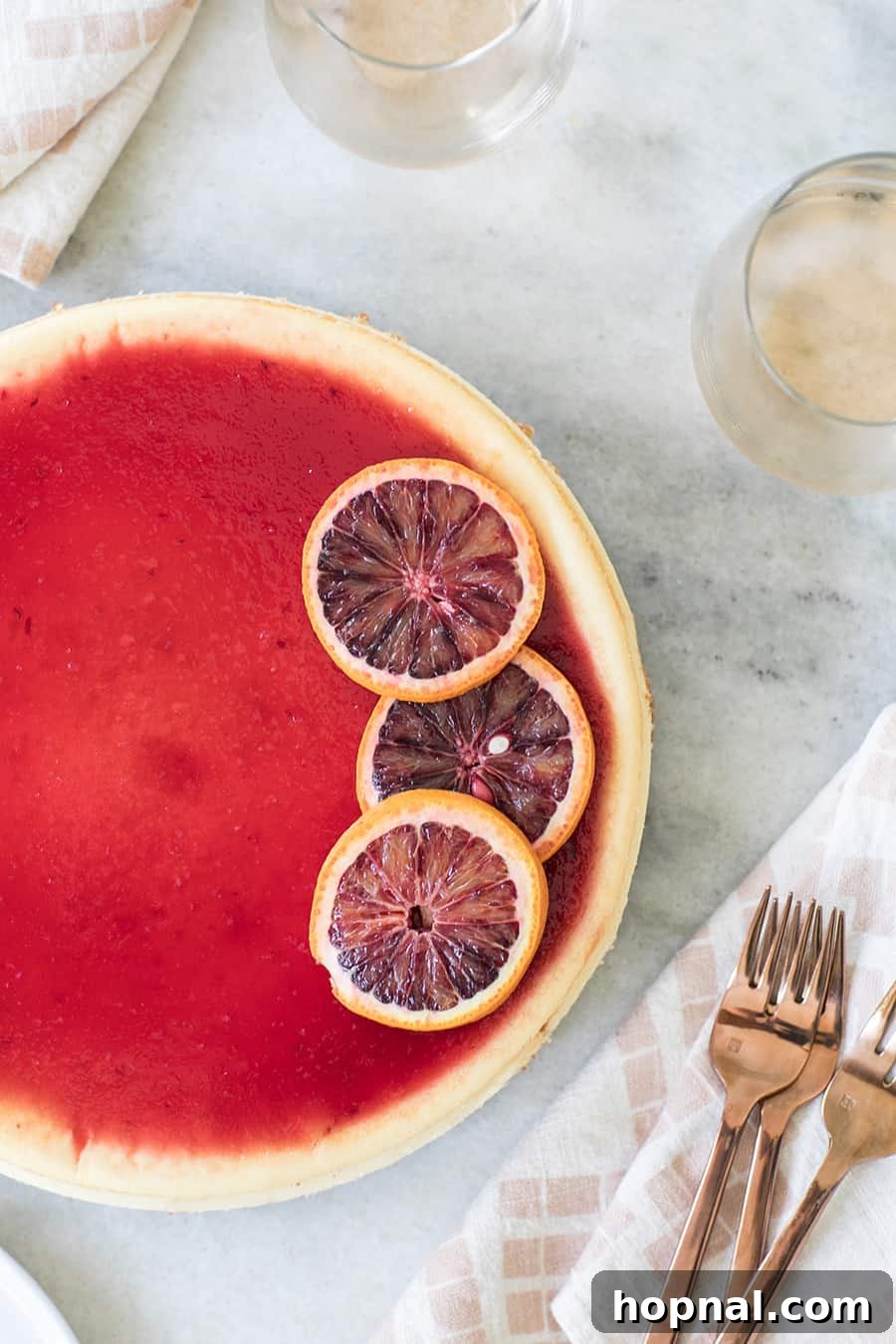
Prepare to be captivated by this stunning Blood Orange Cheesecake recipe! Not only is it a feast for the eyes with its incredibly vibrant hues, but it’s also an explosion of delightful flavors. Blood oranges lend a unique sweet-tart profile and a captivating color to this exceptional cheesecake, elevating a classic dessert into something truly special. While drawing inspiration from our classic cheesecake formula, this version features an irresistible blood orange glaze that makes it absolutely unforgettable.

The moment blood oranges come into season, I’m filled with an undeniable excitement. Their striking, deep red-orange flesh and wonderfully complex flavor profile inspire endless culinary experimentation. I’ve used them to craft everything from elegant appetizers to refreshing cocktails, but this time, a craving for a rich, creamy cheesecake struck, and I instantly knew blood oranges would provide the most beautiful and flavorful topping imaginable.
My go-to cheesecake recipe, lovingly adapted from Dorie Greenspan’s renowned book,Baking, serves as the perfect canvas. It’s incredibly versatile, allowing me to effortlessly tailor it to any flavor whim. This particular cheesecake, with its incredible creaminess and decadent richness, truly never disappoints. It’s consistently a showstopper and a crowd-pleaser at any gathering!

The Allure of Blood Oranges: More Than Just a Pretty Face
Blood oranges are truly a marvel of the citrus world, renowned for their distinctive color and flavor. These captivating fruits originally hail from Sicily and Spain, thriving in the Mediterranean climate. Several popular varieties exist, including Tarocco, Moro (or Morro), and Sanguinello (or Sanguigno), each offering subtle differences in their unique characteristics. While you might frequently hear the term “Sicilian Blood Oranges,” it’s worth noting that these exquisite fruits are now successfully cultivated in various other regions across the globe.
Among the varieties, the ‘Moro’ blood orange stands out as arguably the most visually striking. Its flesh boasts a deep, almost burgundy-red hue, complemented by a rind that often exhibits a bright red blush. Beyond their captivating appearance, Moro blood oranges deliver a more intense flavor and a richer aroma compared to traditional oranges. Their taste is wonderfully distinct, a harmonious blend of sweet and tart with a delightful hint of raspberry, making them an unparalleled choice for both sweet and savory applications.
Incorporating this beautiful fruit into our cheesecake brings a nuanced sweetness and a refreshing tartness that perfectly complements the rich, creamy base. The flavors intertwine beautifully, creating a dessert that is both sophisticated and incredibly satisfying. If you’re looking for a cheesecake that truly stands out, you simply must give this blood orange cheesecake a try!

Crafting the Perfect Cheesecake: Our Go-To Classic Base
This cheesecake recipe isn’t just a recipe; it’s a culinary cornerstone—a classic foundation that offers boundless possibilities for flavor innovation. At its heart, it’s an almost traditional New York-style cheesecake, celebrated for its impressive height and luxurious creaminess. The only traditional element it might be missing is lemon zest, which, of course, can be easily incorporated if you desire that classic bright note.
The beauty of this recipe lies in its versatility and consistent results. The filling is delightfully creamy, achieving that signature smooth texture that defines a truly great cheesecake. For the crust, graham crackers provide a beloved, crumbly base that many adore. However, if you’re preparing this dessert for a special occasion like a Passover meal, you have the flexibility to easily omit the crust entirely or substitute it with macaroon crumbs for a gluten-free option.
When it comes to the dairy in the filling, you have a choice between sour cream and heavy cream, each yielding a slightly different character. Sour cream imparts a distinctive tang, reminiscent of the bolder flavor profile found in many authentic New York cheesecakes. Heavy cream, on the other hand, results in a milder, perhaps even richer, and undeniably silky texture. Whichever you choose, this adaptable base recipe proves to be absolutely perfect for showcasing the bright, zesty flavors of our blood orange cheesecake.

Essential Tips for Cheesecake Success
Achieving a perfectly smooth, crack-free cheesecake is easier than you think with these expert tips:
- Finely Ground Crust: For a uniform and well-bound crust, use a food processor to achieve extra fine graham cracker crumbs. This ensures a consistent texture and prevents the crust from being too coarse.
- Room Temperature Ingredients: This is a golden rule for cheesecake. Ensure your cream cheese and eggs are at room temperature. This allows them to blend smoothly and incorporate air evenly, resulting in a lump-free, silky batter and a consistently creamy final texture.
- Preheated Oven: Always start with a properly preheated oven. An accurately preheated oven ensures even baking from the moment your cheesecake goes in, which is crucial for preventing uneven cooking and cracks.
- The Water Bath Technique: This is arguably the most vital tip for a flawless cheesecake. Completely wrap the bottom of your springform pan with heavy-duty aluminum foil to prevent water from seeping in. Then, bake the cheesecake in a larger roasting pan filled with boiling water. The steam from the water bath creates a moist baking environment, promoting even cooking and significantly reducing the risk of cracks on the surface. We provide more detailed instructions below.
- Gentle Mixing: Overmixing cheesecake batter can incorporate too much air, leading to a “soufflé-like” rise and subsequent fall, often resulting in cracks. Mix until just combined and smooth.
- Gradual Cooling: After baking, turn off the oven and prop the door open slightly with a wooden spoon. Allow the cheesecake to cool gradually in the warm oven for about an hour. This slow temperature transition helps prevent sudden shrinking and cracking.
What is the best temperature to bake a cheesecake?
For most cheesecakes, including this blood orange delight, a baking temperature of 325 degrees Fahrenheit (160 degrees Celsius) is ideal. This moderate temperature, combined with the water bath, ensures a slow, gentle bake that prevents the edges from cooking too quickly while the center remains underdone, contributing to a beautifully smooth and evenly set cheesecake.
What kind of cheese is used for cheesecake?
The vast majority of modern cheesecakes, particularly the creamy, rich New York-style varieties, are made with full-fat cream cheese. Cream cheese provides the signature tangy flavor and incredibly smooth texture that cheesecake lovers adore. However, depending on the specific type of cheesecake you’re aiming for, other cheeses can be incorporated. For instance, some recipes call for ricotta cheese to create a lighter, more cake-like texture, while we’ve even experimented with goat cheese in certain savory or unique dessert cheesecakes to introduce a distinct flavor profile. The key to the irresistible creaminess in any cheesecake primarily comes from the judicious use of cream cheese and often, heavy cream.

Discover More Delicious Cake Creations
If you’re a fan of rich, decadent desserts, be sure to explore some of our other beloved cake recipes:
- Ricotta Cheesecake: A lighter, airy alternative with a delicate texture.
- Chocolate Peanut Butter Cheesecake: The ultimate indulgence for chocolate and peanut butter lovers.
- Goat Cheese Cheesecake: A uniquely flavorful cheesecake with a sophisticated tang.
- No-Bake Cheesecake Recipe: A quick and easy option for when you need a delicious dessert without turning on the oven.
- Orange Ricotta Cake: Another fantastic citrus and ricotta combination, perfect for a lighter treat.
We absolutely love hearing from you! If you’ve tried this delightful blood orange cheesecake recipe, please take a moment to rate it and share your experience in the comments section below. Your feedback and beautiful creations truly inspire us!
You can also FOLLOW US on FACEBOOK, INSTAGRAM, and PINTEREST to discover even more delicious recipes, creative cocktails, tempting desserts, and inspiring party ideas!

Blood Orange Cheesecake Recipe
By: Eden
This blood orange cheesecake is as delicious as it is beautiful. Blood oranges add a lovely tang and vibrant color to this classic cheesecake!
Average Rating: 4.78 from 9 votes
Prep Time: 20 minutes
Cook Time: 1 hour 10 minutes
Chill Time: 4 hours
Total Time: Approximately 5 hours 30 minutes (including chilling)
Servings: 10 servings
Pin Recipe | Rate Recipe | Print Recipe
Ingredients
Cheesecake Filling (ADAPTED FROM DORIE GREENSPAN BAKING)
- 4 (8 ounce) boxes of cream cheese, room temperature (must be room temp)
- 1⅓ cups granulated sugar
- ½ teaspoon salt
- 2 teaspoons vanilla extract
- 4 large eggs, room temperature
- 1⅓ cups heavy cream
Graham Cracker Crust
- 3 ½ cups graham cracker crumbs, you can use a small food processor to make the crumbs even finer
- 6 tbsp granulated sugar
- 1 tsp salt
- ½ cup unsalted butter, melted
Blood Orange Glaze
- ¾ tsp unflavored gelatin
- 10 tbsp fresh squeezed blood orange juice
- 2 tbsp granulated sugar
- ¼ tsp cornstarch
Instructions
Graham Cracker Crust Instructions
- In a bowl, combine graham crackers, sugar, and salt, stirring well. Add the melted butter and mix until thoroughly combined.
- Press the mixture evenly into the bottom of a buttered, round springform pan (this is essential for easy removal).
- Wrap aluminum foil tightly around the bottom exterior of the pan to prevent water from entering during the water bath. Bake the crust for 10 minutes in a 350°F (175°C) oven.
Cheesecake Filling Instructions
- Reduce oven temperature to 325°F (160°C). Boil water in a kettle for the water bath later.
- In a large mixing bowl, beat room temperature cream cheese on medium speed for about 4 minutes until it’s light and fluffy. Be sure to frequently scrape down the sides and bottom of the bowl to eliminate any clumps of cheese.
- With the mixer still running, gradually add the granulated sugar and salt. Continue to beat for another 4 minutes until well incorporated and smooth.
- Beat in the vanilla extract. Add the eggs one at a time, beating just until fully incorporated after each addition. Avoid overmixing once the eggs are in.
- Reduce the mixer speed to low and gently fold in the heavy cream until just combined.
- Pour the cheesecake batter over the pre-baked graham cracker crust, leaving a small amount of space at the top of the pan to allow for the cheesecake to rise slightly during baking.
- Carefully place the foil-wrapped springform pan into a larger roasting pan. Pour boiling water into the roasting pan, ensuring it reaches halfway up the sides of the springform pan, creating a beneficial water bath environment.
- Bake for 1 hour, or until the top of the cheesecake appears lightly golden brown and the edges are set but the center still has a slight jiggle. Turn off the oven, prop the door open with a wooden spoon, and allow the cheesecake to cool gradually in the oven for another hour.
- Remove the cheesecake from the oven and water bath. Let it cool completely at room temperature, then transfer it to the refrigerator to chill for at least 4 hours, or preferably overnight, to allow it to fully set.
Blood Orange Glaze Instructions
- In a small bowl, sprinkle the gelatin over 2 tablespoons of the blood orange juice. Let it sit for 5-10 minutes until it softens and blooms.
- In a small saucepan, bring the granulated sugar and 4 tablespoons of blood orange juice to a boil over medium heat, stirring until the sugar dissolves.
- In a separate small bowl, whisk together the remaining 4 tablespoons of blood orange juice and the cornstarch until the cornstarch is fully dissolved and there are no lumps.
- Gradually whisk the cornstarch mixture into the boiling orange juice in the saucepan. Cook, stirring constantly, until the mixture thickens slightly.
- Remove the saucepan from the heat. Stir in the softened gelatin until it completely dissolves into the hot glaze.
- Allow the glaze to cool to a lukewarm temperature, ensuring it’s still pourable but not hot. Carefully pour the glaze evenly over the chilled cheesecake before it sets. Return the cheesecake to the refrigerator for at least 30 minutes to allow the glaze to fully set.
Nutrition
Nutrition information is automatically calculated, so should only be used as an approximation.
- Calories: 819kcal
- Carbohydrates: 67g
- Protein: 12g
- Fat: 57g
- Saturated Fat: 32g
- Cholesterol: 252mg
- Sodium: 894mg
- Potassium: 270mg
- Fiber: 1g
- Sugar: 48g
- Vitamin A: 2125IU
- Vitamin C: 9mg
- Calcium: 152mg
- Iron: 2mg
Like this recipe? Leave a comment below!
Your feedback helps us create more delicious content for you.