

Embark on a culinary journey to the emerald isle and discover the heartwarming tradition of **Irish Soda Bread**! Imagine learning to bake this classic, four-ingredient staple from the comfort of a charming, thatched-roof cottage nestled in the picturesque landscapes of Northern Ireland. This authentic **homemade Irish soda bread recipe** is not just about combining ingredients; it’s about connecting with centuries of Irish heritage, a delicious tradition passed down through generations. Get ready to create a truly delicious loaf that embodies the spirit of Ireland.

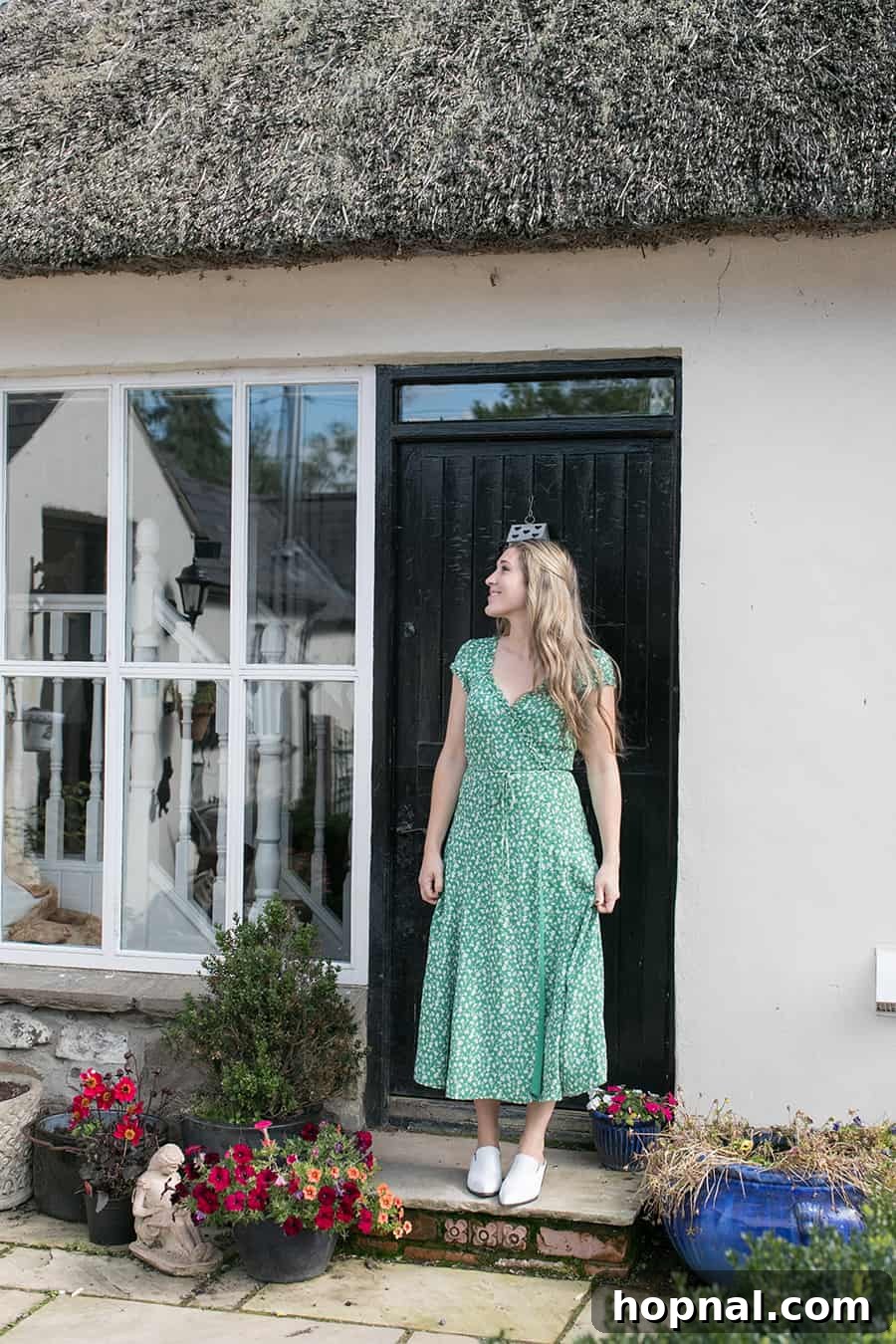
Our recent visit to an utterly adorable cottage in Northern Ireland proved to be an unforgettable immersion into local culture and cuisine. Our gracious hostess, Tracey, opened her home to us – a cozy haven she shares with her husband and two boys. The experience of baking **traditional Irish Soda Bread** right there in Ireland was nothing short of incredible, offering a genuine taste of rural Irish life.
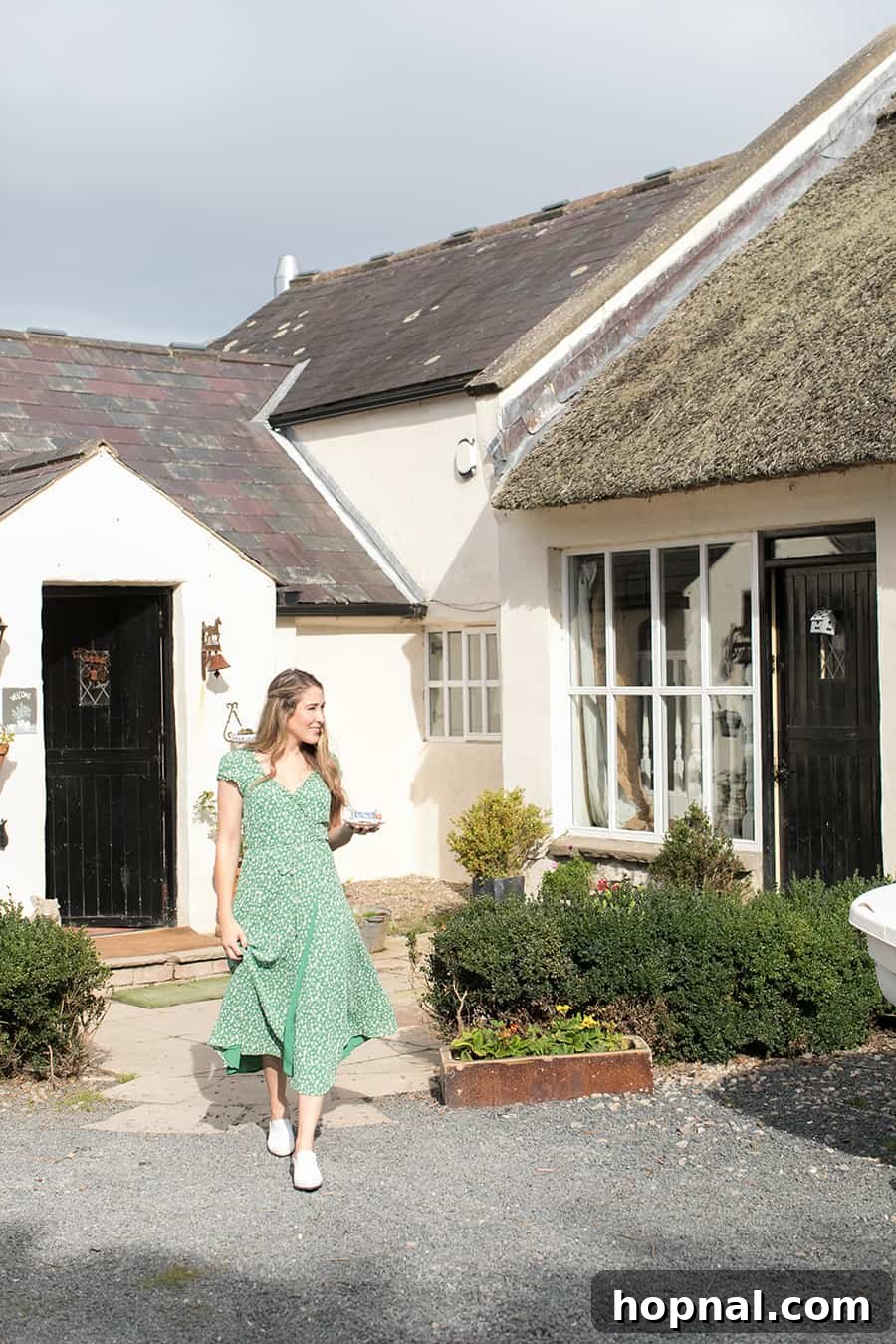
The scenery was precisely what one would envision: an enchanting tapestry of rolling green hills and fertile farmland extending towards the rugged Irish coast. In this idyllic setting, we were taught the remarkably simple method for making authentic Irish Soda Bread. This humble bread is a daily essential in Tracey’s home, served with main meals, as a comforting breakfast accompaniment, or even topped with a fried egg. Its versatility and satisfying texture make it a beloved component of the Irish diet.
The Enduring Charm of Traditional Irish Soda Bread
The beauty of **Traditional Irish Soda Bread** lies in its profound simplicity and accessibility. Requiring just four basic ingredients – flour, baking soda, salt, and buttermilk – it’s a testament to resourceful and delicious baking. For thousands of years, this bread has been a cornerstone of Irish households, a reliable and affordable food source that has nourished families through good times and hard times.

Historically, its low cost made it an ideal daily bread, ensuring that even the most modest families could fill their bellies with something hearty and nutritious. Many rural Irish farmhouses lacked conventional ovens, leading to the ingenious method of baking the bread on a griddle over an open fire or stovetop. This practical approach further cemented its place in Irish culinary lore.
Interestingly, the preparation of Irish Soda Bread varies slightly between the North and South of Ireland. In the Republic of Ireland (the South), it’s common to find a single, large round loaf. However, in Northern Ireland, where our baking lesson took place, the tradition leans towards creating flatter, round discs, which are then typically cut into four pieces, often referred to as “farls.” Both methods yield equally delicious results, showcasing the rich regional diversity within Irish baking.
Mastering the Art of Making Irish Soda Bread: A Hands-On Approach
One of the most fascinating revelations from our Northern Irish baking class was learning that there isn’t a single, rigid written recipe for crafting authentic Irish Soda Bread. Instead, it’s an art form passed down through tactile experience, focusing on the perfect balance of the four core ingredients and, crucially, the texture. The process is intuitive, guided by how the dough feels in your hands, a skill honed through practice and familiarity. Don’t worry if your first attempt isn’t perfect; you’ll quickly get the hang of it!
So, how do you begin your journey to baking this wonderful bread? Let’s break it down:
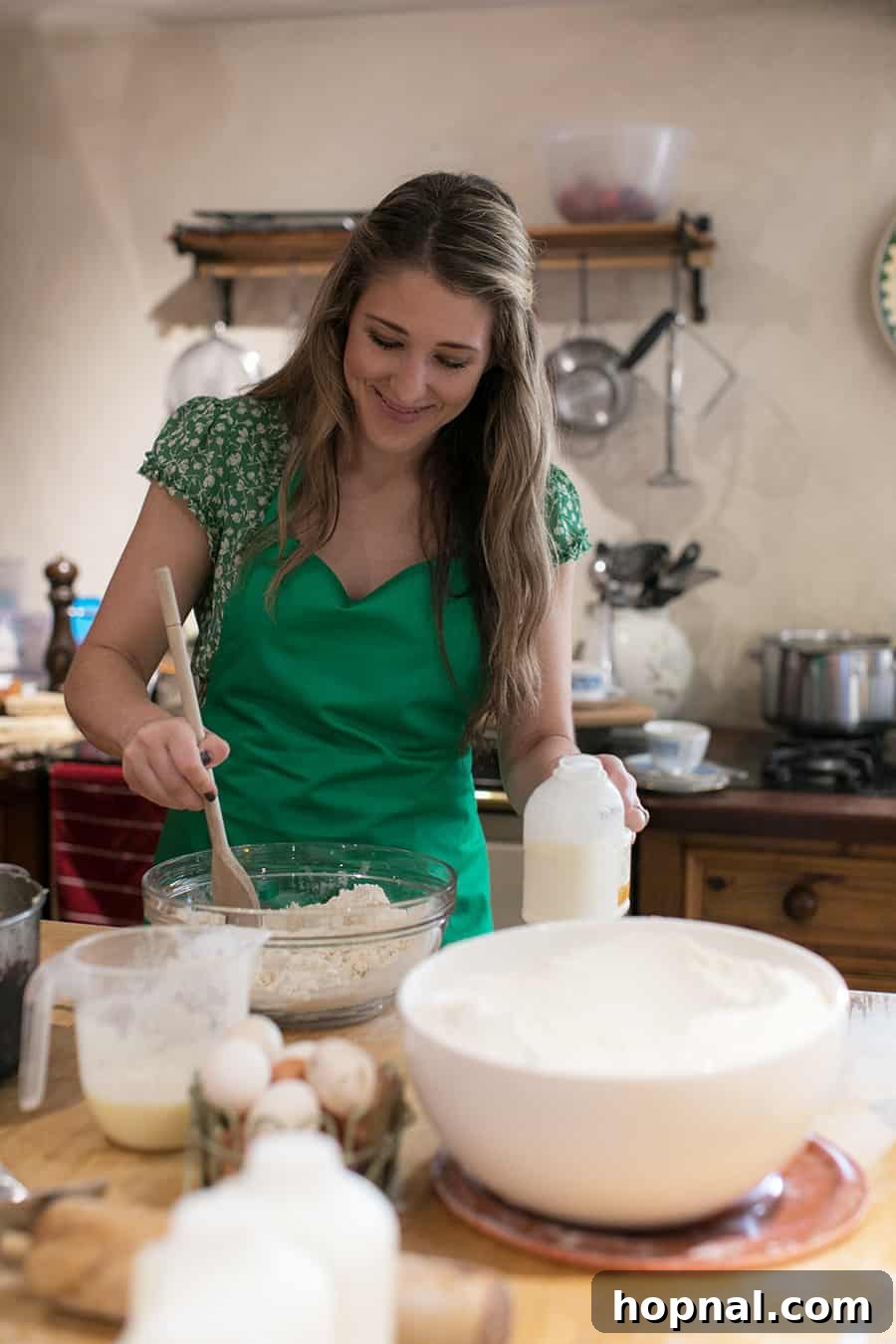
- **Start with the Dry Ingredients:** Begin with approximately 2 cups of good quality all-purpose flour. To this, add about 2 teaspoons of baking soda. A useful rule of thumb is roughly 1 teaspoon of baking soda per 150 grams of all-purpose flour. Toss in about 1/2 a teaspoon of salt for flavor balance, then give the dry ingredients a thorough stir with a wooden spoon to ensure even distribution.
- **Introduce the Buttermilk:** Create a well, or a “hole,” in the center of your flour mixture. Gradually pour in a generous amount of good quality, full-fat buttermilk into this well. Buttermilk is key; its acidity reacts with the baking soda to create the leavening effect, giving the bread its characteristic rise and tender crumb.
- **Mix and Achieve the Right Consistency:** Using your wooden spoon, gently mix the ingredients from the center outwards. The goal is a thicker consistency that isn’t overly sticky. You’re aiming for a dough that feels light and airy, not dense or wet. If the dough is too sticky, add a little more flour, a tablespoon at a time. If it’s too dry, incorporate a splash more buttermilk. Trust your instincts here – it’s all about feeling the texture.
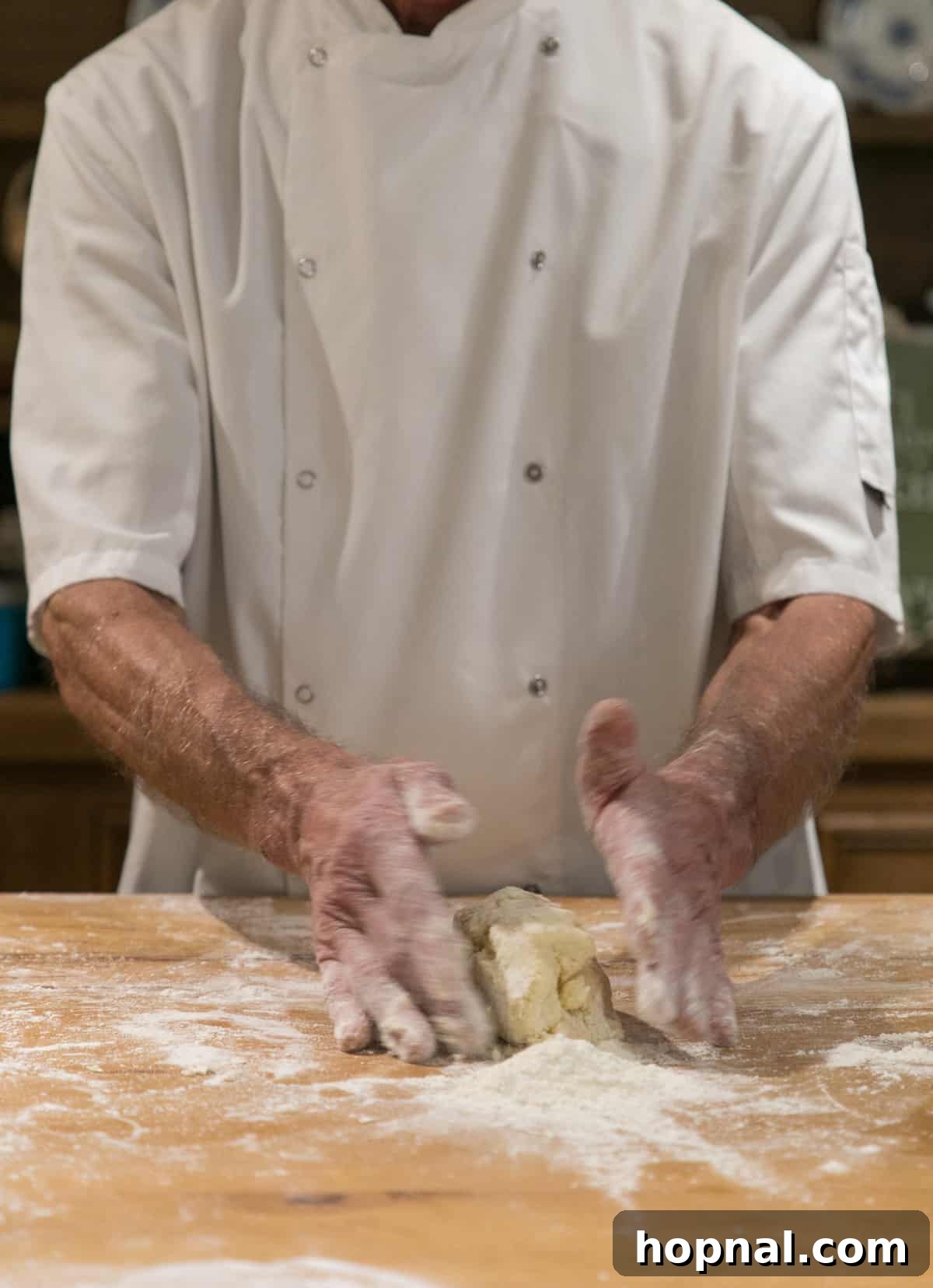
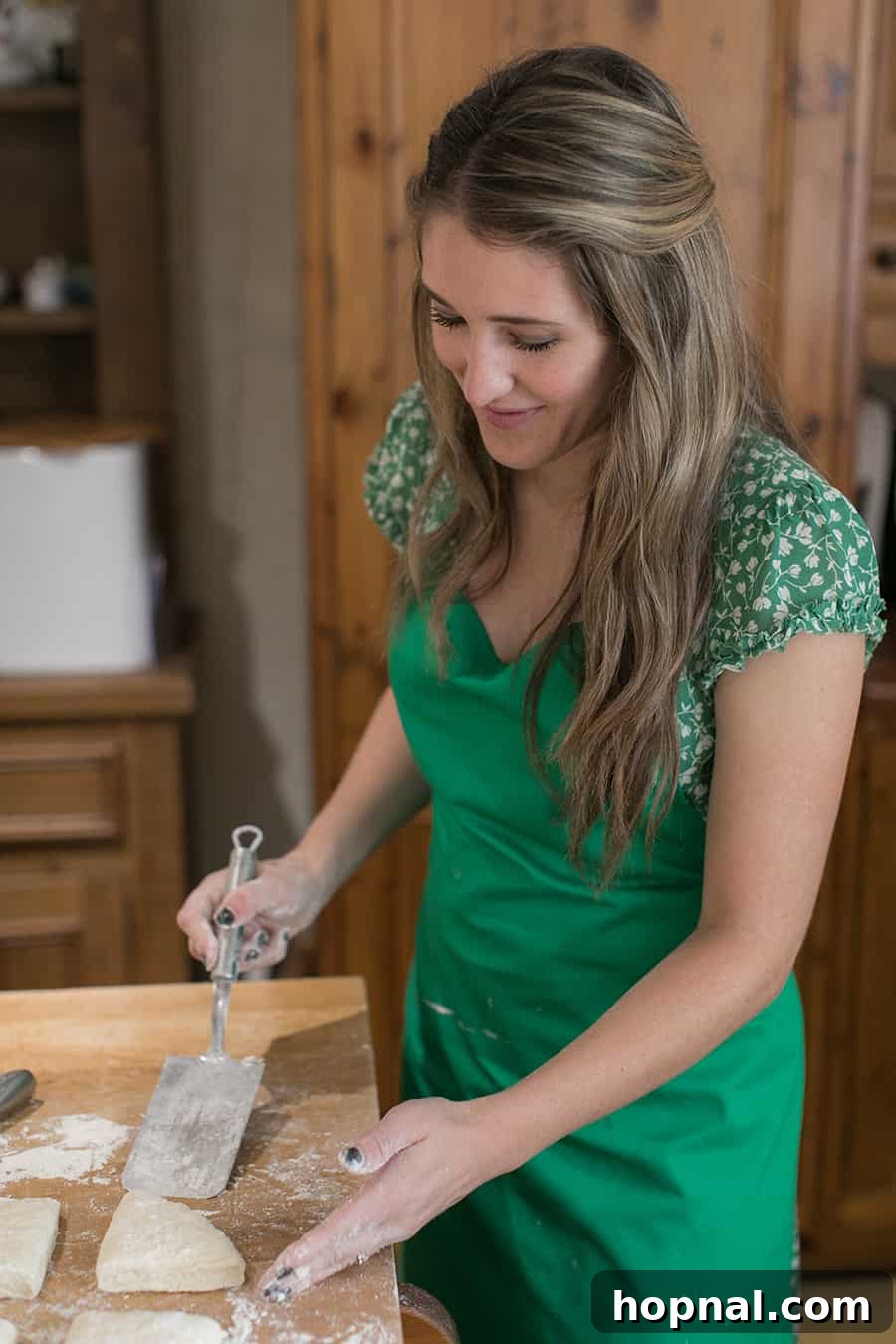
- **Light Kneading and Shaping:** Once your dough reaches the desired texture, lightly flour a flat surface and transfer the dough onto it. The kneading process for soda bread is very gentle and minimal, unlike yeast breads. Simply toss the dough around lightly, just enough to ensure it’s no longer sticky, and then form it into a round ball.
- **Forming the Disc:** Gently flatten the dough ball and roll it out slightly until it forms a round disc, approximately 2 inches thick. This is the traditional shape for Northern Irish soda bread.
- **Cutting the Farls:** Using a knife, carefully cut the disc into four equal pieces, creating what are known as “farls.” This shape is perfect for cooking on a griddle and serving.
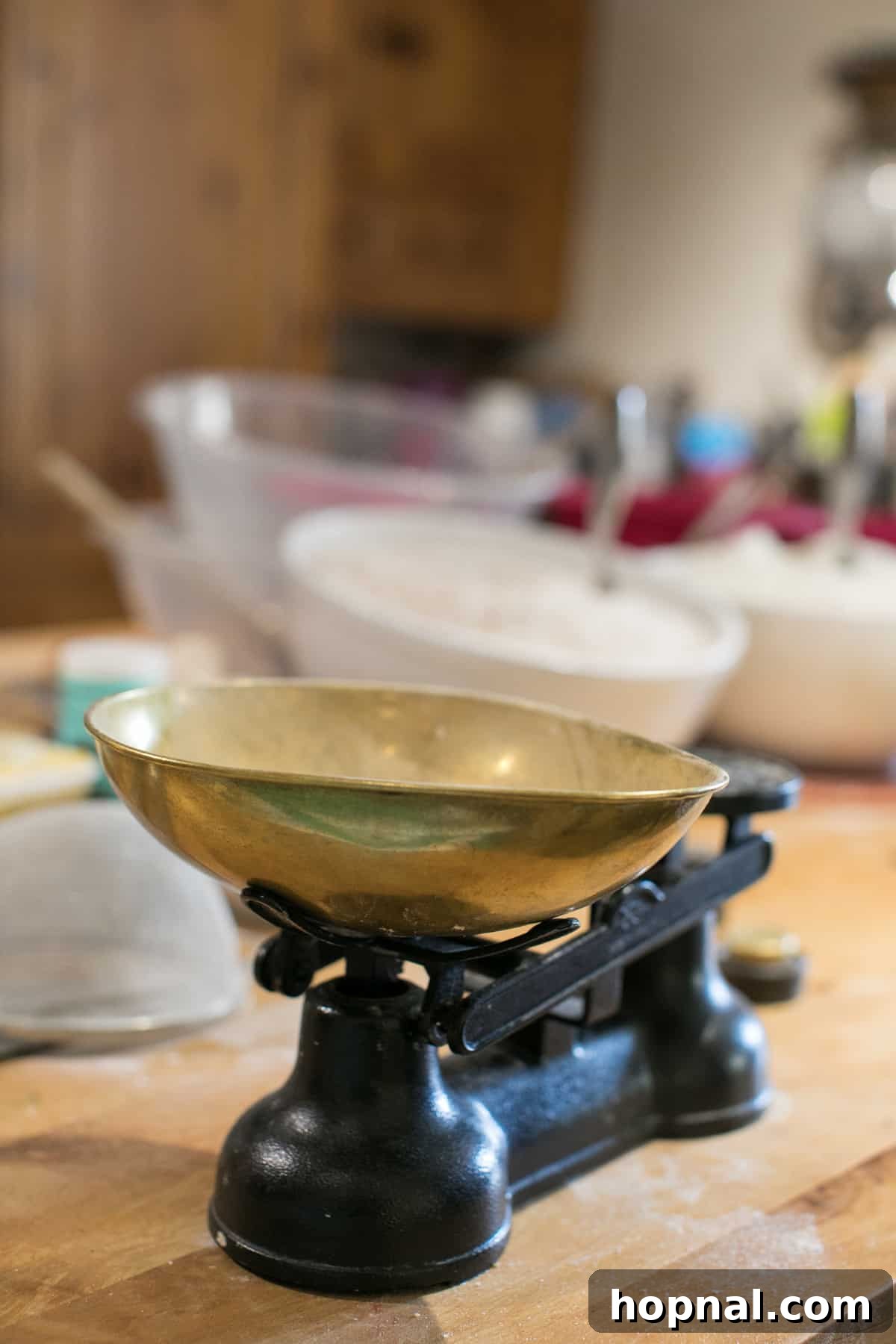
- **Cooking on the Griddle:** Place the cut farls onto a hot griddle. Tracey uses a griddle similar to this one, which works exceptionally well and is also fantastic for making Irish potato bread. Allow the bread to cook on one side until it begins to rise and brown slightly.
- **Sealing and Browning:** Once risen, turn each piece over to brown evenly on all sides, effectively “sealing” the bread and ensuring a cooked interior. You can also achieve excellent results using a cast-iron griddle or heavy-bottomed pan on a stovetop. The goal is a golden-brown exterior and a thoroughly cooked, dense interior. Enjoy it while it’s warm!

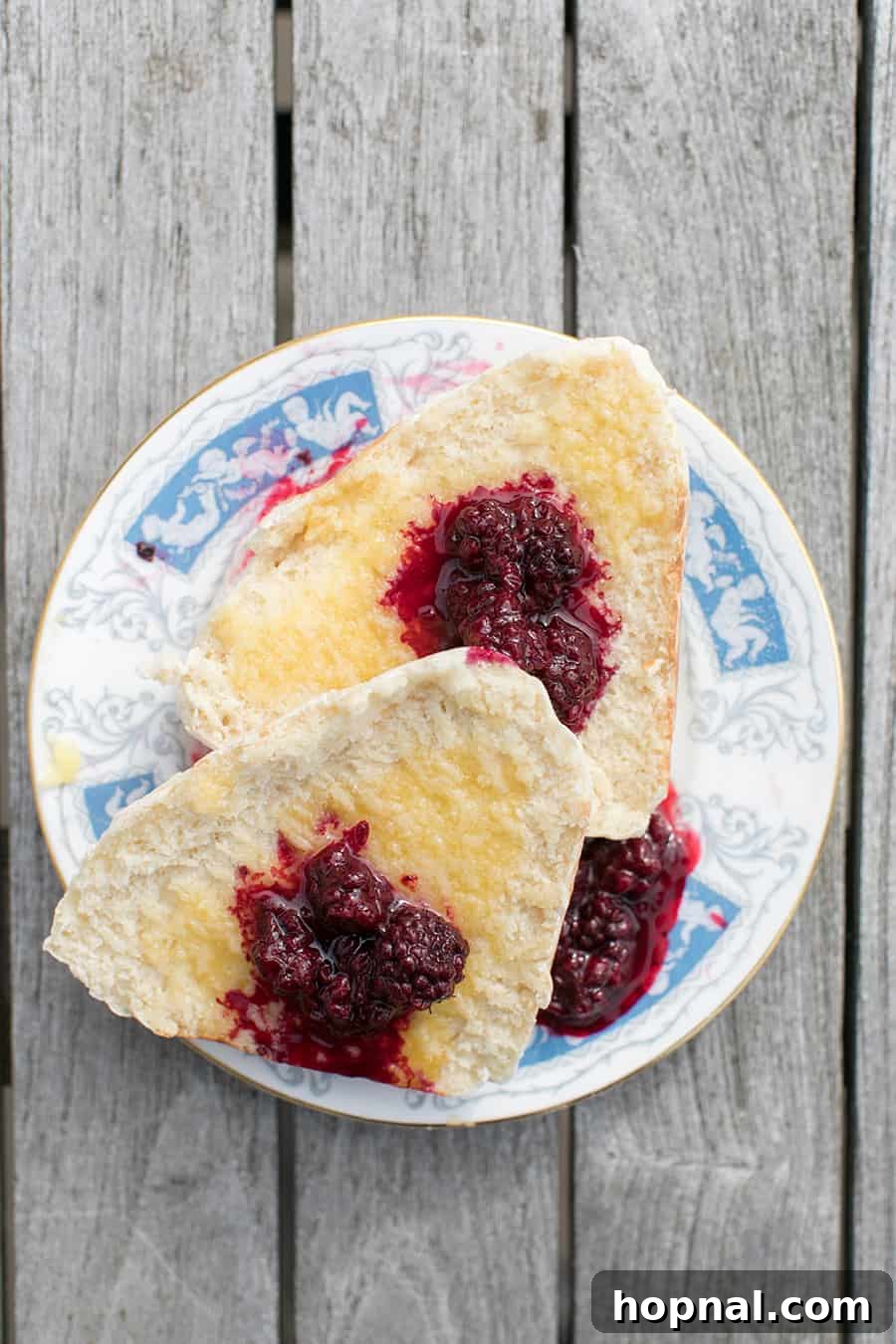
The resulting texture of Irish Soda Bread is intentionally dense yet wonderfully tender. It’s truly at its best when served warm, generously slathered with creamy butter and your favorite homemade jam. This simple pairing highlights the bread’s mild flavor and comforting qualities.
Can You Freeze Irish Soda Bread?
Absolutely! Irish Soda Bread freezes beautifully, making it an excellent option for meal prep or enjoying a taste of Ireland anytime. To freeze, ensure the bread has completely cooled. Then, wrap it tightly in plastic wrap, followed by a layer of aluminum foil, to prevent freezer burn. It can be stored in the freezer for up to 3 months. When you’re ready to enjoy it, simply thaw at room temperature and warm gently in an oven or on a griddle for a few minutes to restore its fresh-baked appeal.
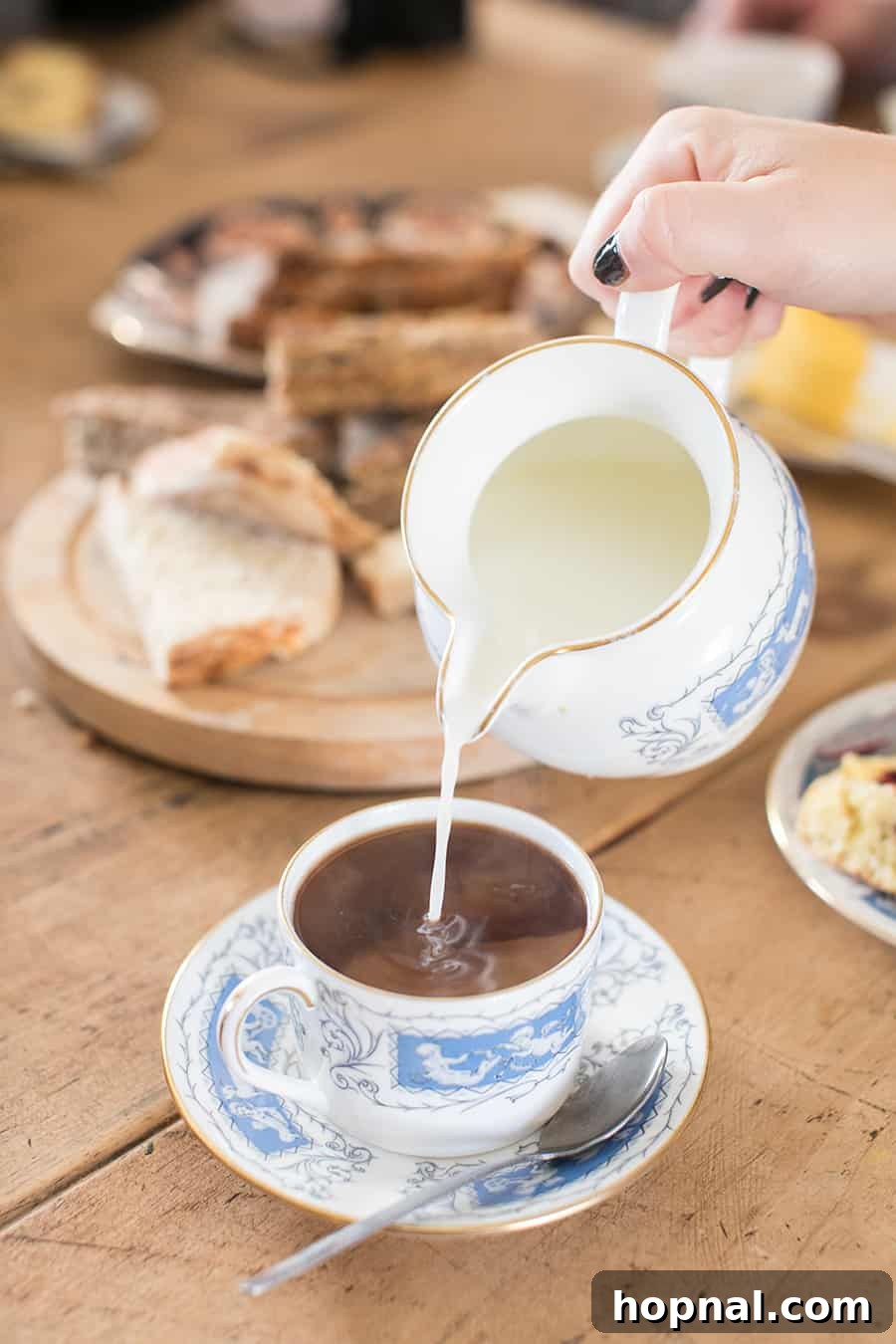
Tracey’s hospitality extended beyond the baking lesson; she had endless hot coffee and tea ready for us, making our cooking class an incredibly cozy and welcoming experience. It’s these personal touches that truly define Irish charm.
What Does Irish Soda Bread Taste Like?
Irish Soda Bread offers a unique flavor profile that some describe as similar to a classic American biscuit, but with its own distinct character. It boasts a mild, slightly tangy flavor from the buttermilk, which is balanced by the salt. Its texture is famously dense yet soft and moist, with a slightly crumbly quality. It’s not heavily sweetened and is primarily intended to be a vehicle for other delicious toppings. This bread truly shines when paired with rich butter, sweet jam, or alongside savory dishes, as its mildness allows accompanying flavors to stand out.
Is Irish Soda Bread Really Irish?
Without a doubt, yes! Irish Soda Bread is deeply ingrained in Irish culture and culinary tradition. Its origins trace back to resourceful baking practices born out of necessity. Using readily available and inexpensive ingredients, it provided essential nutrients and a satisfying meal for countless families, particularly those facing economic hardship. The tradition has been lovingly passed down through generations, making it a true emblem of Irish heritage. As we discovered, it’s less about a precise written recipe and more about the intuitive understanding of basic ingredients and the feel of the dough in your hands – a knowledge cultivated over a lifetime of baking.
How Do You Eat Irish Soda Bread?
Irish Soda Bread is incredibly versatile and can be enjoyed in many delightful ways. The most classic method is to slice it in half and generously spread it with butter and a dollop of homemade jam. It’s also a fantastic accompaniment to a hearty Irish stew or a comforting bowl of soup on a chilly day. For breakfast, try it toasted with a fried or scrambled egg. Some even enjoy it with cheese and cold cuts for a light lunch. Its robust nature makes it an excellent side for almost any meal.
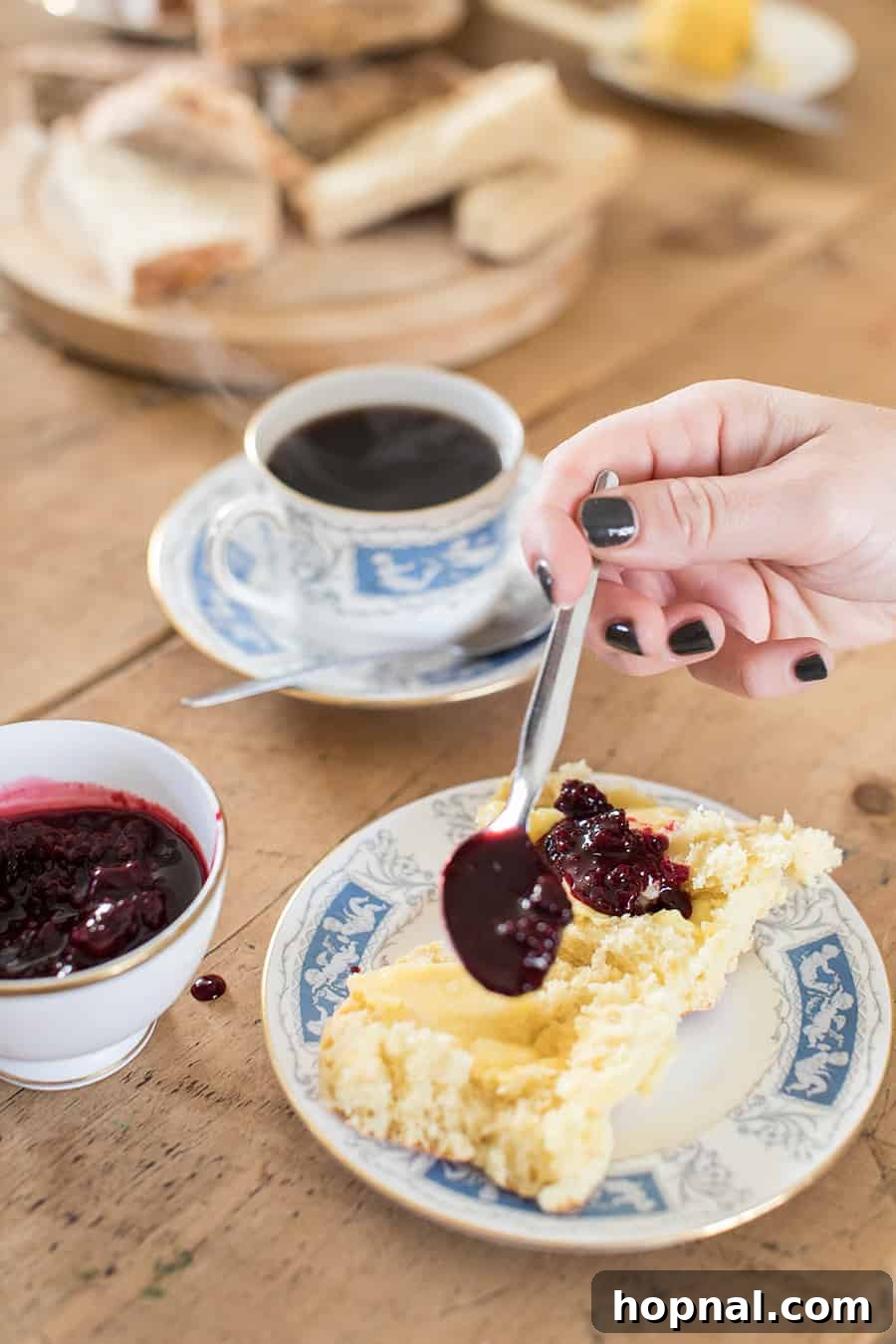
To complement our freshly baked bread, Tracey also prepared an array of homemade jams for us to sample. They were absolutely delicious and paired perfectly with the warm, comforting slices of our Irish Soda Bread, elevating the entire tasting experience.
Tracey’s Berry-Infused Gin: A Taste of Irish Spirit
As our wonderful day in the cottage drew to a close, Tracey offered a special treat: a sample of her homemade berry-infused gin. This exquisite spirit had been infusing for two years, a true labor of love! Her secret recipe? Roughly 3/4 gin, 1/4 sugar, and a few handfuls of berries – what we in America would typically call blueberries. It was a delightful and unique end to a perfect day, reflecting the warmth and generosity of Irish hospitality.
If you’re inspired to experience a culinary class like this, you can find more information on Tracey’s website (please insert Tracey’s website link here if available to guide curious visitors).

Explore More Delicious Recipes
If you enjoyed this taste of traditional Irish baking, we invite you to explore more delightful recipes that will charm your palate:
- The Classic Benedictine Cocktail
- Refreshing Green Irish Whiskey Sangria
- Irresistible Homemade Cinnamon Rolls
We absolutely love hearing from you! If you make this wonderful **traditional Irish soda bread**, please share your thoughts and experiences by leaving a comment and review below. Your feedback means the world to us!
For more delicious recipes, inspiring cocktails, decadent desserts, and party ideas, be sure to FOLLOW US on FACEBOOK, INSTAGRAM, and PINTEREST!

Irish Soda Bread
Print Recipe
Equipment
-
Griddle
Ingredients
- 2 cups all-purpose flour
- 2 tsp baking soda, It’s about 1 teaspoon baking soda per 150 grams of all-purpose flour.
- 1/2 tsp salt
- 3/4 cup buttermilk , full-fat buttermilk
Instructions
-
In a mixing bowl, combine the all-purpose flour and baking soda.
-
Add the salt and stir well with a wooden spoon to evenly distribute.
-
Form a well in the center of the dry ingredients and pour in the good quality buttermilk.
-
Using the wooden spoon, mix from the center outwards until the dough forms a thick, but not overly sticky, consistency. You’re aiming for a light, airy dough ball.
-
Adjust the texture as needed by adding a little more flour if too sticky, or a splash more buttermilk if too dry.
-
Lightly flour a flat surface. Transfer the dough and gently knead it just enough so it’s no longer sticky, then roll it into a ball.
-
Flatten the dough ball and roll it out slightly into a round disc, about 2 inches thick.
-
Cut the disc into 4 pieces (farls) and place them on a hot griddle. A griddle similar to this works wonderfully, and is also great for Irish potato bread!
-
Cook on the griddle until the bread rises and begins to brown. Then, turn each piece to brown on all sides, cooking until thoroughly done. Serve warm and enjoy!
Notes
The key is balancing the four ingredients to achieve the correct texture. Don’t hesitate to add a little more flour or buttermilk as needed until the dough feels right in your hands. You’ll master it after a few attempts.
Nutrition (per serving)
Nutrition information is automatically calculated and should be used as an approximation.
Like this? Leave a comment below!