
Embark on a captivating journey through the diverse and delightful world of wine! Whether you’re a curious beginner or a seasoned enthusiast, navigating the vast array of wine types can be an enriching experience. With over a thousand different wine grape varieties cultivated globally, the choices truly are endless, often making a trip to the wine aisle feel a little overwhelming. But fear not, this comprehensive guide, complete with an easy-to-understand types of wine chart, is designed to demystify the major varieties and equip you with the knowledge to select and savor your next bottle with confidence.
Wine has long been celebrated as a beverage that brings people together, enhances meals, and marks special occasions. Its popularity is undeniable, with statistics showing that approximately 30% of adult drinkers prefer wine over other alcoholic beverages. This guide aims to transform your casual sips into informed sips, helping you understand not only what you’re drinking but also how to pair it perfectly with your favorite dishes.
Your Essential Types of Wine Chart
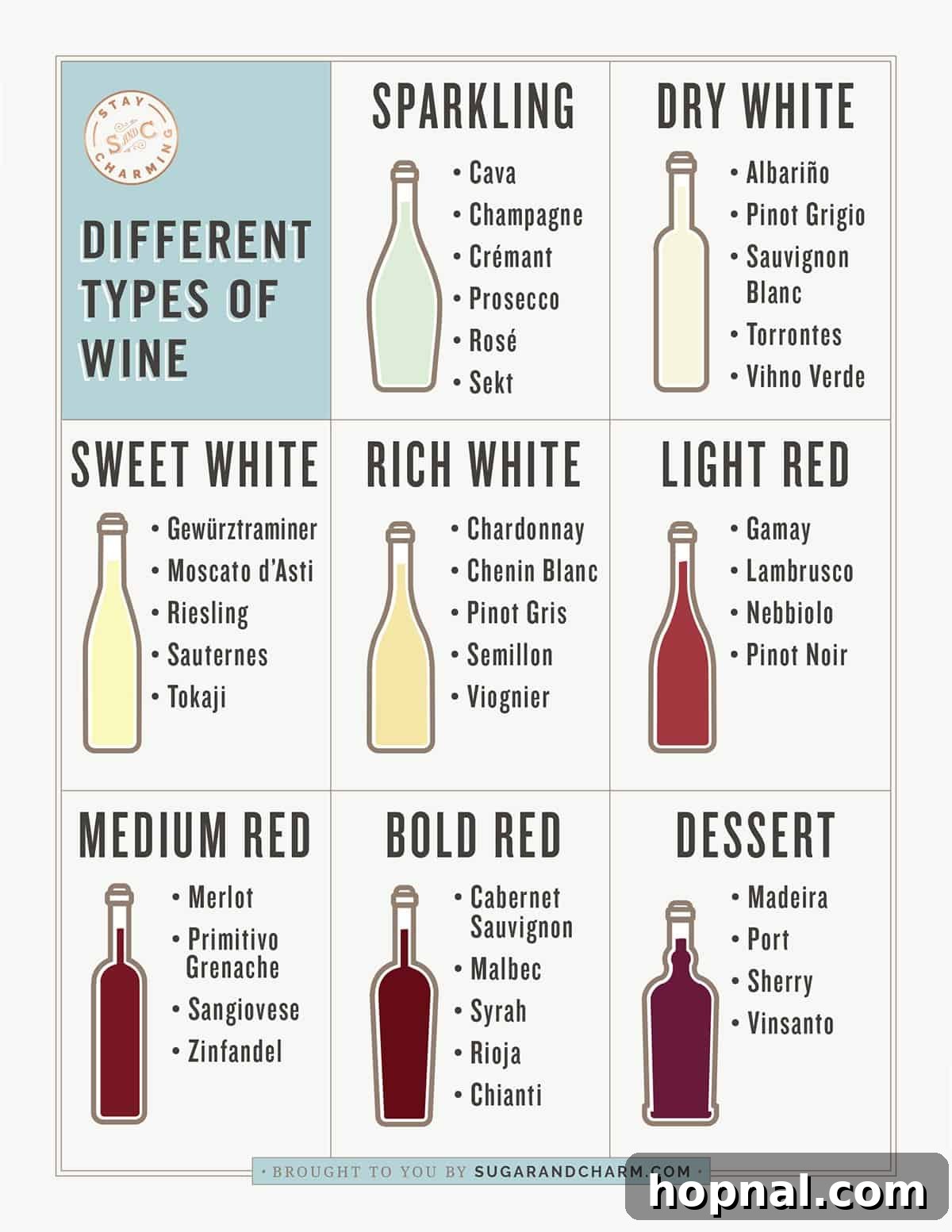
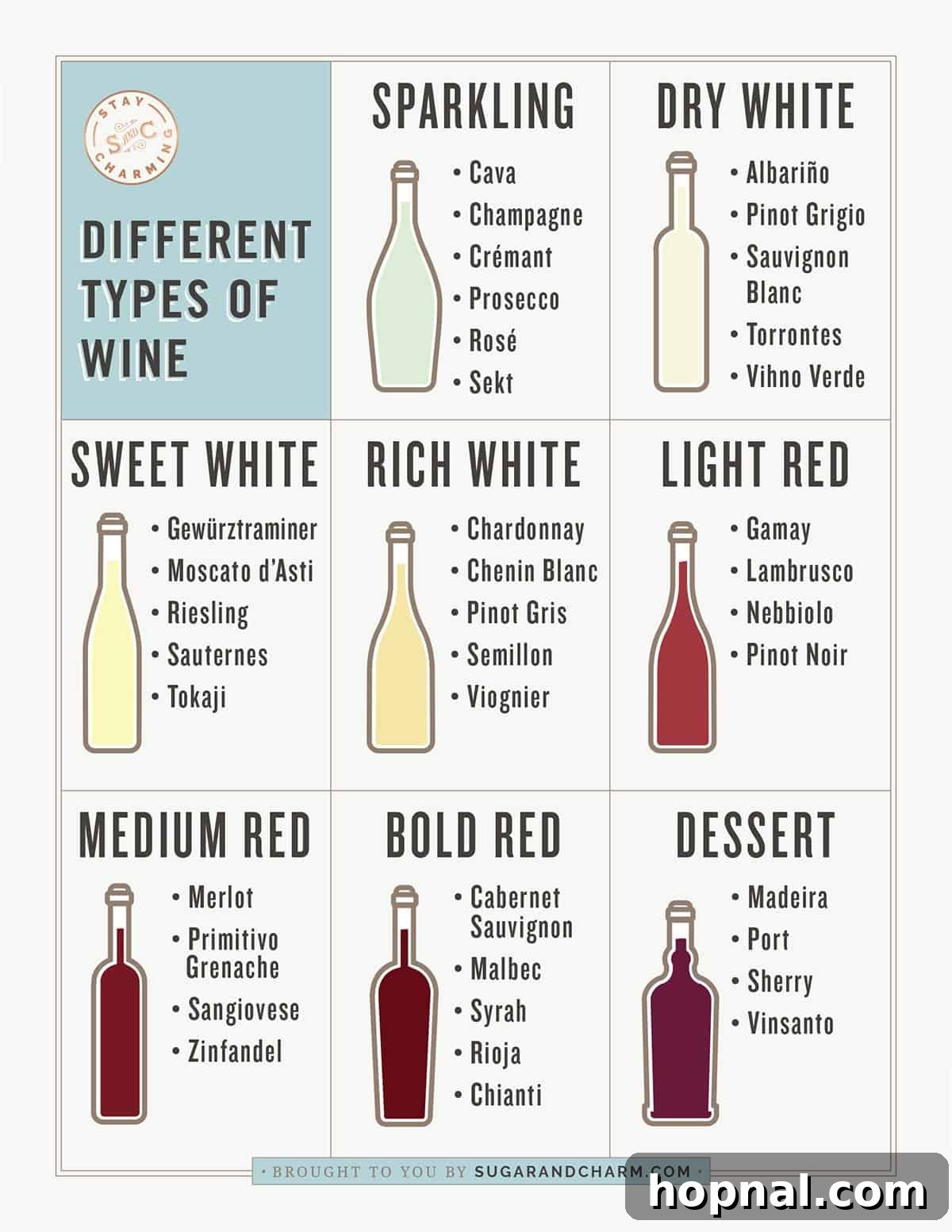
To provide a quick and insightful overview, we’ve created a concise chart detailing the primary wine categories and their key characteristics. We highly recommend saving this chart for easy reference whenever you need a quick glance at different wine types and their attributes.
Beyond this initial overview, we’ll dive deeper into the fascinating world of fermented grape juice, offering practical insights that will empower your next wine selection. Planning a wine and cheese dinner party? Or perhaps you’re looking for expert advice on serving wine, covering everything from appropriate glassware and ideal serving temperatures to proper pour sizes. Don’t forget to check our guide on how many ounces are in a bottle of wine for more details on wine bottle sizes and precise pours. Now, let’s uncork the mysteries of wine!
Exploring the Primary Types of Wine
While the sheer number of wine varieties is staggering, almost all wines can be broadly categorized into a few fundamental types. Understanding these main classifications is the first step to becoming a more discerning wine lover. Let’s explore them:
Red Wines: Bold, Complex, and Inviting
Red wine, celebrated for its rich color and robust flavors, is crafted from dark-skinned grape varieties. The distinct red hue, along with characteristic tannins and fruit-forward profiles, stems from the fermentation process where grape skins, seeds, and sometimes stems remain in contact with the juice. This maceration period is crucial for extracting color compounds (anthocyanins), tannins, and complex flavor precursors, contributing to the wine’s structure and aging potential.
White Wines: Crisp, Aromatic, and Refreshing
White wine, typically made from green or yellow-skinned grapes, offers a stark contrast to red wine. Known for their refreshing acidity and vibrant aromatic notes, white wines often present flavors of citrus, stone fruits, green apple, and sometimes delicate floral undertones. Unlike red wines, the grape skins are usually separated from the juice before fermentation, resulting in a lighter body, lower tannin content, and a pale to golden color.
Rosé, Sparkling, and Fortified Wines: A World of Unique Styles
Beyond the primary red and white categories, several other types of wine offer distinct characteristics and experiences:
- Rosé Wines: These charming pink or blush-hued wines are produced from red grapes, but with a much shorter maceration period than red wines – typically just a few hours. This limited skin contact imparts a delicate color and often results in wines that are dry, crisp, and wonderfully refreshing, making them a popular choice for summer gatherings.
- Sparkling Wines: Affectionately known as “bubbly,” sparkling wines are characterized by their effervescence, created by carbon dioxide trapped within the wine. Champagne is perhaps the most famous example, but sparkling wines are produced worldwide, ranging from dry to sweet and in white, rosé, and even red styles.
- Fortified Wines: These unique wines have distilled spirits, such as brandy, added during their production. This process increases their alcohol content and often enhances their sweetness and complexity. Fortified wines can range from aperitifs like dry Sherry to rich dessert wines like Port and Madeira.
Diving Deeper into Red Wine
Red wines are renowned for their depth and diversity. Made from purple or blue-skinned grapes, the magic of red wine color transformation occurs when the grape skins macerate with the colorless juice, infusing it with those characteristic reddish-purple pigments.
Understanding Tannins in Red Wine
Tannins are natural phenolic compounds found in grape skins, seeds, and stems. They are responsible for the distinctive astringency and bitterness often perceived in red wines, creating that drying sensation in your mouth. Beyond taste, tannins play a crucial role as a natural preservative, allowing high-tannin red wines to age gracefully for extended periods, developing greater complexity and mellowness. Over time, anthocyanins and tannins can form sediments at the bottom of a bottle, which are often removed through decanting to ensure a smoother drinking experience.
The Art of Aging Red Wines
Most red wines benefit from aging, often in oak barrels. New oak barrels, whether French or American, impart distinctive aromas and flavors that complement the grape’s natural characteristics. Common notes derived from oak aging include:
- Cocoa and Coffee
- Baking Spices (clove, cinnamon, nutmeg)
- Vanilla and Caramel
- Chocolate and Smoke
Beyond flavor, oak aging also helps to soften the wine’s tannic structure, leading to a smoother, more integrated mouthfeel. The porous nature of oak allows for slow oxidation, which further aids in the wine’s development and complexity.
Decoding Red Wine Flavors and Aromas
The sensory profile of red wine is incredibly varied, influenced by grape varietal, terroir, and winemaking techniques. Fruit flavors are central to red wine tasting and can be broadly categorized:
- Red Fruit: Raspberry, strawberry, red plum, red cherries, cranberry, pomegranate.
- Blue Fruit: Blueberry.
- Black Fruit: Black plum, black cherry, blackcurrant, blackberry.
Wines from warmer climates tend to exhibit riper, jammier fruit characteristics, while Old World red wines, particularly from Europe, often display distinctive earthy aromas such as wet leaves, forest floor, and potting soil, adding layers of complexity.
Red Wine Varietals and Appellations
Winemakers often produce varietal red wines, meaning they are made primarily from a single type of red grape, with the grape’s name prominently displayed on the label. This practice is more common in New World wine regions like the United States, New Zealand, and South America. In contrast, Old World regions (e.g., France, Italy) often label wines by their appellation (region of origin), such as Burgundy or Bordeaux, where specific grape varieties are traditionally grown. It’s also worth noting that some grape varieties may have different names depending on their growing region (e.g., Syrah in France vs. Shiraz in Australia).
Ideal Food Pairings for Red Wines
Red wines are exceptional companions for hearty and rich dishes. The tannins in red wine interact beautifully with proteins and fats, cleansing the palate and enhancing the flavors of the food. Classic pairings include:
- Pasta dishes with rich sauces
- Pizza with meat toppings
- Grilled steak or lamb
- Gourmet hamburgers
- Aged cheeses
For optimal enjoyment, red wine should generally be served slightly below room temperature, ideally between 60-68°F (15-20°C). Chilling red wine too much can cause its tannins to become unpleasantly bitter and accentuate its acidity.
Exploring Specific Types of Red Wine
The world of red wine offers an incredible spectrum, from bold and intense to light and delicate. Generally, newer or darker red wines tend to have more pronounced tannins, while older, well-aged wines will often present a smoother, less bitter profile as tannins soften over time.
Bold Red Wines: Richness and Intensity
Cabernet Sauvignon
Often hailed as “the king of red grapes,” Cabernet Sauvignon is a full-bodied, age-worthy wine primarily grown in Bordeaux, France, but now a global phenomenon. It is one of the most popular wine types worldwide, celebrated for its robust structure and complex flavors. Expect prominent notes of black cherry, black currant, green bell pepper, and hints of cedar or tobacco, especially with oak aging.
Malbec
Originating from France but now synonymous with Argentina, Malbec is a highly popular red wine known for its deep color, plush texture, and rich fruit flavors. It often presents notes of plum, blackberry, and cocoa, culminating in a smooth, velvety finish. Malbec pairs wonderfully with grilled meats, blue cheese burgers, and rich pasta dishes.
Chianti
A quintessential red wine from Tuscany, central Italy, Chianti is primarily crafted from the Sangiovese grape. While predominantly Sangiovese, some bottles may include small percentages of other local grape varieties. Chianti typically offers savory notes of sour cherry, dried herbs, and earthy undertones, often with firm tannins and high acidity.
Rioja
Spain’s most famous wine region, Rioja, produces exceptional red wines predominantly from Tempranillo grapes. These are often blended with Graciano, Garnacha (Grenache), and Mazuelo (Carignan) to create complex wines that balance fruit, spice, and woody characteristics from oak aging. Rioja wines are known for their plush texture and savory depth.
Syrah (Shiraz)
Syrah, also known as Shiraz in Australia, is a full-bodied red wine known for its intense dark fruit flavors and often spicy, peppery notes. It typically exhibits flavors of blackberry, black plum, and sometimes olive or smoked meat. Syrah wines offer a full and satisfying drinking experience, whether from the Rhône Valley or the Barossa Valley.
Light Red Wines: Elegance and Fragrance
Pinot Noir
Pinot Noir is a highly prized light-bodied, dry red wine, originating in Burgundy, France. It is cherished for its delicate aromas of red berries (cherry, raspberry, strawberry), floral notes (rose, violet), and often subtle earthy or forest floor undertones. With low tannins and a silky-smooth finish, Pinot Noir is exceptionally versatile and food-friendly.
Nebbiolo
Hailing from the Piedmont region of Italy, Nebbiolo is a highly aromatic red wine, despite its often pale color. It boasts complex flavors of raspberries and cherries, intertwined with distinctive notes of tar, roses, and anise. Nebbiolo wines, particularly Barolo and Barbaresco, are known for their formidable tannins and impressive aging potential.
Lambrusco
This unique red wine originates from Northern Italy and is distinctive for its effervescence and low tannin content. Lambrusco is made from a family of ancient grape varieties native to Italy, producing wines that are wonderfully fruity and jammy, often with notes of blackberry and cherry. Its lively bubbles and sweet to dry styles make it an excellent, festive pairing, especially with rich holiday meals like Thanksgiving dinner.
Gamay
Gamay is another delightful light-bodied, dry red wine, often compared to Pinot Noir for its elegance and fruit-forward profile. The grapes thrive in the Beaujolais region of France, where they produce wines with a light flavor profile, strong floral aromas, and bright notes of cherry, plum, and raspberry. Gamay is celebrated for its freshness and drinkability, often enjoyed slightly chilled.
Medium Red Wines: Balance and Versatility
Sangiovese
The cornerstone grape of Chianti, Sangiovese is a highly savory wine that offers flavors of tart cherry, red plum, and a slight hint of tomato leaf or dried herbs. Its flavor profile can vary significantly based on terroir and winemaking, ranging from dry and earthy to fruitier and semi-sweet styles. Sangiovese is known for its high acidity and firm tannins.
Merlot
Once primarily a blending grape in Bordeaux, Merlot has risen to prominence as a standalone varietal. It is widely appreciated for its smooth finish, supple tannins, and approachable fruit flavors, typically featuring notes of plum, black cherry, and chocolate. Merlot’s versatility and friendly character make it an excellent introduction to red wines and a fantastic partner for a wide range of foods.
Zinfandel/Primitivo
Zinfandel and Primitivo are genetic identicals, referring to the same grape variety. Zinfandel is primarily cultivated in California, while Primitivo thrives in Italy. These wines are often fruit-forward, offering a burst of flavors like strawberry, raspberry, and peach, often with hints of spice. Zinfandel/Primitivo can range from elegant and dry to sweeter, jammy styles, making them appealing to those who enjoy a richer red wine experience.
Grenache (Garnacha)
Grenache and Garnacha are indeed the same grape, with the name varying depending on its origin – Grenache in France and Garnacha in Spain. This grape produces medium-bodied wines known for their bright red fruit flavors (strawberry, cherry), white pepper notes, and often a distinctive warmth due to its naturally high alcohol content. While not typically a heavy wine, its richness can make it a delightful choice, sometimes even served as a dessert wine.
For those looking to get creative, consider trying some delightful red wine cocktails:
- Red Moon Over Manhattan
- Autumn Sangria
- Easy Mulled Red Wine Cider
Exploring the World of White Wine
White wines offer a refreshing contrast to their red counterparts, made from green-skinned grapes whose juice is typically colorless. The key distinction in white wine production is the immediate removal of grape skins before fermentation, preventing the extraction of color and significant tannins, thereby preserving the wine’s fresh aroma and delicate acid structure.
Tannins in White Wine
While white wines do contain some tannins, they are generally present in much lower quantities compared to red wines. The minimal skin contact during fermentation means fewer tannins are extracted from the grape skins, seeds, and stems. This contributes to white wines’ smoother mouthfeel and lack of astringency, making their aromatic profile and acidity paramount to their character.
Aging White Wines
Many white wines are aged in stainless steel barrels to preserve their crispness, vibrant fruit flavors, and fresh aromas. However, some white wines, particularly Chardonnay, can be aged in oak barrels. Oak aging introduces additional layers of complexity, adding flavors and aromas such as:
- Vanilla and Baking Spices (clove, nutmeg)
- Coconut and Caramel
- Toasted nuts and butter
The choice of aging vessel significantly impacts the final style of the white wine, contributing to either a bright, fruit-driven profile or a richer, more textural experience.
The Diverse Tastes of White Wine
White wines offer an expansive flavor spectrum, ranging from bone-dry to lusciously sweet. It’s not uncommon for winemakers to produce both sweet and dry versions from the same grape variety. The inherent acidity of white wines contributes to their tart, crisp, and fresh flavors, which can encompass a wide array of notes, including:
- Citrus (lemon, lime, grapefruit)
- Tree fruits (green apple, pear)
- Stone fruits (peach, apricot)
- Tropical fruits (mango, pineapple)
- Floral notes (honeysuckle, jasmine)
- Mineral notes (flint, wet stone)
White Wine Varietals and Regional Blends
Similar to red wines, many white wines are varietal, meaning they are made predominantly from a single grape and labeled accordingly in New World regions. In Old World countries, white wines are often named after their appellation. While single-varietal white wines are common, some specific regions are renowned for their white blends, offering complex and harmonious combinations of grapes. Notable regions for white blends include Bordeaux (Sauvignon Blanc, Sémillon), Spain (various local white grapes), and the Rhône Valley (Viognier, Roussanne, Marsanne).
Perfect Pairings for White Wines
White wines are celebrated for their ability to complement lighter, more delicate dishes. Their acidity and refreshing qualities make them excellent palate cleansers. Some common and highly recommended food pairings include:
- Various types of seafood (fish, shellfish, oysters)
- Poultry (chicken, turkey)
- Light pasta dishes with cream or vegetable sauces
- Tacos and other fresh Mexican cuisine
- Many Asian and Indian curries (especially aromatic whites)
- Fresh cheese plates and goat cheese
- Popcorn and light snacks
- Green salads with vinaigrette dressings
- Spicy foods (off-dry or aromatic white wines can balance heat)
Remember to always chill your white wine before serving, typically between 45-55°F (7-13°C), to fully enhance its crispness and vibrant flavors. A chilled glass of white wine is especially delightful on a hot summer day.
Exploring Specific Types of White Wine
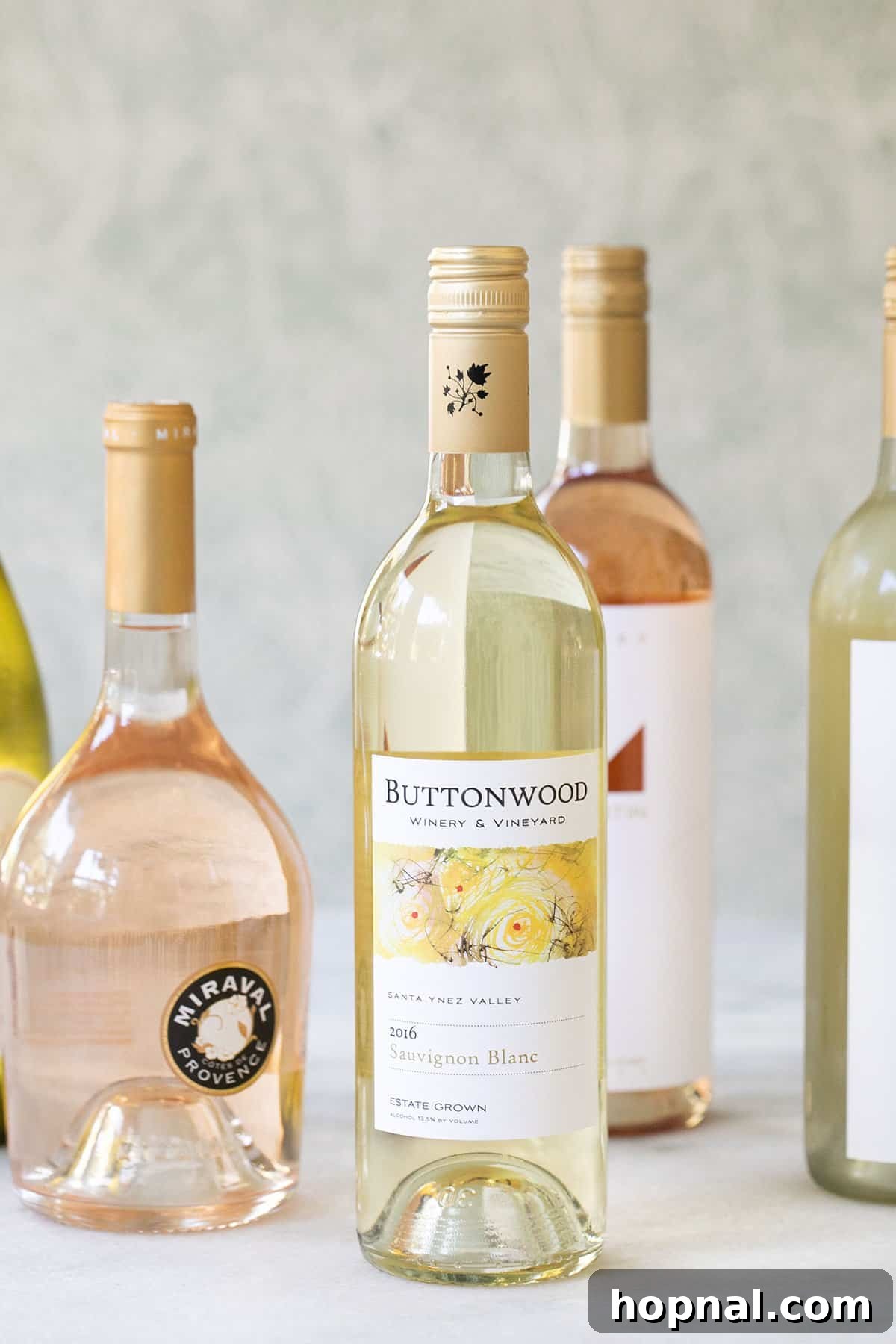
White wines are an excellent starting point for new wine drinkers due to their generally lighter body and refreshing characteristics. Maximizing their flavors often involves serving them properly chilled.
Dry White Wines: Crisp and Refreshing
Pinot Grigio
Pinot Grigio (or Pinot Gris) is a globally popular white wine, known for its refreshing and light-bodied character. It is the second most popular white wine in the United States. Depending on where the grapes are grown and the winemaking style, Pinot Grigio can offer vibrant citrus notes (lemon, lime), green apple, pear, and sometimes a hint of almond or honey. Its crisp acidity makes it highly versatile.
Sauvignon Blanc
Sauvignon Blanc is an incredibly popular and distinctive white wine. It’s celebrated for its pronounced aromatic profile, often featuring notes of grapefruit, passionfruit, fresh-cut grass, and sometimes a characteristic “cat pee” (boxwood) aroma. The flavors can be intensely crisp and zesty, varying with terroir from lean, mineral-driven styles (Loire Valley) to fruitier, more tropical expressions (New Zealand).
Torrontés
Predominantly produced in Argentina, Torrontés is a wonderfully aromatic dry white wine that offers moderate acidity and a smooth, appealing texture. It delights the senses with sweet floral aromas and bright fruit notes of apricot, white peach, and lemon zest. Torrontés is an exceptional pairing for spicy Asian and Indian cuisine, as its aromatic intensity stands up beautifully to bold flavors.
Albariño
Albariño is a highly acclaimed white grape variety primarily grown in Galicia, Spain, and Northwest Portugal. It is often compared to Sauvignon Blanc for its bright acidity and crisp, refreshing taste. Albariño is known for its aromatic profile, featuring notes of citrus, green apple, white peach, and often a distinctive salinity. It is an ideal wine to pair with all types of seafood, particularly oysters and grilled fish.
Sweet White Wines: Luscious and Aromatic
Riesling
Riesling is an extraordinarily versatile white wine grape, capable of producing wines across the entire sweetness spectrum, from bone-dry to intensely sweet. It is characterized by its high acidity, light body, and incredibly floral and fruity aromas. Key characteristics often found in Riesling include:
- White flowers (jasmine, honeysuckle)
- Stone fruits (peaches, apricots)
- Citrus (lime, lemon)
- Green apple, often with a distinctive petrol note in aged examples.
Sauternes
Sauternes is a world-renowned sweet wine produced in the Bordeaux region of France. This opulent wine is made from Sémillon, Sauvignon Blanc, and Muscadelle grapes that have been affected by “noble rot” (Botrytis cinerea), which concentrates the sugars and flavors. Sauternes offers a luxurious balance of sweetness and acidity, with rich flavors of apricot, honey, peach, and candied citrus peel.
Moscato
Moscato, made from Muscat grapes grown globally, is a popular sweet wine known for its enticing floral aromas and vibrant, sweet flavors. It typically has a medium to low acidity and a light effervescence (Moscato d’Asti). Common notes include orange blossom, peach, apricot, and grape, making it a delightful, accessible dessert wine or aperitif.
Tokaji
Tokaji is a historically significant sweet wine originating from the Tokaj wine region in Hungary. Like Sauternes, it is famously produced from grapes affected by noble rot, resulting in wines of incredible sweetness, complexity, and longevity. Tokaji wines offer a rich palate of dried fruit, apricot, grapefruit, orange peel, honey, and often intriguing floral aromas. It is considered one of the world’s great dessert wines.
Rich White Wines: Textural and Complex
Chardonnay
Chardonnay is arguably the most widely planted and popular white wine grape in the world. Its green-skinned grapes are naturally quite neutral, but Chardonnay is a chameleon, capable of expressing a vast array of characteristics depending on its terroir and winemaking techniques. From crisp, unoaked styles with green apple and citrus notes to rich, buttery, oak-aged versions with flavors of vanilla, toast, and tropical fruit, Chardonnay offers immense diversity.
Viognier
Viognier is an aromatic white wine offering a delightful textural experience, ranging from spritzy and fresh to creamy and full-bodied, depending on the winemaker’s approach. It presents enticing light flavors of mango, tangerine, and honeysuckle, often complemented by intriguing aromas of clove and nutmeg. Viognier is a fantastic alternative for those seeking a richer, more fragrant white wine.
Pinot Gris
Pinot Gris, a clone of the Pinot Noir variety, produces grayish-blue grapes used to make white wine. It is distinct from Pinot Grigio in its typical style, often being richer, more textural, and slightly spicier. Popular for its refreshing citrus flavor and balanced acidity, Pinot Gris often shows notes of ripe pear, apple, and sometimes a hint of honey or almond, making it a versatile food-pairing wine.
Sémillon
Sémillon is a golden-skinned grape primarily used to make dry white wines and, most notably, sweet wines like Sauternes. While often blended, Sémillon can produce impressive single-varietal wines, particularly in Australia. It is known for its full-bodied flavor, moderate acidity, and aromas of green apple, pear, lemon, and often a lanolin or waxy texture, evolving into honey and nutty notes with age.
All About Rosé Wine
Rosé wines capture the best of both worlds, made from red grapes but with a minimal maceration period – typically just a few hours, and rarely exceeding a single day. This limited skin contact is precisely what imparts the wine’s beautiful blush or pink color without extracting significant tannins. The resulting flavors are a delightful bridge between red and white wines, often encompassing:
- Red berries (strawberry, raspberry, cherry)
- Tropical fruits (watermelon, peach)
- Citrus (grapefruit, orange zest)
- Delicate floral notes (rose petal)
Rosé styles vary from bone-dry and savory, like many from Provence, to fruitier and slightly sweeter expressions found in the New World. They are incredibly versatile, perfect as an aperitif or paired with light meals, salads, and grilled seafood.
Consider elevating your rosé experience with these delightful cocktails:
- Strawberry Frozé made with Rosé
- Jasmine Ginger Rosé Cocktail
All About Sparkling Wines
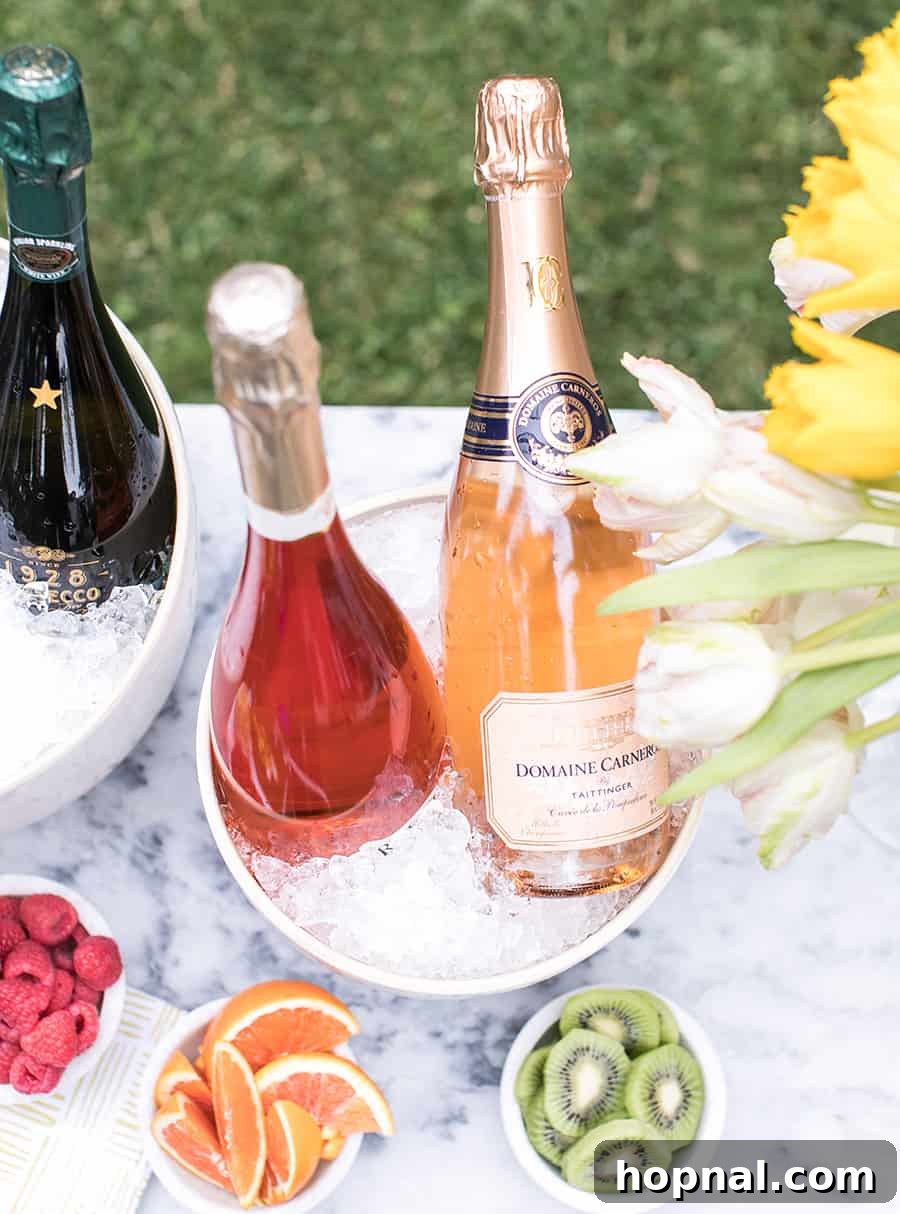
Sparkling wines are defined by their captivating bubbles, which can vary in intensity and persistence. They come in an array of colors – white, red, or pink – and can be made from virtually any grape variety, depending on the appellation rules of the region where they are produced. Sparkling wines can be crafted from a single grape or a carefully blended selection, and their sugar content ranges from extra-brut (very dry) to doux (very sweet).
Champagne: The Quintessence of Sparkling Wine
True Champagne is a sparkling wine with a protected designation of origin, meaning it can only be grown and produced in the Champagne region of France. Strict appellation rules dictate specific practices and the use of certain grapes, primarily Chardonnay, Pinot Noir, and Pinot Meunier. Champagne is renowned for its complex flavors, often displaying notes of:
- Brioche and toasted almond
- Cream and citrus (lemon, green apple)
- White peach and cherry
It’s the epitome of celebration and sophistication.
Sparkling White Wines: Beyond Champagne
The enchanting bubbles in most sparkling white wines are achieved during a secondary fermentation process. Winemakers introduce a precise mixture of sugars and yeast to a still white wine, which then ferments within a sealed environment, creating carbon dioxide. Popular examples include Prosecco from Italy (Charmat method, known for fruity, floral notes) and Cava from Spain (traditional method, often nutty and savory), both offering refreshing alternatives to Champagne.
Sparkling Rosé
Sparkling Rosé, produced globally, combines the elegance of rosé with the effervescence of sparkling wine. It offers a light, bubbly, and often vibrant experience, with flavor profiles ranging from delicate floral notes to rich, full-bodied red berry characteristics. Crafted from various red grapes, sugar, yeast, and carbon dioxide, sparkling rosé is a versatile and festive choice for any occasion.
Explore some refreshing white and sparkling wine cocktails:
- Classic White Wine Sangria
- Apple Ginger White Wine Spritzer
- A Classic Mimosa with Champagne
Fortified Wines: Richness and Longevity
Fortified wines are a distinct category where a distilled grape spirit, typically brandy, is added to a wine at some point during its fermentation. This process, known as fortification, halts fermentation, preserving residual sugars and increasing the alcohol content. While many fortified wines are sweet (like Port), some styles of Sherry can be remarkably dry. These wines are often enjoyed as aperitifs, digestifs, or alongside desserts.
Key examples of fortified wines include:
- Port (from Portugal)
- Sherry (from Spain)
- Madeira (from the Portuguese Madeira Islands)
- Marsala (from Sicily, Italy)
- Vermouth (a fortified, aromatized wine)
Due to the addition of spirits, fortified wines typically have a higher alcohol content (often 15-20% ABV) compared to still wines.
Natural Wine: A Return to Simplicity
Natural wine represents a philosophy of winemaking with minimal intervention, striving to create wine as purely and organically as possible. Winemakers typically use grapes that are organically or biodynamically grown, free from herbicides, pesticides, and synthetic fertilizers. A key characteristic is the reliance on native or wild yeasts for fermentation, rather than cultured laboratory yeasts. Furthermore, natural wines often undergo little to no fining or filtration, and contain minimal or no added sulfites, resulting in wines that can sometimes appear slightly cloudy, offering unique and sometimes unpredictable flavor profiles that truly reflect their terroir.
Decoding the Wine Label: Your Key to Informed Choices
With thousands of wineries worldwide, understanding a wine label is essential. While attractive labels might catch your eye, the information printed on them is far more valuable than the design. A wine label, whether on the front or back, provides a wealth of information about the bottle’s contents:
- The Producer: Identifies the winery or brand that crafted the wine. This often speaks to a specific style or quality level.
- The Region: Indicates where the grapes were grown and the wine was produced (e.g., Bordeaux, Napa Valley). This is crucial as terroir significantly impacts flavor.
- The Variety: States the primary grape variety used (e.g., Cabernet Franc, Petite Sirah, Pinot Blanc). In Old World wines, this might be implied by the region.
- The Vintage: The year the grapes were harvested. This is important for understanding the wine’s age and how well it might have evolved, as vintage quality varies yearly.
- The Alcohol Level: Expressed as Alcohol by Volume (ABV). A higher alcohol content (e.g., 14.5%+) often correlates with a bolder, fuller-bodied wine.
- Sulfites: By law, bottles must indicate the presence of sulfites (a natural byproduct of fermentation and a common preservative), even if only in trace amounts.
- Appellation System: For Old World wines, look for terms like AOC (Appellation d’Origine Contrôlée) in France or DOC (Denominazione di Origine Controllata) in Italy, which signify adherence to strict regional winemaking rules.
Frequently Asked Questions About Wine
As you can see, the world of wine is rich with fascinating details. Let’s address some of the most commonly asked questions to further enhance your understanding.
What Are the Seven Key Types of Wine?
While classifications can vary, the seven commonly recognized key types of wine that every enthusiast should know include:
- Red Wine
- White Wine
- Rosé Wine
- Orange Wine (skin-contact white wine)
- Sparkling Wine
- Dessert Wine (often sweet, but can include fortified)
- Fortified Wine
What Are the Top 10 Most Popular Wine Grapes/Varietals?
Among the hundreds of different grape varieties, certain types consistently rise to the top in terms of global popularity and cultivation. These include:
- Chardonnay
- Cabernet Sauvignon
- Merlot
- Airén
- Tempranillo
- Grenache (Garnacha)
- Syrah (Shiraz)
- Pinot Noir
- Sauvignon Blanc
- Riesling
(Note: The “top 10” can vary slightly by source or specific criteria, but these are consistently among the most significant.)
What Are the Five Primary Classifications of Wine?
Beyond grape varietal, wines are typically classified in several fundamental ways, helping consumers and experts alike categorize and understand them:
- Color: Red, White, Rosé (and sometimes Orange).
- Effervescence: Still (no bubbles) or Sparkling (with bubbles).
- Sweetness Level: Dry, Off-Dry, Sweet, Dessert.
- Body: Light-bodied, Medium-bodied, or Full-bodied.
- Origin/Appellation: The geographical region or specific vineyard where the grapes were grown and the wine was made.
How Do I Choose a Good Wine?
Choosing a “good” wine is subjective and depends largely on your personal preferences and the occasion. If you’re at a restaurant, vineyard, or wine shop, don’t hesitate to ask for recommendations from staff – they are excellent resources! They’ll likely inquire about your tastes (e.g., sweet vs. dry, light vs. full-bodied) and what food you plan to pair with it.
For those new to drinking wine, starting with a crisp white or a refreshing rosé is often a great entry point. Consider the context: Is it for a casual evening, a formal dinner, or a party? If you need to please multiple palates, picking up a bottle of both a red and a white is always a safe bet. Experimentation is key – trust your palate and enjoy the discovery process!
What Defines a Natural Wine?
Natural wine is defined by its minimal intervention winemaking philosophy. This means grapes are grown without herbicides, pesticides, or synthetic chemicals, often adhering to organic or biodynamic farming methods to ensure purity. Crucially, natural wines are typically fermented with native or wild yeasts (already present on the grapes or in the cellar environment), rather than commercially cultured yeasts. They also generally avoid additives, excessive filtering, and fining, with minimal or no added sulfites, aiming to express the purest form of the grape and terroir.
What Are Four Popular Types of Red Wine?
While there are countless red wine varieties, four of the most widely recognized and enjoyed types globally include:
- Cabernet Sauvignon (bold, full-bodied)
- Merlot (smooth, versatile, medium-bodied)
- Pinot Noir (light-bodied, aromatic)
- Zinfandel (fruit-forward, can be bold)
What Is the Most Popular White Wine?
Chardonnay holds the title as the most popular white wine in the world. Originating in France’s Burgundy region, its widespread appeal is due to its versatility in both viticulture and winemaking. It’s a key grape in many Champagnes and can produce a vast array of styles, from lean and mineral-driven to rich, oak-aged and buttery.
Delicious Wine Cocktail Recipes
Looking for creative ways to enjoy your favorite wines? Try these delightful wine cocktail recipes:
- Red Moon Over Manhattan
- Easy Mulled Wine
- White Wine Sangria
- Fall Sangria Recipe
- Classic Red Wine Sangria
For more wine-inspired ideas, discover our DIY floral ice bucket to keep your white wines perfectly chilled, or learn how to make charming DIY wine tassels to personalize your drink markers. Don’t miss our recipe for the best black sangria!
Explore Our Types of Wine Chart to Master Your Palate
We hope this detailed exploration has provided invaluable insight into the fascinating world of wine. By utilizing our comprehensive types of wine chart and the knowledge shared in this guide, you’re well on your way to discovering new favorite varietals and enhancing your appreciation for this ancient beverage. Continue your journey to becoming a confident wine connoisseur, perhaps even your neighborhood sommelier!
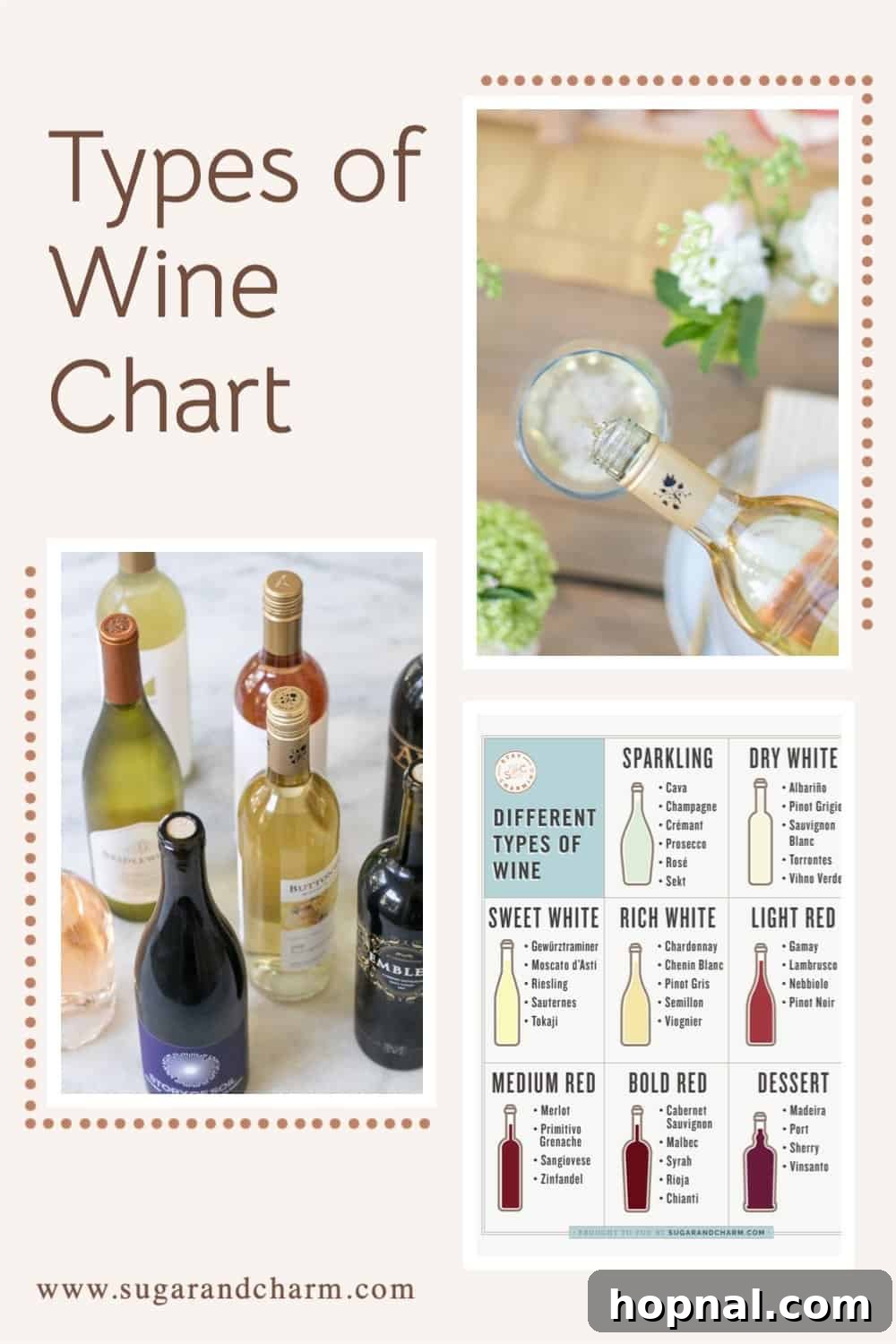
Don’t forget to pin this valuable wine chart for future reference!
Now that you’re more knowledgeable about the different types of wine, we’d love to hear from you! Share your favorite type of wine or any new discoveries in the comments below.
We trust this guide has given you a deeper appreciation for the world of wine! For more delightful recipes, cocktails, desserts, and party inspiration, be sure to FOLLOW US on FACEBOOK, INSTAGRAM, and PINTEREST!