

Transform your next gathering with a truly spectacular, yet surprisingly simple, fruit and cheese platter. This elegant appetizer is a timeless classic, beloved for its fresh flavors, vibrant colors, and effortless sophistication. Whether you’re hosting an intimate get-together, a festive holiday celebration, or a lavish bridal shower, a well-curated fruit and cheese board is guaranteed to impress your guests and satisfy every palate.
Having crafted countless platters for a variety of events, I’ve gathered invaluable insights and refined techniques to help you create a board that is not only visually stunning but also incredibly delicious and easy to assemble. Say goodbye to complicated recipes and hello to an appetizer that does all the work for you, inviting guests to graze and mingle.
If you’re passionate about the art of serving boards, explore my other guides for endless inspiration, including a dedicated fruit platter masterpiece, an essential cheese platter guide, and a delightful dessert charcuterie board to complete your entertaining repertoire.
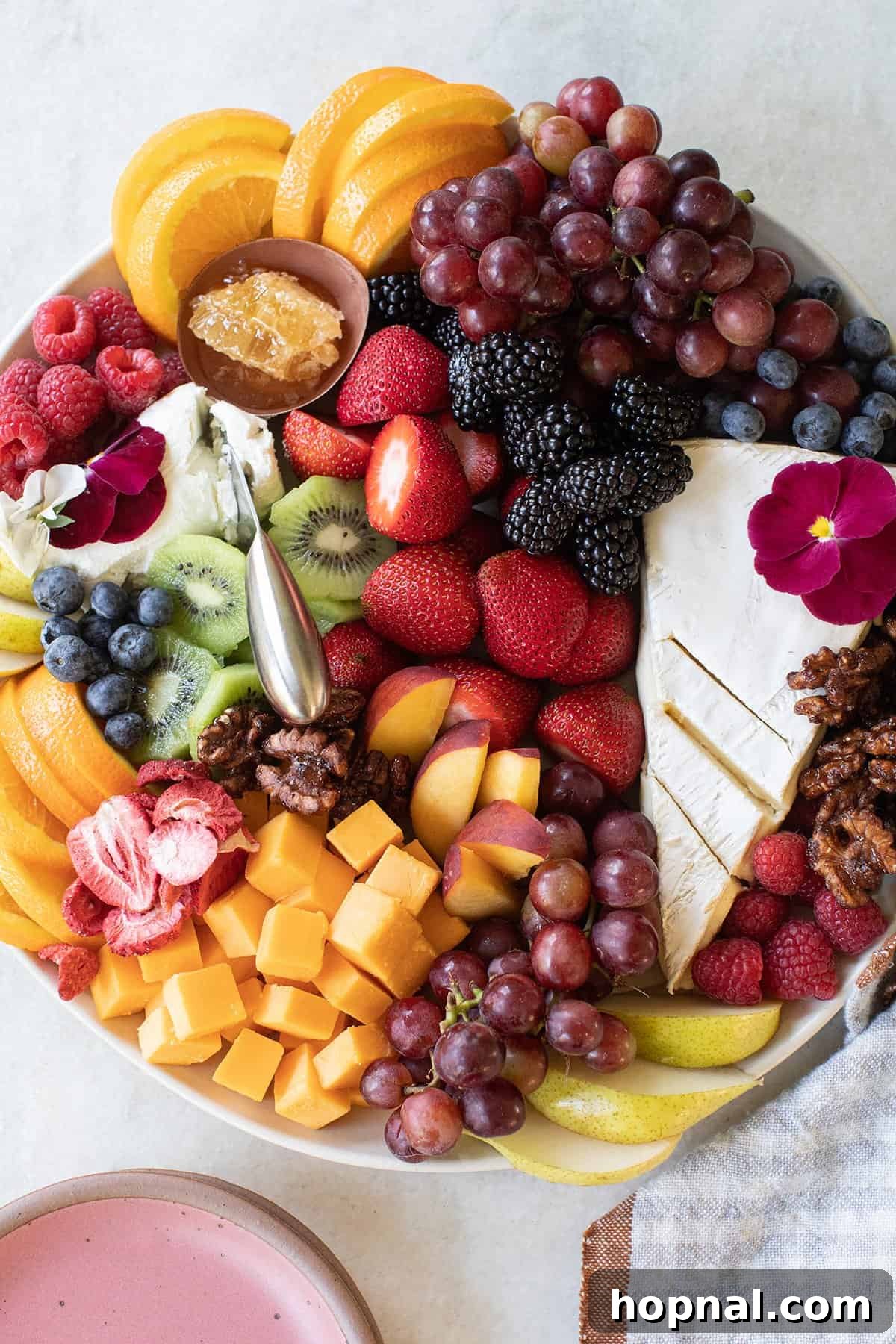
Why This Fruit & Cheese Platter Will Be Your Go-To Appetizer
A fruit and cheese platter isn’t just food; it’s an experience. Here’s why this versatile and appealing appetizer deserves a permanent spot in your entertaining playbook:
- Always Fresh & Visually Stunning: Bursting with succulent fruits and a spectrum of cheeses, each platter is a kaleidoscope of colors and textures. The natural beauty of fresh produce combined with the rustic charm of artisan cheeses creates an immediate “wow” factor that’s hard to beat.
- Effortlessly Elegant for Any Party: From casual weekend brunches to sophisticated holiday gatherings or celebratory baby showers, this platter elevates any occasion. It’s an impressive centerpiece that requires minimal cooking, allowing you more time to enjoy your guests.
- Infinitely Customizable & Creative: No two platters need ever be the same! Easily adapt your selection of seasonal fruits, diverse cheeses, and gourmet extras to match your event’s theme, dietary preferences, or even your personal cravings. It’s a canvas for your culinary creativity.
- Complements Every Menu: Whether served as a standalone appetizer or alongside heartier fare, a fruit and cheese platter is incredibly versatile. It pairs beautifully with everything from savory options like Halloween charcuterie boards to sweet finales like a Christmas dessert board, offering a refreshing contrast or a harmonious addition.
- A Crowd-Pleaser for All Ages: With a diverse selection of mild to bold cheeses and sweet to tangy fruits, there’s something for everyone. It’s an ideal choice for multi-generational gatherings, ensuring even the pickiest eaters find something they love.
- Simple Preparation, Maximum Impact: Unlike many appetizers that require intricate steps or precise timing, assembling a fruit and cheese platter is straightforward. Most of the “cooking” involves washing, slicing, and arranging, making it perfect for hosts who want to impress without stress.
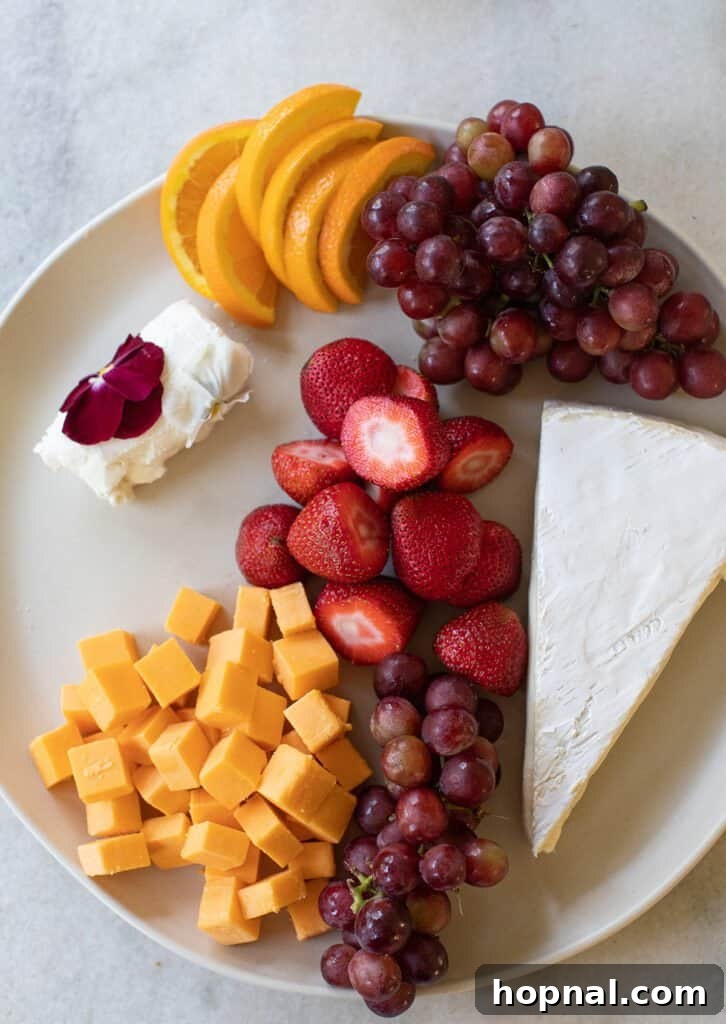
How to Assemble an Exquisite Fruit and Cheese Platter
Crafting a beautiful and delicious fruit and cheese platter is an art that’s surprisingly easy to master. Follow these steps to build a board that looks as good as it tastes:
Step 1: Prep Your Ingredients Thoughtfully
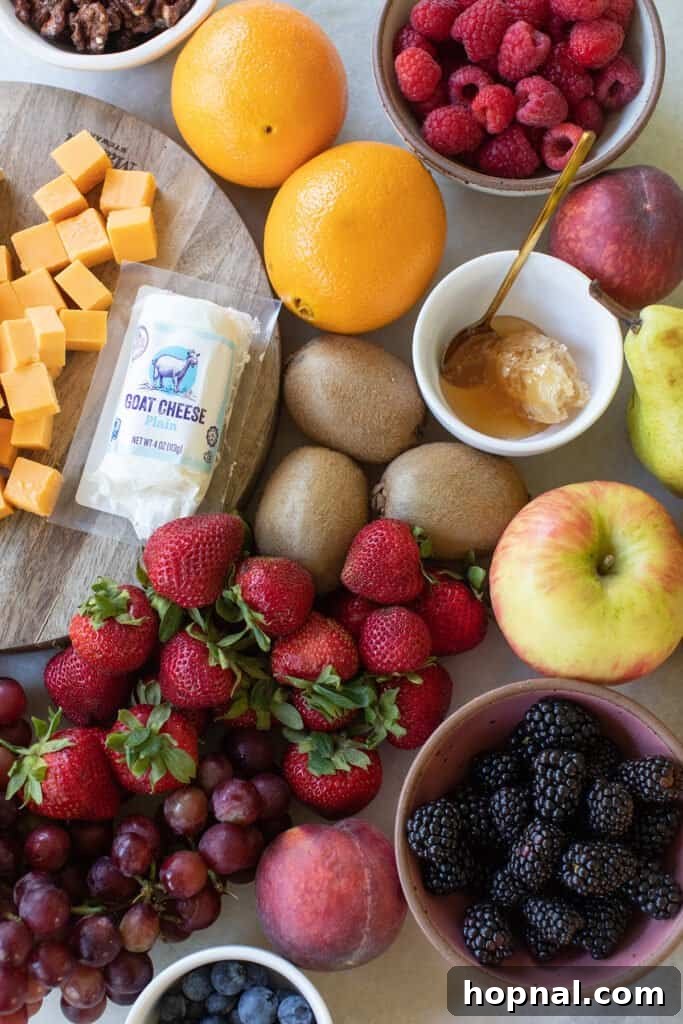
Begin by selecting 3 to 4 distinct cheeses to offer a variety of flavors and textures (think soft, semi-soft, hard, and maybe a blue). Slice or cut your chosen cheeses into various shapes – cubes, wedges, logs, or crumbled pieces – to add visual interest. Thoroughly wash and gently dry all your fruits. Moisture is the enemy of freshness, so ensure everything is completely dry. Set aside small bowls for condiments like honey, fruit jams, or savory dips. These bowls will also serve as anchor points on your board.
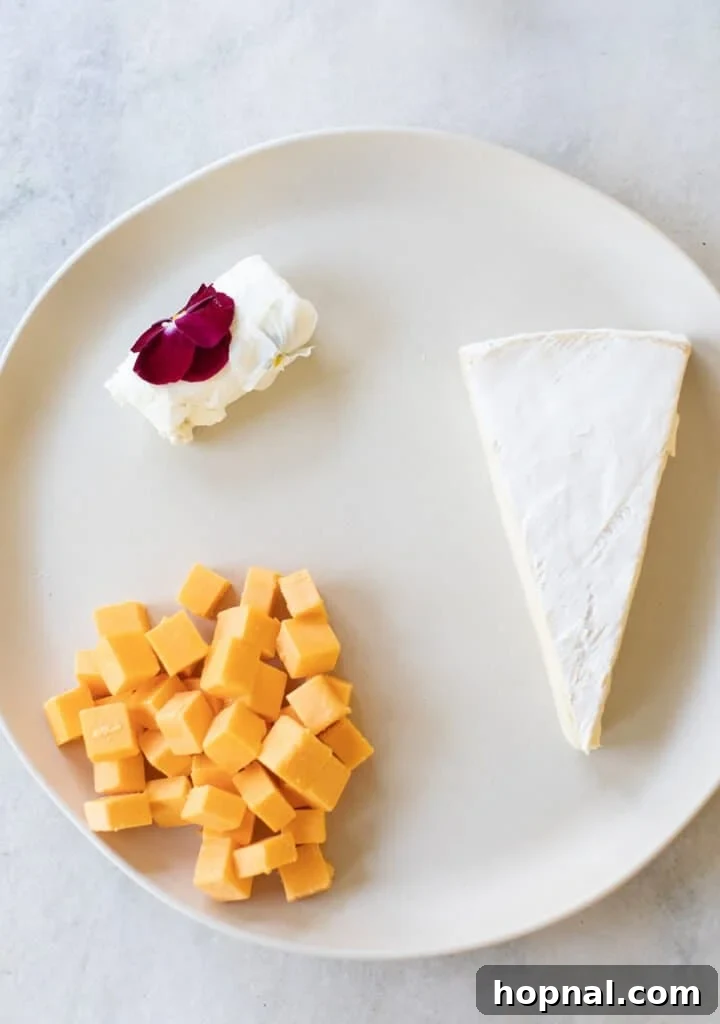
Step 2: Anchor with Cheeses and Bowls
Start the arrangement by strategically placing your cheeses on the board. Distribute them evenly to encourage exploration. Next, position your small bowls for honey, jams, olives, or nuts. These items are the “anchors” that provide structure to your platter. Remember to include appropriate cheese knives or spreaders next to each cheese for easy serving and to prevent flavor transfer.
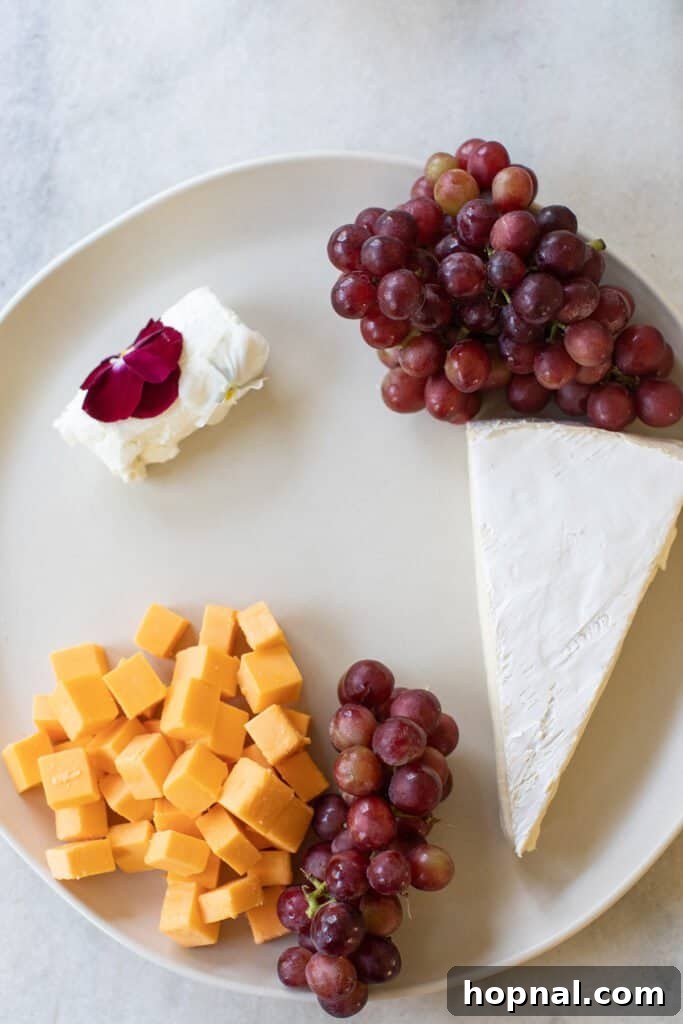
Step 3: Artfully Add Fruits and Key Extras
Once your cheeses and bowls are in place, begin layering in the larger fruits. Grapes, berries still on the vine, or apple slices can create flowing lines and vibrant clusters. Next, fill in the remaining larger gaps with other substantial components like crackers, bread, and nuts. Create inviting piles and cascades, making sure to vary textures and colors throughout the board.
Step 4: Garnish for Unforgettable Color and Aroma
The final touches are crucial for elevating your platter from good to gourmet. Sprinkle fresh herbs such as rosemary, mint, or thyme amongst the ingredients. Edible flowers like pansies or lavender can add a delicate pop of color and a fragrant touch, making the platter truly special and inviting.
Step 5: Utilize Extra Plates if the Board Gets Crowded
Don’t be afraid to expand beyond a single board. If your main platter feels too full or you want to keep certain items crisp, like crackers, bread slices, or baguette pieces, serve them on separate, complementary plates nearby. This prevents sogginess and ensures easy access for your guests.
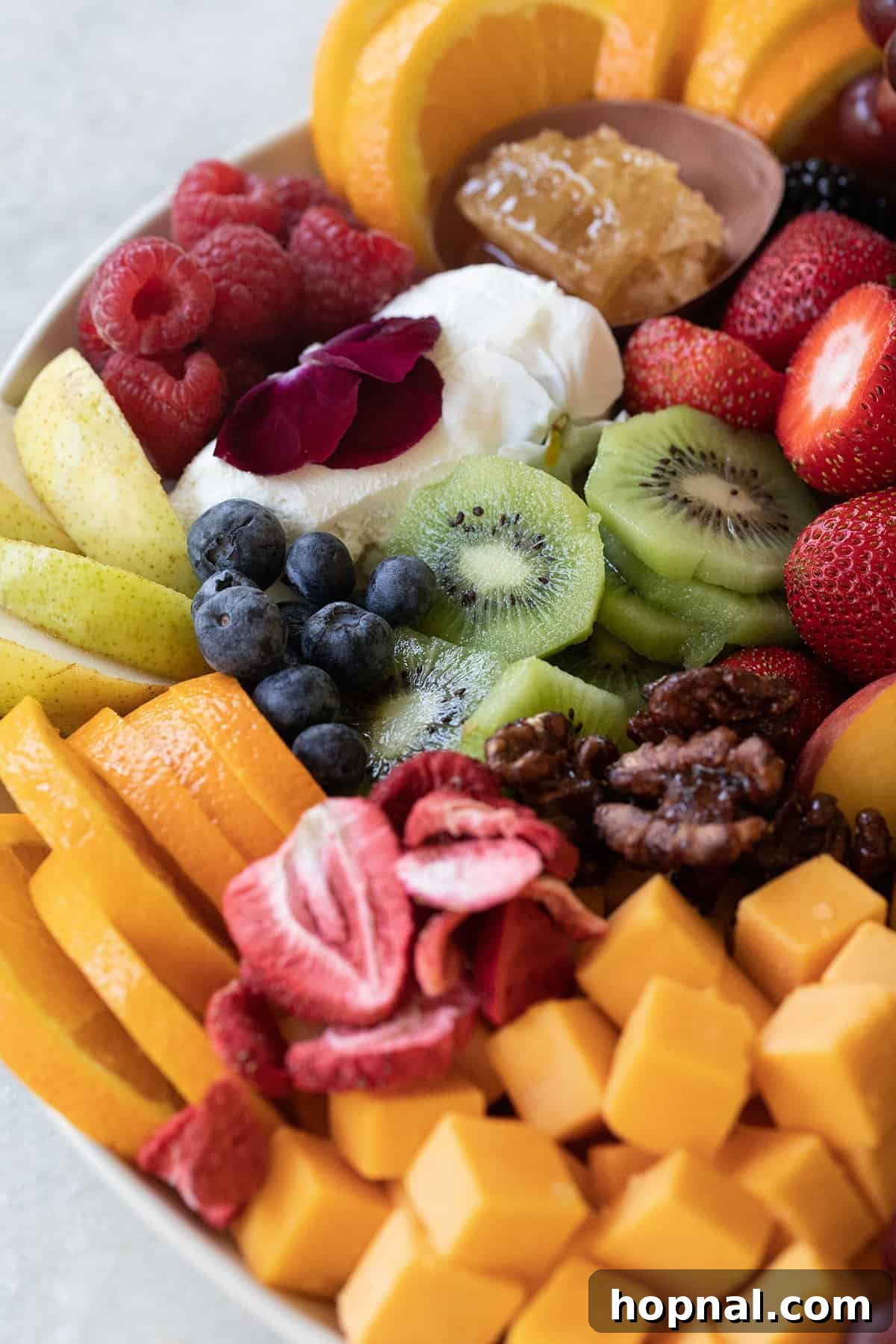
Curating the Perfect Selection: Best Items for Your Platter
The beauty of a fruit and cheese platter lies in its endless possibilities. Here’s a comprehensive guide to selecting the finest ingredients for a balanced and exciting spread:
Cheese: The Heart of Your Platter
Aim for a variety of 3-4 cheeses with different textures and flavor profiles to appeal to all tastes:
- Fresh & Crumbly Cheeses: Offer a light, tangy element.
- Feta: Salty and tangy, pairs wonderfully with watermelon and mint.
- Goat Cheese (Chèvre): Creamy yet tart, excellent with berries and honey.
- Ricotta (whipped): Smooth and mild, a lovely base for sweet toppings or fruit.
- Soft & Creamy Cheeses: Indulgent and spreadable.
- Brie: Buttery and mild, a classic with apples, pears, and fig jam.
- Camembert: Similar to Brie but often with a slightly stronger, earthy flavor.
- Semi-Soft & Approachable Cheeses: Generally mild and crowd-pleasing.
- Havarti: Smooth, buttery, and slightly sweet, fantastic with stone fruits.
- Provolone: A versatile Italian cheese, great with grapes and savory elements.
- Hard & Aged Cheeses: Offer a sharp, nutty, or savory bite.
- Aged Cheddar: Sharp, robust, and a universally loved choice, perfect with apples.
- Parmesan (Parmigiano-Reggiano): Salty, nutty, and crystalline, exquisite with figs or balsamic glaze.
- Bold & Blue Cheeses: For adventurous palates, offering a pungent kick.
- Gorgonzola: Creamy with a distinctive piquant flavor, ideal with pears and walnuts.
- Roquefort: A sheep’s milk blue, intensely salty and tangy.
- Washed Rind Cheeses: Known for their unique, pungent aroma and creamy interior.
- Taleggio: A mild, fruity, and slightly tangy Italian cheese.
- Limburger: Famous for its strong aroma, but surprisingly mild interior.
- Bloomy Rind Cheeses: Characterized by their soft, edible white rind.
- Brie & Camembert: (Also listed under soft cheese) Their rinds add an earthy complexity.
Fruits: Nature’s Candy for Your Platter
Choose fresh, ripe, and seasonal fruits to complement your cheeses. They add sweetness, acidity, and vibrant color:
- Tropical Treasures:
- Mango and Kiwi: Sweet, juicy, and exotic, these fruits offer a bright counterpoint to creamy and fresh cheeses like goat cheese.
- Classic Berries:
- Strawberries, Blueberries, Raspberries: Offering a delightful mix of sweet and tart flavors, berries are incredibly versatile and pair well with almost any cheese, especially soft varieties.
- Crisp & Refreshing:
- Grapes: Both green and purple varieties add crispness, sweetness, and a hydrating element. They are a universal match for all cheese types, especially hard and semi-hard.
- Apples (sliced): Crisp and sweet or tart, apples are a classic pairing for cheddar and other robust cheeses. Use a little lemon juice to prevent browning.
- Stone & Orchard Fruits:
- Peaches, Plums, and Pears: Juicy and sweet, these fruits pair beautifully with soft cheeses like Brie, goat cheese, and feta. Pears are particularly exceptional with blue cheese.
- Melons:
- Honeydew, Cantaloupe, Watermelon: Refreshing and sweet, melons provide a bright contrast to rich, salty cheeses, especially feta and prosciutto.
- Figs: Fresh figs, when in season, are a luxurious addition, particularly good with brie, goat cheese, or blue cheese, often drizzled with honey.
Enhancing Flavors: Nuts, Spreads & More
These additions provide texture, depth, and additional flavor dimensions:
- Nuts for Crunch:
- Cashews, Almonds, Pistachios, Candied Pecans/Walnuts: Offer a satisfying crunch and nutty flavor. Candied nuts add a sweet counterpoint to savory cheeses.
- Crackers & Bread for Scooping:
- Multi-grain Crackers, Water Crackers, Artisanal Breads (baguette, sourdough), Pita Chips: Choose a variety to complement different cheeses and textures.
- Sweet & Savory Spreads:
- Honey: Especially honeycomb, offers natural sweetness that pairs perfectly with sharp and creamy cheeses.
- Jams & Preserves: Fig spread, apricot jam, or seasonal berry jams add a burst of fruitiness and sweetness.
- Mustards: A gourmet mustard can add a piquant kick for savory pairings.
- Gourmet Touches:
- Edible Flowers: Lavender, rose petals, or pansies provide a delicate, elegant, and fragrant touch.
- Fresh Herbs: Rosemary, thyme, or mint can add an aromatic freshness.
- Olives & Pickles: Marinated olives or cornichons introduce a briny, tangy element that cuts through rich cheeses.
- Dried Fruit for Concentrated Flavor:
- Dehydrated Oranges, Cranberries, Raisins, Dried Apricots: Offer intense bursts of flavor and color, and a chewy texture that complements nuts and cheeses.
Time-Tested Perfect Pairings:
Experimentation is fun, but these classic combinations are always a hit:
- Cheddar and Apple: A timeless sweet and savory combination that everyone adores.
- Feta and Watermelon: Light, refreshing, and ideal for a vibrant summer platter.
- Brie and Pears: A classic, creamy, and undeniably delicious pairing, especially with a sprinkle of candied pecans.
- Goat Cheese and Fig Jam: The tang of goat cheese beautifully balances the sweetness of fig jam.
- Blue Cheese and Honey: The pungent notes of blue cheese are softened and enhanced by the sweetness of honey.
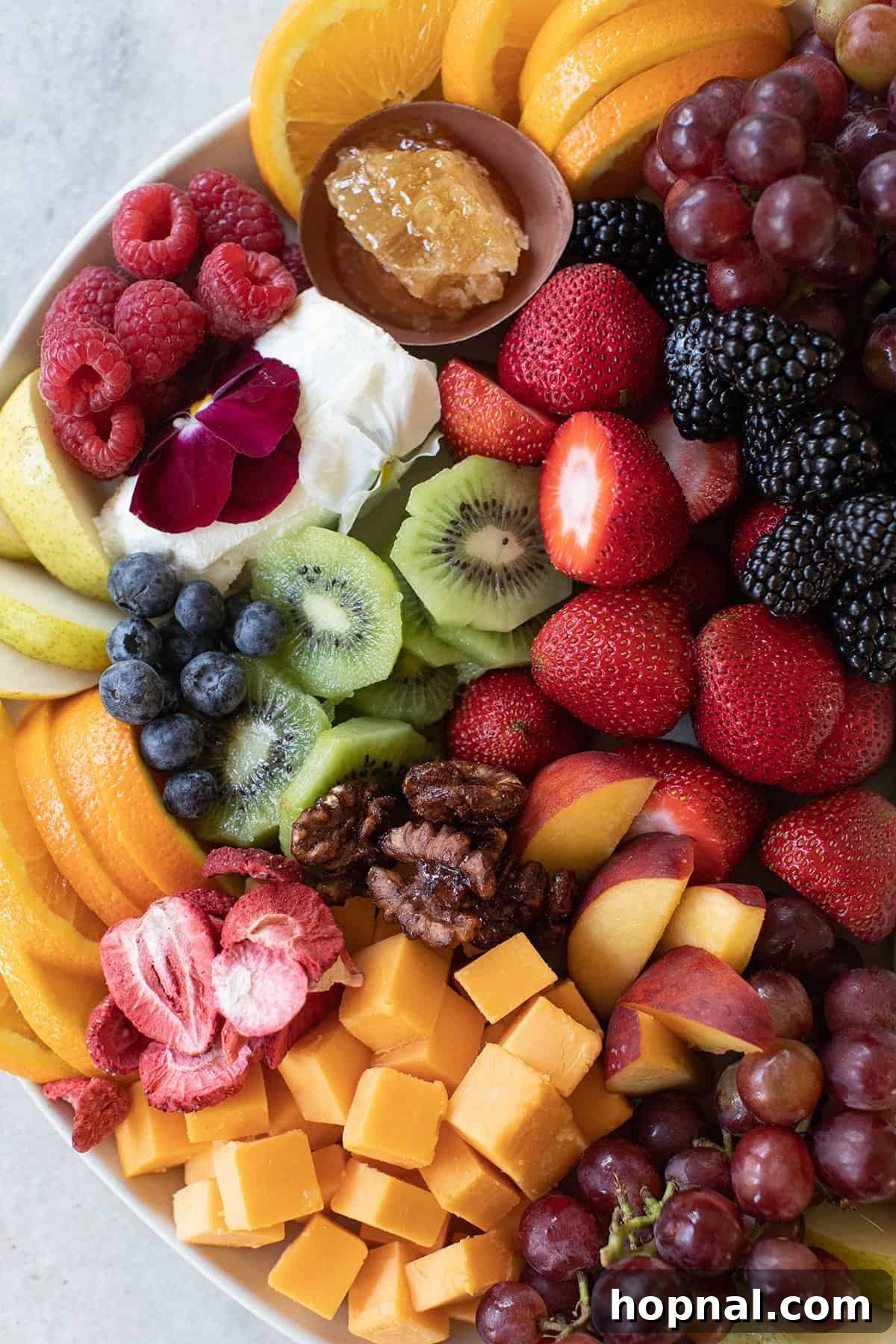
Expert Tips for a Flawless Fruit & Cheese Platter
Elevate your fruit and cheese platter from good to unforgettable with these insider tips:
1. Label Your Cheeses for an Enhanced Guest Experience:
Using small cheese signs or flags is a thoughtful touch that goes a long way. It allows guests to know exactly what delicious cheese they’re sampling, helps prevent strong flavors (like blue cheese) from accidentally mixing with milder ones, and adds a professional, polished look to your board. It’s also incredibly helpful for guests with dietary restrictions or allergies.
2. Serve Cheese at Room Temperature for Optimal Flavor:
This is a crucial tip for maximizing the flavor and texture of your cheeses. Cheese tastes its absolute best when it’s slightly soft and pliable, allowing its complex aromas and nuances to fully develop. Remove your cheeses from the refrigerator about 30 minutes to an hour before your guests arrive. This simple step makes a significant difference in the tasting experience.
3. Plan for Approximately 3-4 Ounces of Cheese Per Guest:
A good rule of thumb for an appetizer portion is about 3 ounces of cheese per person. If the platter is serving as the main appetizer or will be out for an extended period, consider increasing the quantity to 4-5 ounces per person. It’s always better to have a little extra – people tend to gravitate back for seconds (and thirds!) when a platter is this enticing.
4. Embrace a Balance of Flavors and Textures:
The most successful platters offer a delightful interplay of tastes and mouthfeels. Combine creamy soft cheeses with crunchy nuts, sweet fruits with salty cured meats (if adding), and tangy jams with mild crackers. This variety keeps each bite interesting and encourages guests to explore different combinations.
5. Go Seasonal with Your Fruit Selection:
Opting for fruits that are in season not only guarantees the freshest and most flavorful produce but can also be more cost-effective. Seasonal fruits are at their peak ripeness, enhancing the overall taste and appeal of your platter. Think berries in summer, apples and pears in fall, and citrus in winter.
Fruit & Cheese Platter FAQs
How far in advance can you prepare a fruit and cheese platter?
You can certainly do some prep work in advance! Most cheeses can be sliced and stored in an airtight container in the refrigerator up to 24 hours prior. Similarly, wash and thoroughly dry your fruit the day before. Assemble the platter a few hours before serving, cover it tightly with plastic wrap (taking care not to smash delicate items), and keep it chilled in the fridge. For optimal freshness and crispness, add crackers, bread, nuts, and delicate garnishes (like fresh herbs or edible flowers) right before your guests arrive. For more make-ahead tips, consider my Thanksgiving appetizer platter guide.
What fruits pair best with cheese?
Classic pairings include grapes, berries (strawberries, blueberries, raspberries), pears, apples, and fresh figs. For a more adventurous and tropical touch, consider adding mango, kiwi, or melon – these pair beautifully with creamy cheeses like brie or tangy goat cheese. The key is to offer a range of sweet, tart, and juicy options. You can also pull ideas from my dedicated fruit platter and favorite fruit dip recipes for more inspiration.
How much cheese do I need per person?
As a general guideline, plan for about 3 ounces of cheese per guest if the platter is one of several appetizers. If the fruit and cheese platter is the primary appetizer or a significant component of the meal, it’s wise to increase that to 4–5 ounces per person to ensure there’s plenty for everyone to enjoy. For more detailed hosting math and portioning tips, refer to my comprehensive cheese platter guide.
How do you keep fruit fresh on a cheese platter?
The most important step is to pat all fruit completely dry after washing; excess moisture can lead to sogginess and faster spoilage. For fruits prone to browning, such as apple slices or pears, toss them lightly with a small amount of citrus juice (lemon or lime works best) just before arranging them. Store the assembled platter, loosely covered, in the refrigerator until about 30 minutes before serving. Avoid cutting fruit too far in advance, especially highly perishable items like berries.
What kind of board or platter should I use?
The best board is one that suits your style and the number of guests. Wooden boards (like acacia, bamboo, or oak) offer a warm, rustic aesthetic. Slate boards provide a modern, elegant look, and you can write on them with chalk. Large ceramic platters or marble slabs also work wonderfully. Choose a size that allows you to spread ingredients generously without making it look sparse, and consider boards with raised edges to keep items contained. Rectangular, round, or even irregular shapes can all create a beautiful foundation.
More Inspiring Party Platter Ideas
Snacks & Appetizers
The Ultimate Dessert Charcuterie Board
Recipes
Classic Southern Cheese & Charcuterie Board
Snacks & Appetizers
How to Make a Dazzling Fruit Platter
Snacks & Appetizers
The Authentic Greek Mezze Platter
Still craving more platter perfection? Be sure to check out my detailed guide on making a captivating fruit platter, my recipe for the most satisfying fruit dip, and my comprehensive instructions on building an incredible cheese platter from start to finish!
I am eagerly awaiting to see your stunning fruit and cheese platters! Don’t hesitate to tag me on social media (e.g., Instagram, Pinterest) so I can celebrate your delicious and beautiful creations. Happy entertaining!
Classic Fruit and Cheese Platter
Rate Recipe
Print Recipe
Equipment
- 1 large platter or serving board
Ingredients
Choose a Variety of Cheese (Total ~20 ounces for 8 guests)
- 4 ounces goat cheese (or any soft cheese)
- 8 ounces brie cheese (or any similar creamy cheese)
- 8 ounces aged cheddar (or any aged cheese)
Choose a Variety of Fruit (Approximate quantities)
- 1 lb grapes (red or green grapes)
- 3 kiwi, sliced
- 1 large orange, sliced
- 4 ounces blueberries
- 4 ounces blackberries
- 4 ounces raspberries
- 4 ounces strawberries, (tops sliced off)
- 1 pear, sliced
Nuts, Dried Fruit & Honey
- 4 ounces candied walnuts (or candied pecans)
- 4 tbsp honey (with honeycomb if possible)
- 3 ounces dried fruit (strawberries, orange slices, cranberries, etc.)
Bread and Crackers
- 6 ounces crackers (or crusty bread, sliced baguette)
Instructions
-
Select and Prepare Cheeses: Choose 3-4 different types of cheese that vary in texture and flavor. Cut them into appealing shapes like cubes, triangles, slices, or wedges. Aim for visual variety.
-
Wash and Prepare Fruits: Thoroughly wash, slice, and chop all the fruits you plan to add to the platter. Ensure they are completely dry to prevent sogginess. For fruits like apples or pears, toss with a little lemon juice to prevent browning.
-
Prepare Dips and Spreads: Pour honey, jams, or any other dips and sauces into small serving bowls. These will be placed on the board.
-
Anchor the Platter with Cheeses and Bowls: Strategically arrange the different cheeses across the platter, creating focal points. Place your small bowls for honey and dips. Add a cheese knife or spreader next to each cheese to prevent cross-contamination of flavors.
-
Add Larger Fruits: Begin filling the board by placing larger fruit items, such as grape clusters, first. Use them to create flowing lines or generous piles.
-
Fill with Smaller Fruits, Nuts, and Extras: Next, fill in the remaining empty spaces and gaps with your smaller fruits (like berries), nuts, and dried fruits. Arrange them in aesthetically pleasing clusters or cascades. Finish off your fruit and cheese platter with colorful garnishes like fresh herbs and edible flowers for an aromatic and beautiful touch.
-
Serve Crackers and Bread: Arrange the crackers and crusty bread slices on the platter, or if the board is getting crowded, serve them on a separate plate placed nearby.
Notes
This recipe serves as a comprehensive guide to making a fruit and cheese platter. Feel free to customize it with your favorite cheeses, fruits, and extras based on availability and personal preference.
I highly recommend prioritizing seasonal fruit whenever possible; it ensures the best flavor and freshness.
For a balanced experience, always aim to pick at least 3 different cheeses that vary significantly in texture (e.g., one soft, one semi-hard, one hard).
Storing Your Fruit and Cheese Platter: You can prepare your platter in advance! Assemble the cheeses and fruits (excluding crackers, which can get soggy) the day before. Wrap the platter tightly in plastic wrap or an airtight container and store it in the refrigerator. Add crackers, nuts, and delicate garnishes right before you plan to serve.
Nutrition
Carbohydrates: 63g,
Protein: 20g,
Fat: 31g,
Saturated Fat: 14g,
Polyunsaturated Fat: 3g,
Monounsaturated Fat: 6g,
Trans Fat: 1g,
Cholesterol: 63mg,
Sodium: 672mg,
Potassium: 492mg,
Fiber: 7g,
Sugar: 40g,
Vitamin A: 768 IU,
Vitamin C: 57mg,
Calcium: 371mg,
Iron: 3mg
Nutrition information is automatically calculated and should only be used as an approximation.
Enjoyed this recipe? Leave a comment below!