
Mastering Wine: A Comprehensive Guide to Bottle Sizes, Servings, and Enjoyment
For many, wine is more than just a beverage; it’s an experience. In the United States, a significant 31% of drinkers prefer wine, making it a beloved choice for casual evenings, celebrations, and culinary pairings. Whether you’re a seasoned connoisseur or simply looking to confidently host friends and family, understanding the fundamentals of wine bottle sizes, serving suggestions, and proper pours is essential.
This guide will demystify common questions about wine, from “how many ounces are in a bottle of wine?” to practical advice on serving. We’ll explore the various types of wine bottles, the nuances of different wine glasses, standard wine pours, and how many servings you can expect from each bottle. Don’t forget to check out our comprehensive types of wine chart and our essential guide to serving wine for even more insights!
Decoding Wine Bottle Sizes: More Than Just Standard
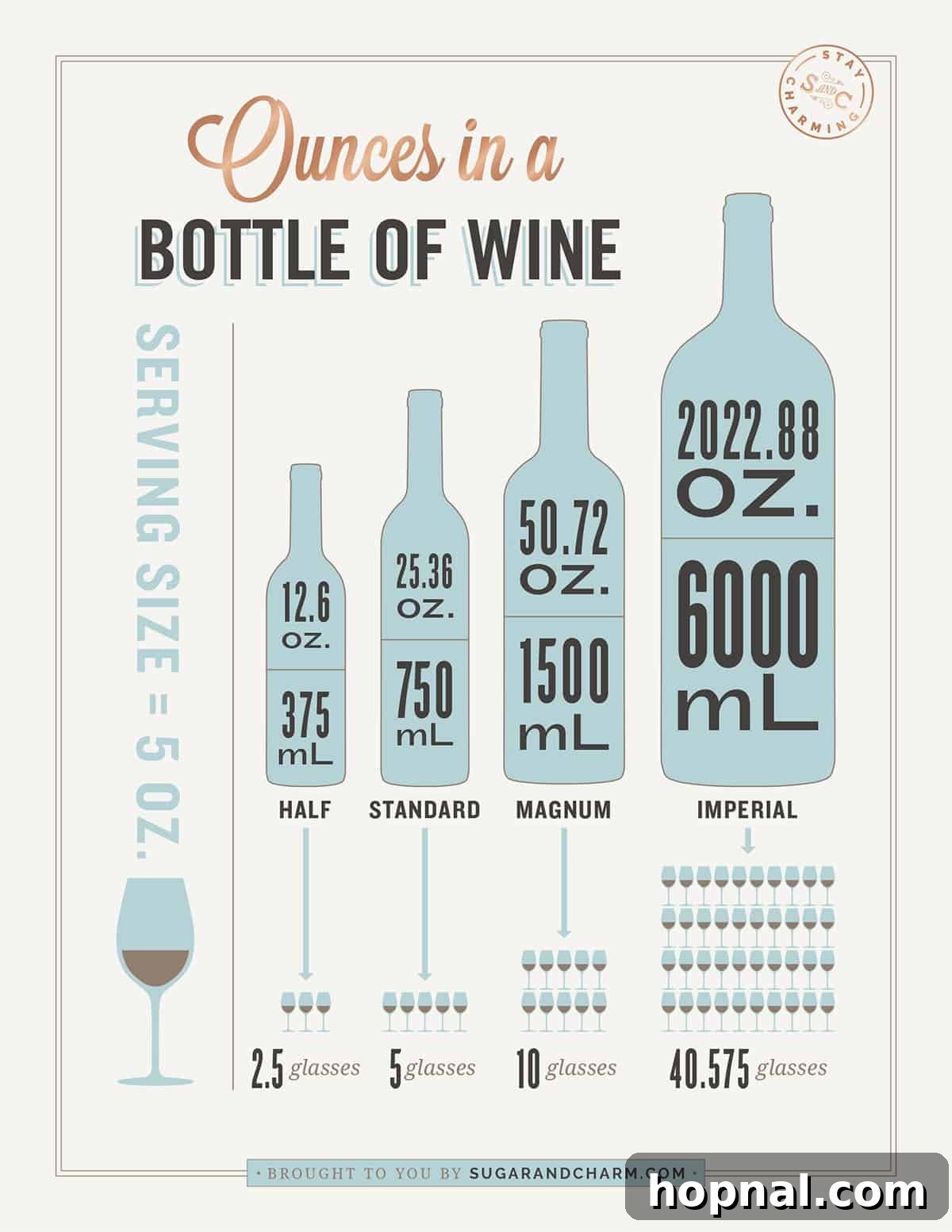
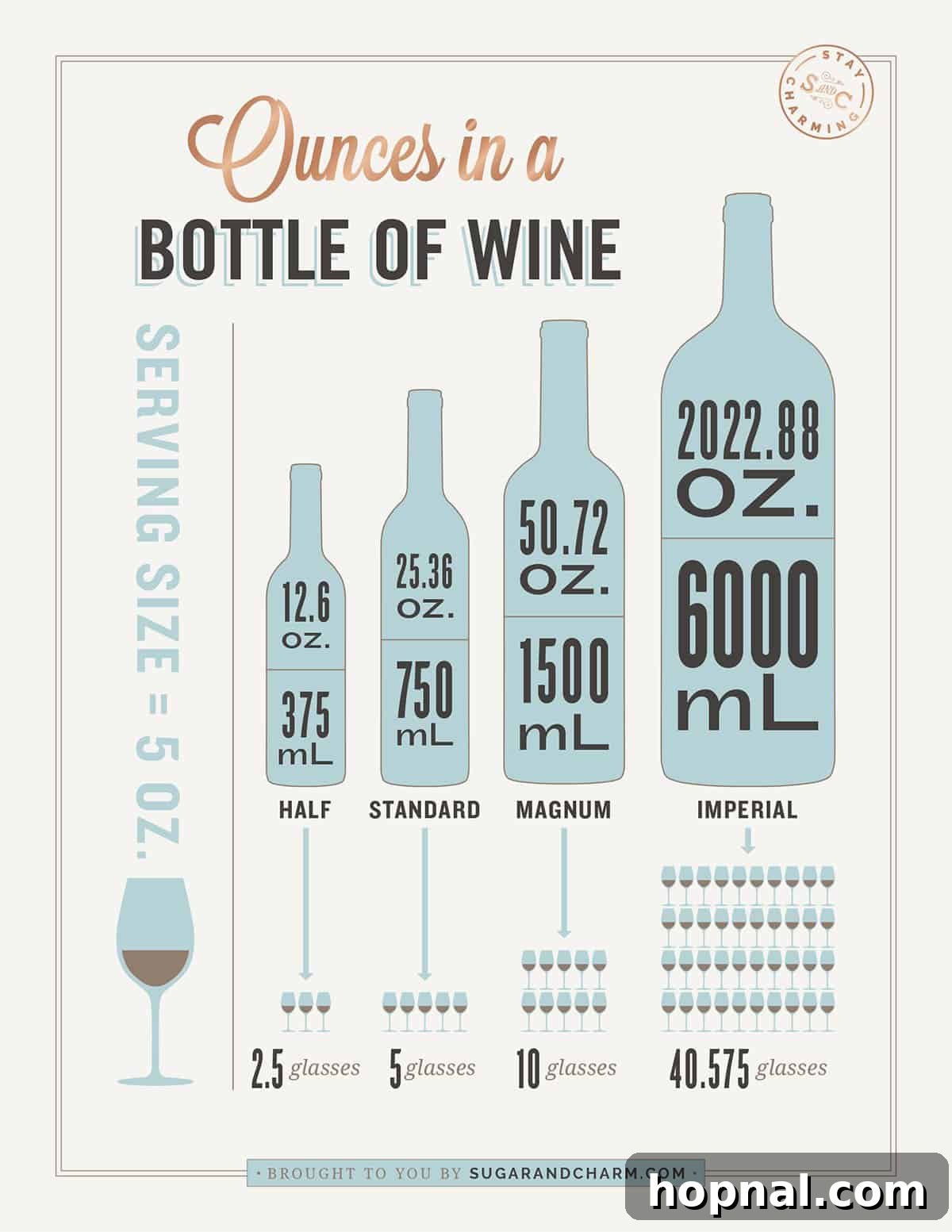
Step into any wine shop, and you’ll quickly notice the vast array of wine bottle shapes and sizes. The amount of wine contained within each bottle varies significantly, impacting how you plan for gatherings and manage your cellar. Here’s a breakdown of the most common wine bottle sizes and their fluid ounce and milliliter equivalents:
Standard Wine Bottle
The most ubiquitous size you’ll encounter, a standard wine bottle holds 25.4 fluid ounces (oz) or 750 milliliters (ml) of wine. This size is typically what people refer to when discussing “a bottle of wine” and is designed for easy handling, storage, and consumption among a small group.
Half, Demi, or Split Bottle
As the name suggests, this bottle contains exactly half the content of a standard bottle. You’ll find 12.7 oz or 375 ml of wine. Half bottles are perfect for solo enjoyment, when you want just a couple of glasses, or for pairing different wines with multiple courses without opening a full bottle.
Quarter, Piccolo, or Split (in Champagne)
These smaller bottles are designed for individual servings, often seen with sparkling wines or as a personal treat. A quarter bottle holds approximately 6.3 oz or 187 ml of wine, which is roughly a fourth of a standard bottle. They are ideal for picnics, single servings at events, or for tasting purposes.
Aluminum Cans (American Beer Can Size)
For ultimate convenience and portability, many wineries now offer wine in aluminum cans. These are typically sized like a standard American beer can, holding around 12 oz or 354 ml. Canned wines are excellent for outdoor activities, travel, or occasions where glass bottles might be impractical.
Dessert Wine Bottles
Often distinguishable by their slender, elegant shape, dessert wines (like Port, Sherry, or Sauternes) frequently come in smaller bottles. A common size for these rich, sweet wines is 16.9 oz or 500 ml. Given their intensity and higher alcohol content, smaller servings are customary, making these bottle sizes appropriate for their intended use.
Larger Format Wine Bottles (Magnum and Beyond)
While less common for everyday consumption, understanding larger format bottles can be useful for special occasions or collectors. These impressive bottles often allow wine to age more slowly and gracefully due to a smaller wine-to-air ratio. Here are a few notable examples:
- Magnum: Equal to two standard bottles, holding 1.5 liters (50.7 oz). Great for dinner parties.
- Jeroboam (Double Magnum): Typically holds 3 liters (101.4 oz), equivalent to four standard bottles. A true statement piece.
- Rehoboam: Common for Champagne, holding 4.5 liters (152.2 oz), or six standard bottles.
- Methuselah: Holds 6 liters (202.9 oz), eight standard bottles.
- Salmanazar: Contains 9 liters (304.3 oz), or twelve standard bottles – a full case!
- Balthazar: Houses 12 liters (405.8 oz), sixteen standard bottles.
- Nebuchadnezzar: An enormous 15 liters (507.2 oz), or twenty standard bottles.
Some smaller, boutique brands may also offer unique bottle sizes, so always check the label for precise volume information.
Understanding the Standard Wine Pour and Serving Sizes
When someone mentions “a glass of wine,” what does that truly mean in terms of volume? While the physical size of a wine glass can range dramatically, a standard serving of wine is generally consistent.
The 5-Ounce Standard Pour
Across the board, the universally accepted standard pour of wine in the US is 5 fluid ounces. This amount is also considered a “standard drink” from a health and alcohol content perspective, typically containing about 14 grams of pure alcohol.
It’s important to differentiate between the standard pour and the size of the glass itself. Red wine glasses, for instance, can hold anywhere from 8 to 22 ounces, while white wine glasses typically range from 8 to 12 ounces. The larger size of these glasses is not meant for overfilling; rather, it allows the wine sufficient room to “breathe” and its aromas to fully develop. This enhances the sensory experience, especially for red wines.
Variations in Pours
While 5 oz is the standard, you might encounter variations:
- At Home: Many people tend to pour more generously at home, often exceeding the 5 oz mark without realizing it. Measuring occasionally can help maintain responsible consumption.
- Restaurants: Professional establishments often adhere to the 5 oz standard. However, some higher-end restaurants or those specializing in by-the-glass offerings might pour 6 oz, or sometimes even 3 oz for very exclusive or dessert wines.
- Dessert Wines: Due to their higher sugar and alcohol content, dessert wines are typically served in smaller portions, often around 2 to 3 ounces.
How Many Glasses Per Bottle? Practical Calculations
Knowing the standard pour allows for easy calculation of how many servings you can get from various bottle sizes, which is particularly useful for party planning.
From a Standard 750ml Bottle (25.4 oz):
- With a 5 oz pour: You’ll get approximately 5 glasses of wine from a 750ml bottle (25.4 oz / 5 oz per glass = 5.08 glasses).
- With a 4 oz pour: This more conservative pour yields a little over 6 glasses (25.4 oz / 4 oz per glass = 6.35 glasses).
- With a 6 oz pour (common in some restaurants): Expect around 4 glasses (25.4 oz / 6 oz per glass = 4.23 glasses).
- With an 8 oz pour (a very generous home pour): A standard bottle provides about 3 glasses (25.4 oz / 8 oz per glass = 3.175 glasses).
From Other Bottle Sizes:
- Half Bottle (375ml / 12.7 oz): You’ll get about 2.5 glasses at 5 oz per pour, perfect for one person.
- Magnum (1.5 Liters / 50.7 oz): Provides approximately 10 glasses at 5 oz per pour, serving 4-5 people generously.
Choosing the Right Glass: Size and Shape Matter
While the volume of a standard pour remains constant, the shape and size of the wine glass play a crucial role in enhancing the tasting experience. Different glass designs are optimized to direct specific aromas and flavors to your palate and nose.
Standard Red Wine Glass
Red wine glasses typically feature a larger, wider bowl. This design provides a greater surface area for the wine to interact with air, allowing it to “open up” and release its complex aromas. The wider opening also facilitates aeration, which can soften tannins and enhance flavor perception. Remember, a standard red wine pour is still 5 ounces; the ample space is for the wine’s bouquet, not for filling the glass to the brim.
Standard White Wine Glass
White wine glasses usually have a smaller bowl and a narrower opening compared to their red wine counterparts. This design helps to preserve the wine’s cooler temperature, maintain its delicate floral and fruity aromas, and direct them more precisely to the nose. The smaller surface area also minimizes oxidation, which is beneficial for the crispness of white wines.
Champagne Flutes and Coupes
For sparkling wines, flutes are the go-to choice. Their tall, slender shape helps to concentrate and preserve the wine’s effervescence, directing bubbles and aromas upwards. Coupes, with their wider, shallower bowl, were once popular but allow bubbles to dissipate more quickly, making them less ideal for appreciating sparkling wines.
Drinking Wine Responsibly: Moderation and Health
While wine can be a delightful part of a balanced lifestyle, responsible consumption is key. The concept of “moderation” is often discussed, but what does it truly mean?
According to health experts, moderate alcohol consumption is defined as:
- Up to one 5-ounce glass of wine per day for women.
- Up to two 5-ounce glasses of wine per day for men.
These guidelines are for occasional consumption, not a daily recommendation, and experts strongly advise against exceeding three drinks per day for women and four for men. Drinking more than this can negate potential health benefits and lead to various health risks.
For most individuals, enjoying half a bottle of wine in an evening (approximately 2.5 standard glasses) is generally considered within the bounds of moderation, especially if it’s not a regular occurrence. Wine, particularly red wine, is often lauded for its antioxidant properties, which some studies suggest may contribute to cardiovascular health when consumed moderately. However, it’s crucial to remember that these benefits are observed with *moderate* intake and do not outweigh the risks associated with excessive drinking. For more information, you can explore resources like Can a Glass of Wine Benefit Your Health?
Serving Wine for Every Occasion: Tips for Hosts
Wine is incredibly versatile, making it the perfect beverage for a wide array of events, from intimate dinners to grand celebrations. Planning how much wine to serve and when to serve it can elevate your hosting game.
Calculating Wine for Guests
When hosting a party, a good rule of thumb is to estimate at least 3 glasses of wine per guest over the course of the event. For a standard 750ml bottle yielding 5 glasses, this means you’ll need approximately one bottle for every 1.5-2 guests. If guests are primarily drinking wine, consider increasing this estimate slightly.
Ideal Serving Temperatures
Serving wine at the correct temperature significantly impacts its taste and aroma:
- Red Wines: Best served slightly below room temperature, between 60-68°F (15-20°C). Lighter reds can be enjoyed slightly cooler.
- White and Rosé Wines: Should be chilled, ideally between 45-55°F (7-13°C). Over-chilling can mute flavors.
- Sparkling Wines: Serve well chilled, between 40-45°F (4-7°C), to maintain their effervescence and crispness.
Perfect Occasions to Serve Wine
Wine pairs beautifully with many social events. Here are some of our favorite occasions:
- Wine and Cheese Party
- Fall Charcuterie Party
- Brunch
- Birthday Party (it’s also perfect for a last-minute birthday party!)
- Carnival Party
- Garden Party
- Tropical Party
- Fall Harvest Party
- Graduation Party
- Baby Shower and Bridal Showers
- Kentucky Derby Party
- Cookies and Cocktail Party
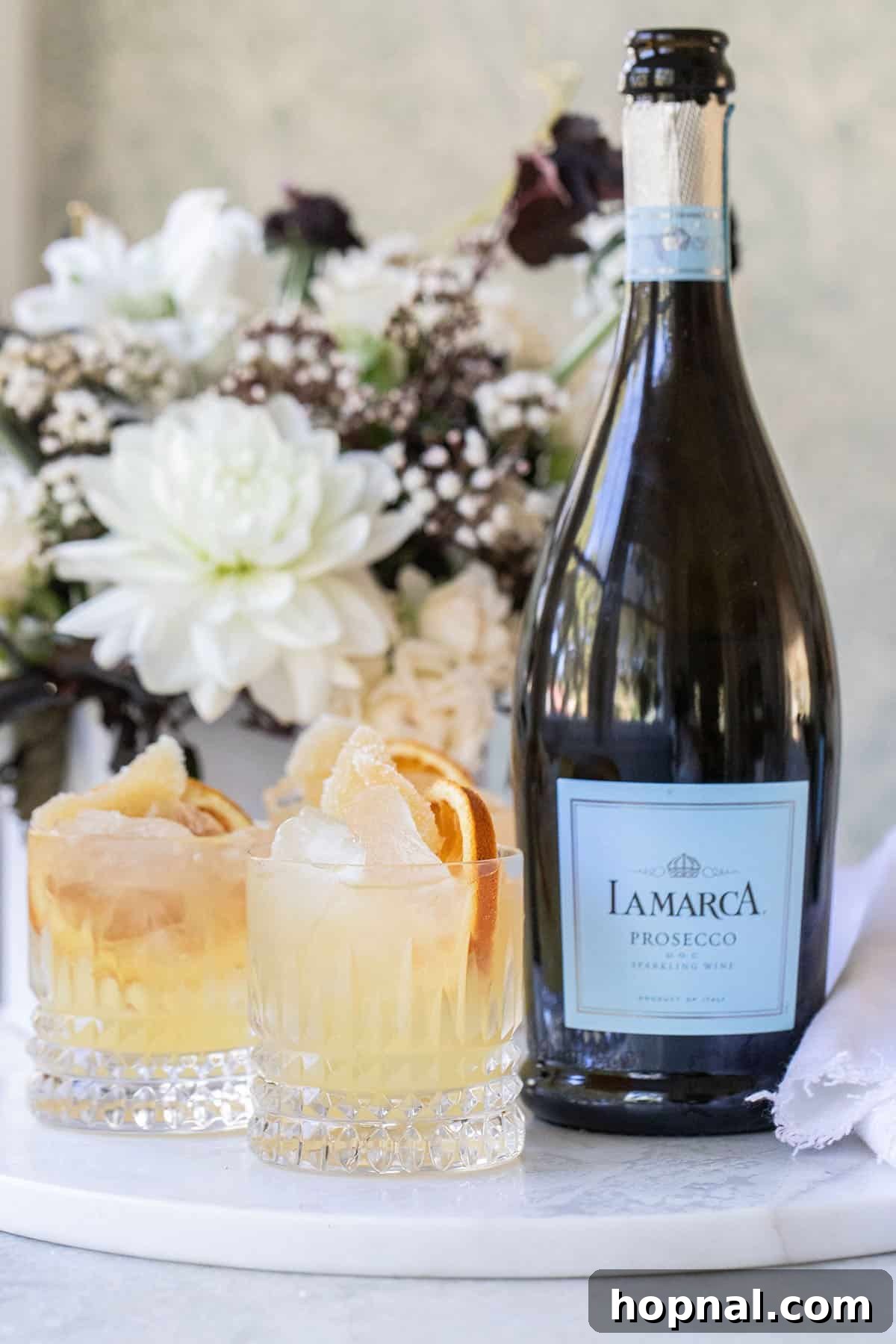
Beyond the Glass: Exploring Wine Cocktails
While many enjoy wine on its own, it also serves as an excellent base for a variety of delicious cocktails. From refreshing sangrias to festive sparkling concoctions, wine cocktails offer a creative twist for any occasion:
- Red Moon Over Manhattan – A popular and sophisticated cocktail crafted with red wine.
- Poinsettia Drink – A vibrant, sparkling wine-based cocktail perfect for holiday celebrations.
- White Wine Sangria – A refreshing and easy-to-make white wine cocktail, ideal for parties and warm weather.
- Sparkling Ginger Prosecco Cocktail – A light and citrusy drink that highlights the bubbly charm of Prosecco.
Concluding Your Wine Journey: Enjoy Responsibly
Now you’re equipped with comprehensive knowledge regarding how many fluid ounces are in a bottle of wine, the various bottle types, standard serving sizes, and practical tips for enjoying wine. Understanding these details empowers you to make informed choices, whether you’re selecting a bottle, pouring a glass, or planning an event.
Always remember that the alcohol content and type of wine will influence its impact, so responsible consumption is paramount. Take a moment to check the wine label for specific details, and savor every sip. Cheers to your enhanced appreciation and enjoyment of wine!
Should you wish to explore other delightful libations, our selection of fantastic cocktail recipes awaits you. You can also FOLLOW US on FACEBOOK, INSTAGRAM, and PINTEREST to discover more delicious recipes, cocktails, desserts, and party inspiration!