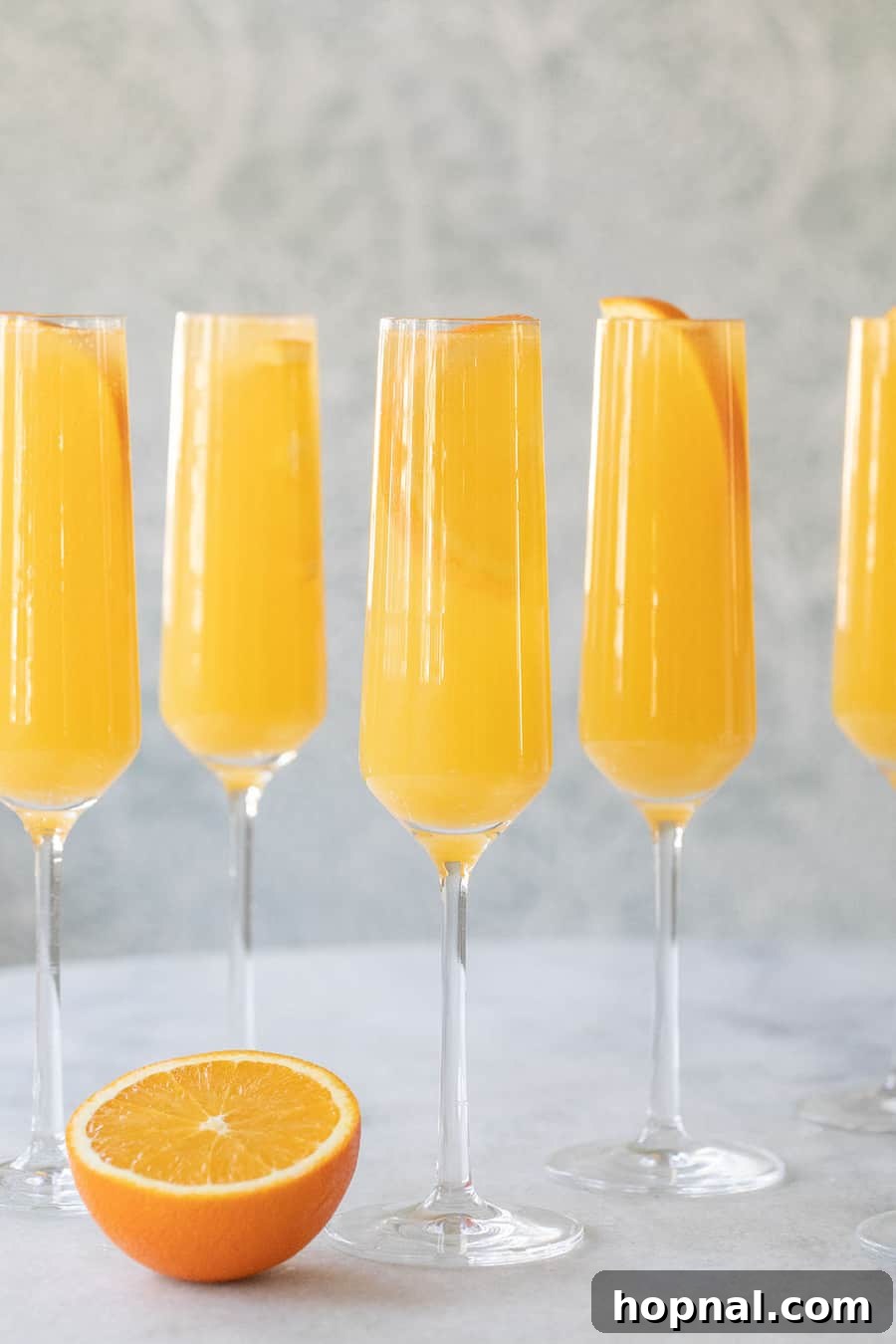
Few beverages capture the essence of celebration and leisure quite like the classic mimosa. This iconic two-ingredient cocktail, a vibrant blend of chilled orange juice and sparkling wine, is more than just a drink; it’s a staple for joyous occasions, lazy Sunday brunches, and festive gatherings throughout the year. Its simplicity belies its elegance, offering a light, refreshing, and subtly sweet experience that delights palates worldwide.
In this comprehensive guide, we’ll delve into everything you need to know to craft the perfect mimosa right at home. From selecting the finest ingredients to mastering the ideal pour, exploring tantalizing variations, and even setting up an impressive mimosa bar, you’ll become a true mimosa connoisseur. Get ready to elevate your entertaining game and toast to unforgettable moments with this timeless brunch favorite.
The Elegant History of the Mimosa Cocktail
While its exact origins are debated, the mimosa cocktail is widely believed to have been invented in Paris. One popular theory credits Frank Meier, a bartender at the Ritz Hotel in Paris, with creating the drink in 1925. Another theory suggests it emerged earlier at the Buck’s Club in London in 1921, where a similar drink called the “Buck’s Fizz” was created, featuring orange juice and champagne. Regardless of its precise birthplace, the mimosa quickly gained popularity, especially after its association with glamorous brunch culture and its endorsement by Alfred Hitchcock, who was reportedly a fan.
The name “Mimosa” itself is said to be inspired by the bright yellow-orange flowers of the Mimosa plant (Acacia dealbata), which beautifully mimic the cocktail’s vibrant hue. This simple yet sophisticated concoction has since become a global symbol of daytime celebrations and relaxed indulgence, officially recognized by the International Bartender Association (IBA) as a classic.
Crafting the Perfect Classic Mimosa: Ingredients & Simple Steps
The beauty of a classic mimosa lies in its elegant simplicity. With just two key ingredients, you can create a truly delightful beverage. The IBA’s official definition calls for equal parts orange juice and Champagne, a ratio we enthusiastically endorse for a balanced and refreshing drink. However, feel free to adjust to your personal preference for a stronger or sweeter cocktail.
Essential Ingredients for Your Mimosa
Making a mimosa is incredibly straightforward, requiring only two core components:
- Sparkling White Wine or Champagne: This is the effervescent soul of your mimosa. While true Champagne hails exclusively from the Champagne region of France and is often the traditional choice, many other excellent sparkling wines can be used. Consider Prosecco from Italy or Cava from Spain for equally delicious and often more budget-friendly alternatives. The key is to opt for a dry (Brut) sparkling wine, as the sweetness of the orange juice will perfectly balance it. A bottle in the $12-$20 range is usually ideal – there’s no need to splurge on a top-tier vintage when mixing with juice.
- Orange Juice: The quality of your orange juice can make or break your mimosa. For the best flavor, we highly recommend using freshly squeezed orange juice. Its bright, natural sweetness and slight tang are unmatched by store-bought concentrates. If fresh squeezing isn’t an option, look for high-quality, not-from-concentrate orange juice at your local market. Ensure it is well-chilled for optimal enjoyment.
Which Oranges Make the Best Juice for Mimosas?
The type of orange you choose can subtly influence the flavor profile and color of your mimosa. Here are some of our favorites for juicing:
- Valencia Oranges: Known for being exceptionally juicy with a balanced sweet-tart flavor, making them a classic choice for orange juice.
- Navel Oranges: Sweet and seedless, navel oranges are easy to peel and yield plenty of juice, though their flavor can sometimes be less intense than Valencias.
- Blood Oranges: Offering a distinct, berry-like sweetness and a stunning crimson hue, blood oranges create a visually striking and uniquely flavored mimosa.
- Cara Cara Oranges: A type of navel orange with a beautiful pinkish-red flesh and a slightly sweeter, less acidic taste with hints of berry.
- Mandarin or Clementine Oranges: While smaller, these can provide a sweeter, less tart juice, especially good if you prefer a milder citrus note.
Mimosa in 3 Easy Steps
Creating a classic mimosa is a quick and effortless process. Follow these simple steps for a perfectly mixed drink:
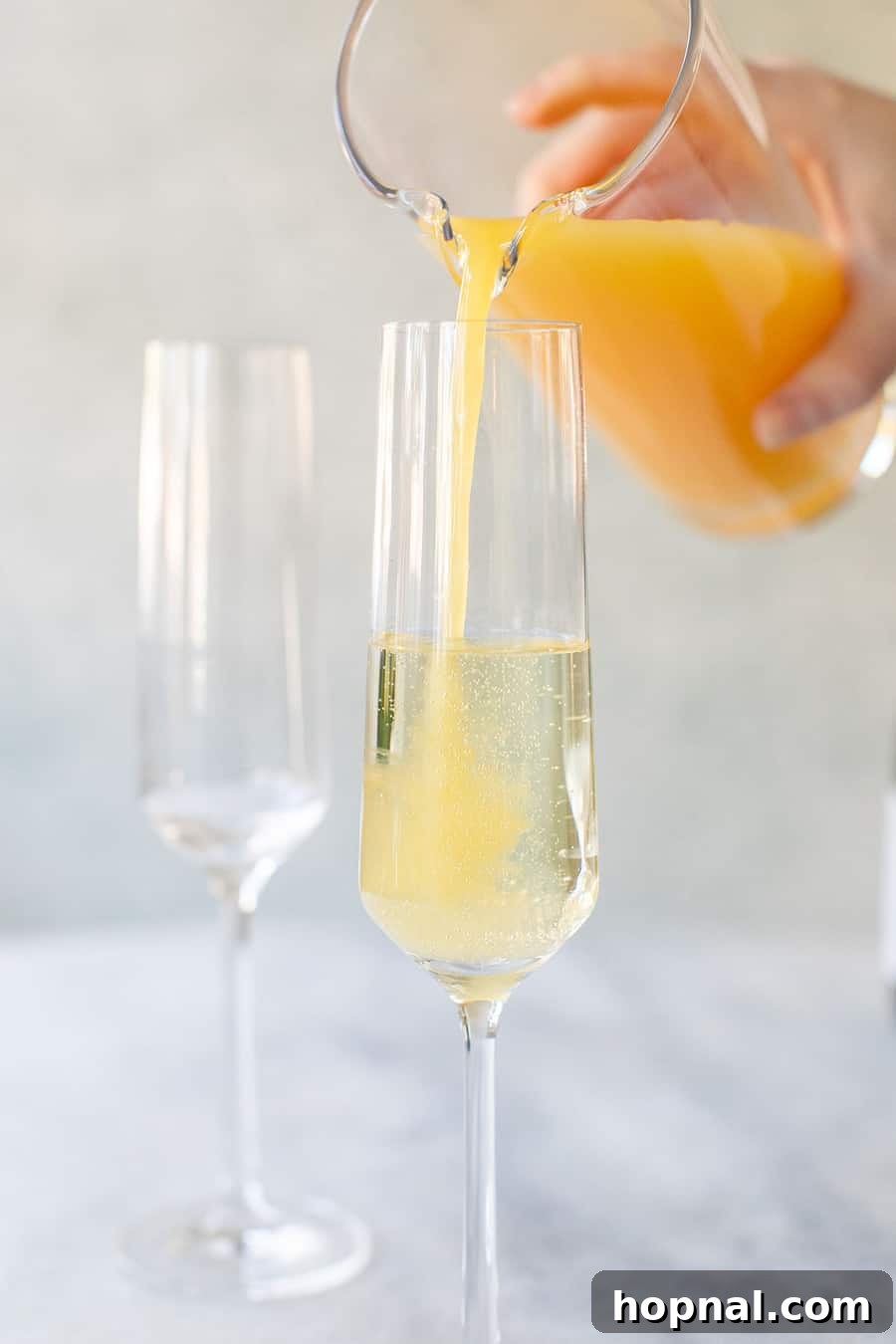
- Pour the Orange Juice: Fill a chilled champagne flute about halfway with fresh, cold orange juice. For a traditional 50/50 ratio, this would be approximately 3 ounces. If you prefer a stronger cocktail, use slightly less juice.
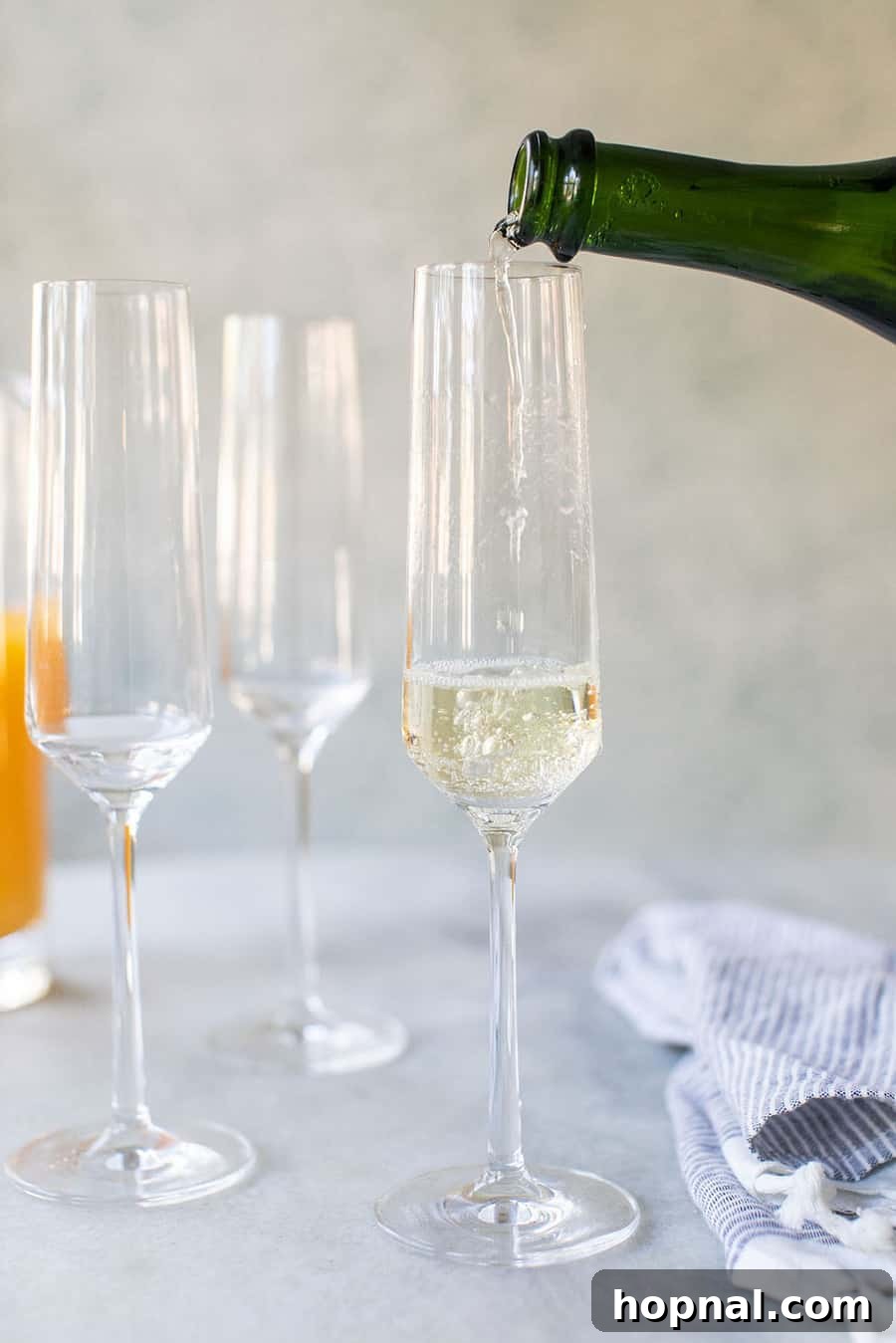
- Top with Sparkling Wine: Slowly tilt the flute slightly and top the orange juice with your chosen chilled sparkling white wine or Champagne. Fill the glass almost to the rim. Allow the bubbles to settle, then top it off again if needed to reach your desired level.
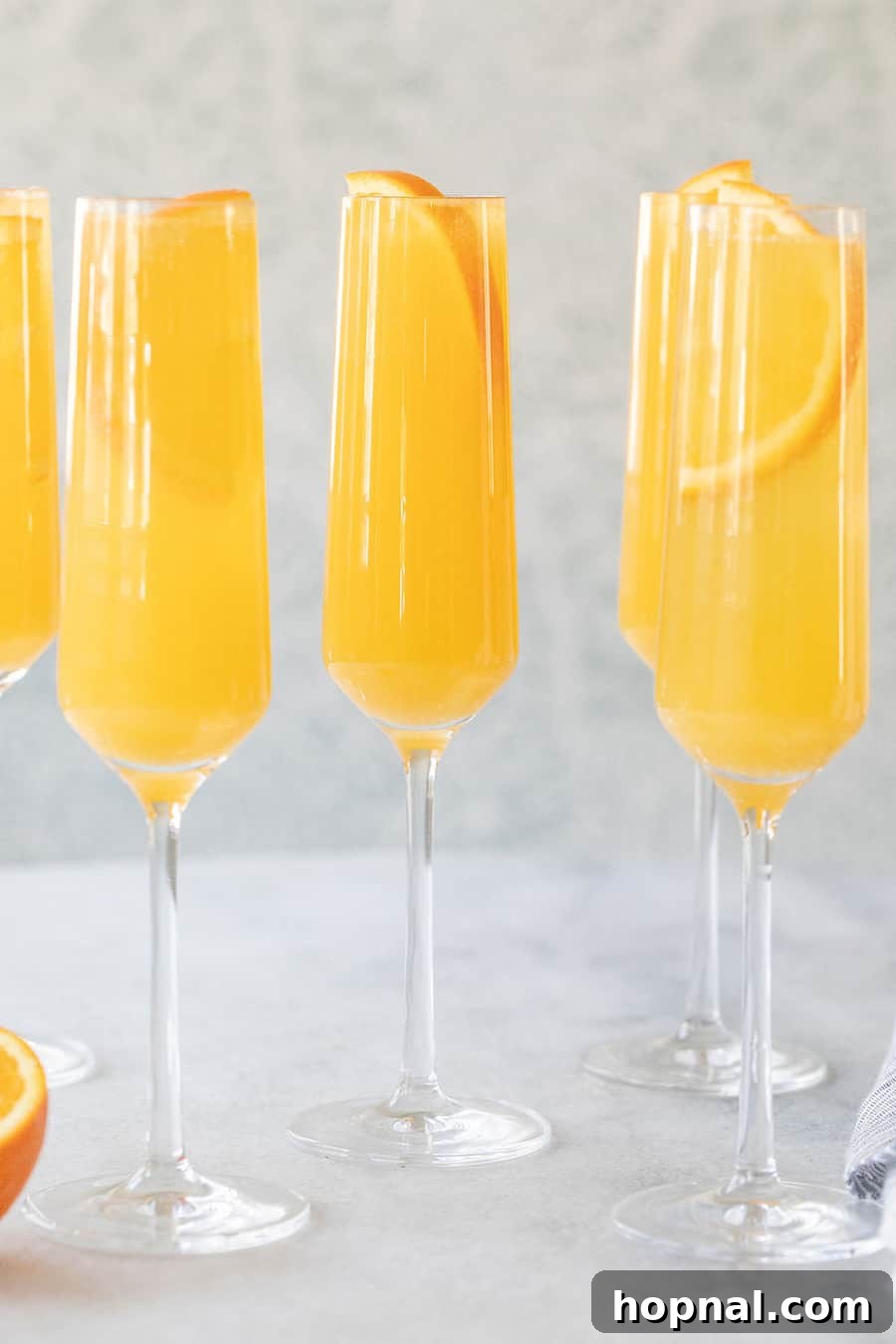
- Garnish and Serve: A simple garnish elevates the experience. Add a thin slice of fresh orange to the rim or drop it into the glass. A sprig of fresh mint also adds a beautiful touch and aromatic note. Serve immediately and enjoy!
For those who prefer a bolder flavor or a slightly stronger drink, consider a 2:1 ratio of sparkling wine to orange juice. Experiment to find your personal perfect blend!
Expert Tips for the Ultimate Mimosa Experience
While making a mimosa is easy, a few expert tips can transform a good mimosa into an exceptional one:
- Chill Everything Thoroughly: Since ice is typically not added to mimosas (it dilutes the drink and diminishes the bubbles), ensure both your orange juice and sparkling wine are thoroughly chilled beforehand. Ideally, refrigerate them overnight. You can even chill your champagne flutes in the refrigerator or freezer for 15-20 minutes before serving for an extra cold cocktail.
- Always Use Freshly Squeezed Orange Juice: This cannot be stressed enough. The vibrant, natural flavor of fresh orange juice is paramount. You can squeeze it a day in advance and store it in an airtight container in the refrigerator.
- Choose the Right Glassware: Champagne flutes are traditionally used for mimosas. Their tall, narrow design is not just for aesthetics; it helps to preserve the sparkling wine’s carbonation, keeping your mimosa bubbly and lively for longer.
- Consider a Splash of Orange Liqueur: For an added layer of flavor and sophistication, a small splash (about ½ ounce) of orange liqueur like Grand Marnier, Cointreau, or Triple Sec can wonderfully enhance the citrus notes.
- Make it a Batch: If you’re hosting a crowd, pre-mixing mimosas in a large pitcher can save time. However, to maintain maximum fizz, it’s often best to combine the ingredients right before serving or set up a mimosa bar (more on that below) where guests can mix their own. If pre-mixing, do it no more than an hour or two in advance and keep it chilled.
Elevate Your Mimosa with Creative Garnishes
While a simple orange slice or mint sprig is perfectly classic, garnishes offer a fantastic opportunity to add visual appeal and extra flavor to your mimosas. Get creative and consider:
- Seasonal Fresh Fruits: Strawberries, raspberries, blueberries, or thinly sliced peaches and kiwis can add a burst of color and complementary sweetness.
- Dehydrated Citrus Slices: For a sophisticated and lasting garnish, use dehydrated orange, lemon, or grapefruit slices.
- Edible Flowers: Pansies, roses, or violas can add a delicate and elegant touch, perfect for a garden party or bridal shower.
- Sugared Rims: Dip the rim of your flute in a little orange juice or water, then into fine sugar for a sparkling, sweet edge.
Beyond the Classic: Delicious Mimosa Variations
The classic mimosa is just the beginning! This versatile cocktail lends itself beautifully to countless variations, allowing you to tailor it to different tastes, seasons, and occasions.
Fruity Juice Alternatives
Swap out the traditional orange juice for other fruit juices to create entirely new flavor experiences:
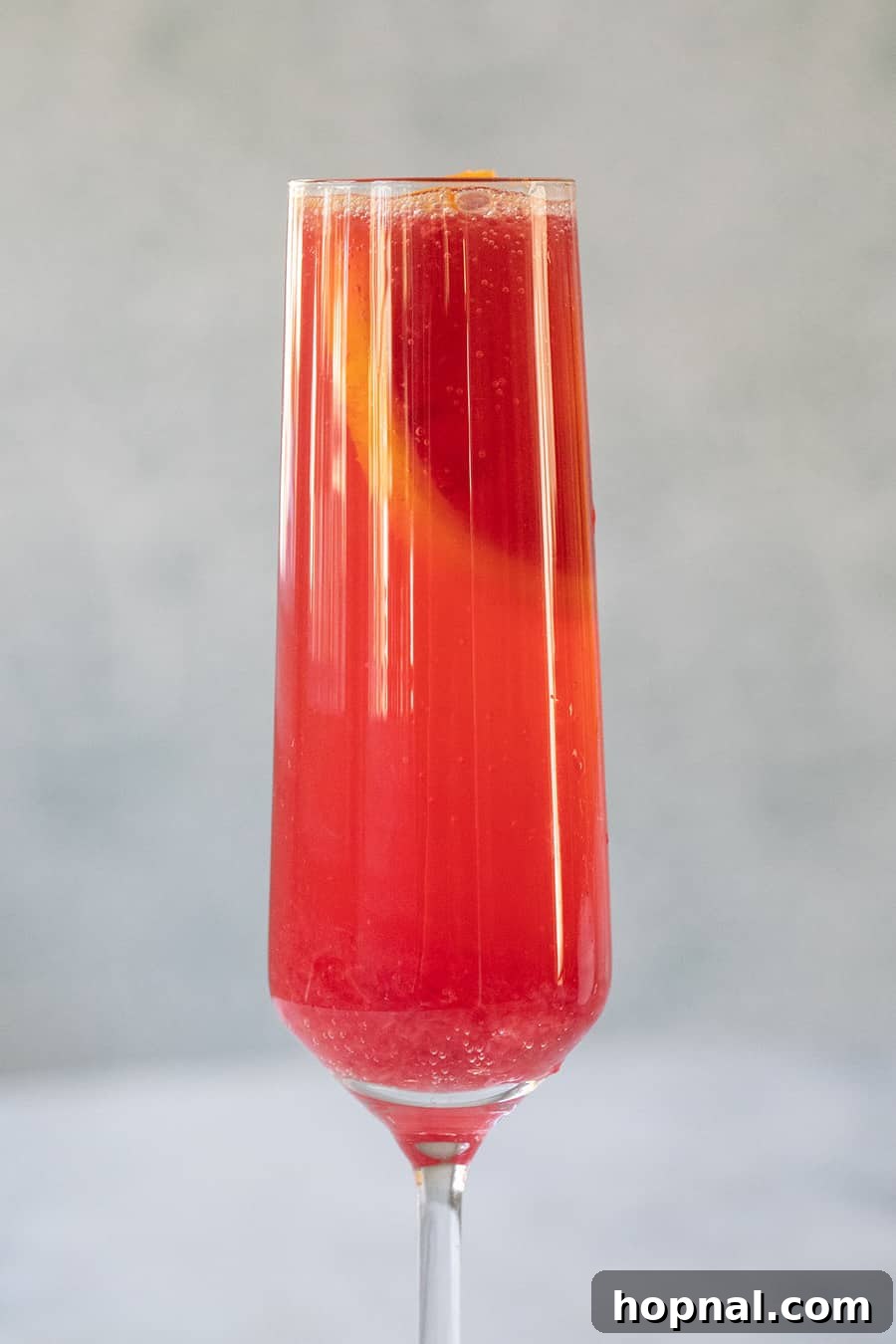
- Cranberry Mimosa (Poinsettia Cocktail): For a festive holiday twist, use cranberry juice. This vibrant red drink is often called a Poinsettia cocktail and is perfect for winter celebrations.
- Grapefruit Mimosa: If you prefer a drink with a pleasant tart kick, grapefruit juice is an excellent choice. It creates a wonderfully refreshing and slightly bitter mimosa.
- Pineapple Mimosa: For a tropical escape, pineapple juice adds a sweet and tangy exotic flavor. Garnish with a pineapple wedge for a true island vibe.
- Pear Mimosa: A sophisticated and unique option, pear juice offers a subtle sweetness and delicate aroma that pairs wonderfully with sparkling wine.
- Pomegranate Mimosa: Pomegranate juice adds a beautiful jewel-toned color and a sweet-tart flavor, making it a popular choice for holiday brunches and special occasions.
- Apple Cider Mimosa: Perfect for autumn, apple cider mimosas bring cozy fall flavors to your brunch table. Add a cinnamon stick for extra warmth.
- Lemonade Mimosa: For a super refreshing and zesty option, especially in warmer months, try using fresh lemonade. A blood orange lemonade mimosa offers a stunning color and flavor combination.
Liqueur-Enhanced Mimosas
A touch of liqueur can add depth and complexity to your mimosa:
- Grand Marnier Mimosa: As mentioned, Grand Marnier (an orange-flavored liqueur) enhances the citrus profile and adds a touch of sophisticated sweetness.
- Chambord Mimosa: A splash of Chambord, a black raspberry liqueur, gives the mimosa a beautiful pinkish hue and a lovely berry note.
- Lillet Mimosa: Lillet Blanc, a French aperitif wine with subtle fruit and spice notes, can add a unique botanical dimension.
“Boozy” and Themed Mimosa Twists
- Tequila Sunrise Mimosa: For a fun and festive take, combine orange juice with tequila, then add a splash of grenadine for the signature “sunrise” effect. Top with sparkling wine. Garnish with an orange slice and a cherry.
- Vodka Mimosa: For those who like a stronger drink, a shot of vodka can be added to the orange juice before topping with sparkling wine.
- Carrot and Blood Orange Mimosa: A truly unique and healthy-ish option, perfect for an Easter brunch or a vibrant start to your day.
The Ultimate Mimosa Bar: A Host’s Dream
For entertaining large groups or simply offering guests a personalized drink experience, a mimosa bar is an absolute showstopper. It’s fun, interactive, and incredibly easy to set up. Here’s how to create a memorable mimosa bar:
- The Bubbly Station: Set out several chilled bottles of sparkling wine (Champagne, Prosecco, Cava). Keep them on ice in a stylish cooler or bucket to ensure they stay cold.
- Juice Selection: Offer a variety of fresh, chilled fruit juices in attractive carafes or pitchers. Think beyond orange juice and include grapefruit, cranberry, pineapple, pomegranate, and pear juices. Label each one clearly.
- Garnish Galore: Arrange small bowls filled with an assortment of garnishes. This is where you can truly impress! Include fresh berries (strawberries, raspberries, blueberries), various citrus slices (orange, lemon, lime), edible flowers, mint sprigs, and even sugared cranberries.
- Liqueur Enhancements: Provide a few small bottles of liqueurs for guests to add a splash. Grand Marnier, Chambord, or a peach schnapps (for bellini-style mimosas) are great choices.
- Glassware: Line up a selection of clean champagne flutes within easy reach.
- Instructions & Labels: Briefly explain how to create a mimosa on a small card, and label all juices and garnishes for clarity.
When to Serve Mimosas: Perfect for Any Occasion
While the mimosa is undeniably the star of brunch, its versatility and celebratory nature make it suitable for a wide array of special occasions:
- Brunch Gatherings: The quintessential setting. From casual Sunday brunches to elaborate holiday feasts like Christmas, Easter, or Mother’s Day brunch, mimosas are always a welcome addition.
- Celebratory Parties: Ring in birthdays, anniversaries, graduations, or engagements with a tray of bubbly mimosas. They add an instant touch of sophistication and cheer.
- Daytime Events: Perfect for garden parties, bridal showers, baby showers, or elegant tea parties. Their light and refreshing profile makes them ideal for daytime enjoyment.
- Special Mornings: Whether it’s a holiday morning, a weekend treat, or a pre-wedding celebration, mimosas can make any morning feel a little more special.
- Last-Minute Gatherings: Since they require minimal ingredients and effort, mimosas are an excellent choice for impromptu celebrations.
Virgin Mimosa: A Non-Alcoholic Delight
For guests who prefer a non-alcoholic option, a virgin mimosa ensures everyone can join in the celebration. Simply replace the sparkling wine with sparkling apple cider, sparkling grape juice (like Martinelli’s), or even plain sparkling water or ginger ale. Garnish as usual for a festive, alcohol-free treat.
Beyond Delicious: The Benefits of Drinking a Mimosa
While primarily enjoyed for its taste and festive spirit, a mimosa does offer a few health benefits:
- Rich in Vitamin C: Thanks to the orange juice, mimosas provide a good dose of Vitamin C, an essential nutrient known for boosting the immune system and acting as an antioxidant.
- Antioxidants: Both orange juice and sparkling wine contain antioxidants, which help protect your body’s cells from damage caused by free radicals.
- Hydration: While alcoholic, the juice content contributes to hydration, especially when compared to neat spirits.
Frequently Asked Questions About Mimosas
What alcohol is best for mimosas?
Traditionally, Champagne is used for mimosas. However, dry (Brut) Prosecco or Cava are excellent and more affordable alternatives that still provide a crisp, bubbly foundation. The key is a sparkling wine that isn’t too sweet, allowing the orange juice to provide the primary sweetness.
How much orange juice should I use?
The classic mimosa ratio is 1 part orange juice to 1 part sparkling wine (50/50). For a less sweet, stronger cocktail, you can use 1 part orange juice to 2 parts sparkling wine. Adjust to your personal preference!
Why are they called mimosas?
The name “Mimosa” is widely believed to come from the Mimosa plant (Acacia dealbata), which produces bright yellow, fluffy flowers that resemble the drink’s sunny, golden color. The cocktail’s visual appeal, therefore, mirrored the plant’s natural beauty.
What is the difference between sparkling white wine and Champagne?
All Champagne is sparkling white wine, but not all sparkling white wine is Champagne. True Champagne must be produced in the Champagne region of France using specific grape varieties (Chardonnay, Pinot Noir, Pinot Meunier) and a traditional method of secondary fermentation in the bottle. Sparkling white wine, on the other hand, can be made anywhere in the world, from various grape types, and using different production methods (e.g., Prosecco, Cava).
How long do mimosas last?
For the best taste and fizz, mimosas should be enjoyed immediately after mixing. While they can last in the refrigerator for a few hours, the carbonation will diminish over time, leading to a flatter drink. If making a pitcher, try to consume it within 1-2 hours for optimal effervescence.
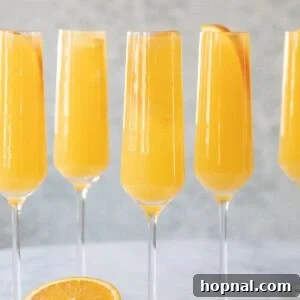
Mimosa Recipe
By: Eden
Learn how to make a simple mimosa at home! This cocktail uses only 2 ingredients and is perfect for all occasions, especially brunch! Also sharing variations and tips for making the best mimosa ever!
Rate Recipe
Print Recipe
Ingredients
- 3 ounces sparkling white wine, or Champagne
- 3 ounces orange juice, freshly squeezed
- 1/2 ounce orange liqueur (optional, but highly recommended!)
Instructions
-
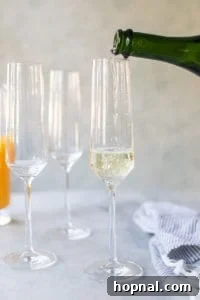
Fill a Champagne flute halfway full with chilled sparkling white wine. This is about 3 ounces.

-
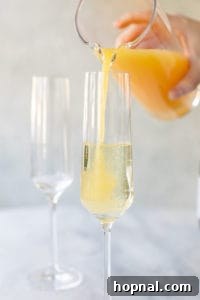
Top it with fresh squeezed orange juice, approximately 3 ounces. Let the bubbles settle and top off if necessary.
-
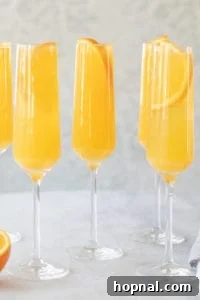
Add in a slice of orange to garnish if you please, or a fresh mint sprig.
Notes
To make a larger batch that serves 8, combine 1 chilled bottle of Champagne or sparkling white wine with approximately 2-3 cups of orange juice. You can either combine them in a pitcher and pour into individual glasses, or fill half of each glass with sparkling white wine and then top with orange juice for a 50/50 proportion.
You can also use a 2 parts sparkling white wine to 1 part orange juice ratio for a stronger drink.
Experiment with different versions of a mimosa using grapefruit juice, cranberry juice, or pineapple juice for delicious variations.
Always ensure both the wine and juice are well-chilled before serving for the best experience.
Nutrition
Serving: 1g, Calories: 123kcal, Carbohydrates: 11g, Protein: 1g, Fat: 1g, Saturated Fat: 1g, Trans Fat: 0g, Sodium: 6mg, Potassium: 272mg, Fiber: 1g, Sugar: 8g, Vitamin A: 170IU, Vitamin C: 43mg, Calcium: 17mg, Iron: 1mg
Nutrition information is automatically calculated, so should only be used as an approximation.
More Easy Cocktails You’ll Love!
- How to Make an Aperol Spritz
- Easy and Traditional White Sangria Recipe
- Classic Bees Knees Cocktail
- The Best Skinny Margarita Recipe
- Classic Whiskey Sour Cocktail
- How to Make a Dirty Martini
- Strawberry Tequila Sodas
- Mixed Drinks to Make at Home
You can also view all of our cocktails here!
We hope this guide inspires you to create your own perfect mimosas! Let us know your thoughts and any favorite variations by leaving a comment and review below. We’d love to hear from you!
You can also FOLLOW US on FACEBOOK, INSTAGRAM, and PINTEREST to see more delicious recipes, cocktails, desserts, and party ideas!